


Neck assessment in Sydney
Platysma neck bands in Sydney
Platysma neck bands, also called platysmal bands, are vertical cords that may become more visible when you speak, smile or tense your neck. An assessment can help distinguish muscle bands from loose skin, horizontal neck lines and under-chin fullness.
At Medical Aesthetics 360, neck consultations in Chatswood and Hurstville consider your concerns, neck movement, skin quality and medical history. Discuss suitable options, limitations, risks and costs before deciding whether to proceed.
Arrange a neck consultation Call 1300 338 307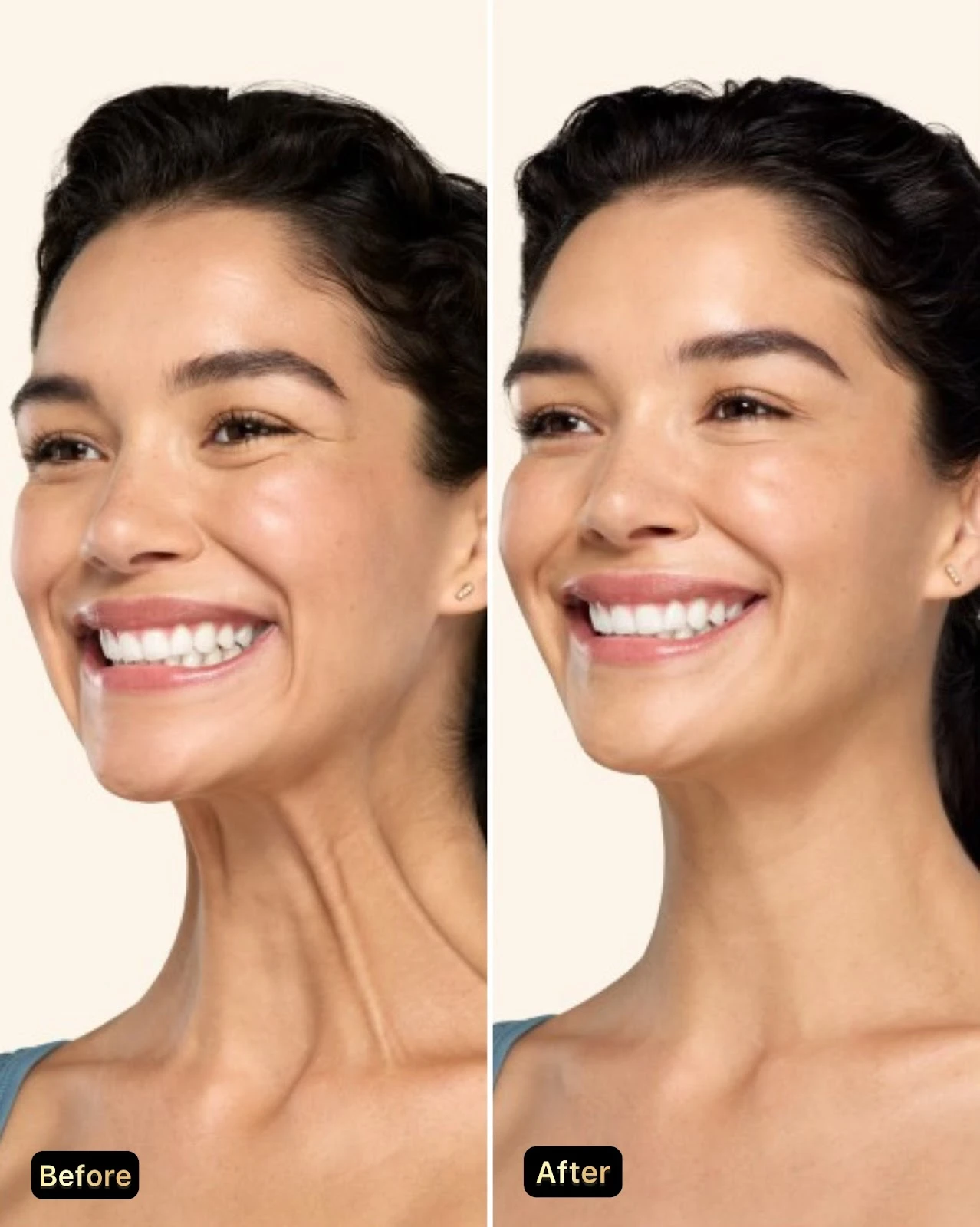
Neck anatomy in plain language
What are platysmal neck bands, and what causes them?
The platysma is a broad, thin muscle just beneath the skin, extending from the upper chest into the lower face. Its borders can become prominent as vertical bands when the muscle contracts.
In younger skin, these bands may appear only with a strong grimace or neck tension. Over time, repeated movement, changes in muscle position and reduced support from skin and soft tissue can make them easier to see at rest.
The right diagnosis changes the plan
Four neck concerns that are often confused
Vertical neck bands, loose skin and neck lines can look similar in photographs. They involve different structures, so a useful treatment discussion starts by identifying the main concern.
Treatment matching
Platysma neck band treatment options: what should you discuss?
The categories below are a guide to the consultation, not a recommendation. Some patients need one focused option; others are better served by a staged plan or no treatment.
| Main concern | Direction to discuss | Important limitation |
|---|---|---|
| Dynamic vertical bands | Assessment of neck movement, band position and medical history to discuss suitable care. | Visible bands may coexist with loose skin or fullness; each concern needs a separate assessment. |
| Mild skin laxity | Energy-based skin-firming or collagen-remodelling pathways. | Cannot reliably reproduce a surgical neck-lift result. |
| Under-chin fullness | Submental contour and fat-distribution assessment. | Reducing fullness may not improve a strong muscle band. |
| Marked laxity or band separation | Surgical opinion where non-surgical improvement would be too limited. | Surgery has a different risk profile, scarring and recovery period. |
Understanding the evidence
Why neck movement matters
An anatomical study using ultrasound examined neck bands at rest and during contraction. It found that the muscle’s borders became thicker and more prominent during contraction. This helps explain why a still photograph cannot show the whole concern.
Research supports assessment, not a promised result
Anatomy studies explain how bands form. They cannot determine which option is suitable for you or predict your outcome.
Read the platysmal-band anatomy study on PubMedPersonal suitability
Who may benefit from an assessment?
A consultation is most useful when you can describe when the bands appear, what else bothers you about the neck and how subtle or noticeable a change you would accept.
Discussion may be worthwhile when
- Vertical cords appear during speaking, smiling, exercise or neck tension.
- The bands are becoming visible at rest and create a tense or stringy appearance.
- You understand that muscle activity is only one part of neck ageing.
- You want a conservative plan that preserves normal expression and movement.
Another pathway or medical review may come first when
- Loose skin, under-chin fullness or horizontal lines are the dominant concern.
- You have existing swallowing, voice, neck-strength or neuromuscular problems.
- There is unexplained asymmetry, a lump, thyroid-area change or new discomfort.
- Your medical history, medicines, pregnancy or breastfeeding affect suitability.
Your consultation pathway
From movement assessment to review
The neck should be examined at rest and in motion. This reveals whether a visible cord is truly muscular and how it interacts with the jawline, skin and under-chin area.
Describe the concern
Discuss when you notice the bands, how they affect photographs or expression, and which parts of your neck you do not want changed.
Assess anatomy and movement
The clinician reviews band position at rest and contraction, skin laxity, jawline, under-chin contour, symmetry and neck function.
Review health and risk
Medical history includes swallowing and voice symptoms, neuromuscular conditions, neck surgery, allergies, medicines and prior reactions.
Compare and decide
Suitable categories, limitations, recovery, costs and follow-up are explained. A consultation does not require you to proceed.
Recovery and expectations
Timing depends on the chosen pathway
Recovery and the time needed to assess a result depend on the option selected. Temporary redness, tenderness, swelling or bruising may occur. Ask about work, exercise, aftercare and follow-up before making a decision.
Discuss your recovery plan
Your clinician should explain the expected recovery, possible side effects and when to return for review. Allow for individual variation when planning work or social events.
Ask what improvement is realistic, how long it may last and whether ongoing care could be needed. Follow the aftercare instructions for your particular procedure.
Skin tightening and surgical pathways
Skin tightening and surgery have different recovery requirements. Device-based procedures may cause redness, swelling, tenderness or altered sensation. Surgery involves incisions, scars and a more substantial recovery period.
Where a surgical opinion is appropriate, discuss referral, procedure-specific risks and recovery with the relevant surgeon.
Informed decision-making
Possible side effects and risks
Every procedure has risks. The likelihood and seriousness depend on the approach, your health and the area treated. Ask your clinician which risks apply to your plan, including effects on neck function, and how complications would be managed.
Possible effects to discuss
- Redness, tenderness, swelling, bruising, headache or temporary discomfort.
- Under-correction, asymmetry, altered neck contour or an outcome you do not like.
- Temporary smile imbalance, neck weakness or unwanted change in lower-face movement.
- Depending on the procedure, swallowing difficulty, voice change, breathing problems or more general weakness may occur and need prompt medical attention.
- Additional device- or surgery-specific complications where those pathways are chosen.
Planning your appointment
How much does neck-band treatment cost in Sydney?
There is no single price because visible neck bands, skin laxity and under-chin fullness may need different approaches. Confirm the consultation fee when booking; a personalised treatment quote follows assessment.
What affects the quote?
- The cause of the concern and the area being assessed.
- The approach recommended and number of appointments.
- Aftercare, reviews and any ongoing care requirements.
Questions to bring
Ask what is included, what improvement is realistic, what alternatives exist and what additional costs could arise. You can choose not to proceed.
Enquire about a neck consultationPatient questions
Platysma neck bands FAQs
What are platysma neck bands?
Why do platysmal bands become more visible?
Are neck bands the same as loose neck skin?
Can one treatment correct every sign of neck ageing?
When will a result become visible?
Is there downtime after platysma band treatment?
Can treatment still look natural?
Who needs extra caution before neck treatment?
Can neck-band treatment be combined with skin tightening?
How much does platysma neck-band treatment cost in Sydney?
Where can I have a neck-band consultation in Sydney?
Are platysmal bands the same as horizontal neck lines?
Your Sydney consultation
Neck-band consultations in Chatswood and Hurstville
Choose the clinic that suits your visit. Our team can confirm the appropriate appointment and practitioner. You can also meet the MA360 clinical team.
Chatswood clinic
Suite 203, Level 2, 38B Albert AvenueChatswood NSW 2067
Located on Sydney’s North Shore.
Chatswood clinic details and directionsHurstville clinic
41–43 Dora StreetHurstville NSW 2220
Located in Sydney’s St George area.
Hurstville clinic details and directionsMention your preferred clinic when enquiring. Suitability, availability and costs are confirmed individually.