


Pigmentation Treatment Sydney: Melasma, Freckles & Sun Spots
Considering pigmentation removal in Sydney? Treatment may involve skincare, pigment-targeting laser or light-based therapy, depending on whether you have freckles, sun spots, melasma or post-inflammatory hyperpigmentation (PIH). The first step is identifying the pigment and your skin’s needs.
At MA360 in Chatswood and Hurstville, assessment considers the pattern, depth and likely cause of the pigment, along with skin tone, sensitivity and previous reactions. Compare treatment options, costs, recovery and recurrence below, and find out whether a spot needs medical review before cosmetic treatment.
- Common concerns
- Melasma, freckles, sun spots and post-inflammatory marks
- Assessment
- Pigment type, skin tone, triggers and lesion safety
- Treatment course
- Often staged; session number varies by diagnosis
- Maintenance
- Photoprotection and trigger control remain important
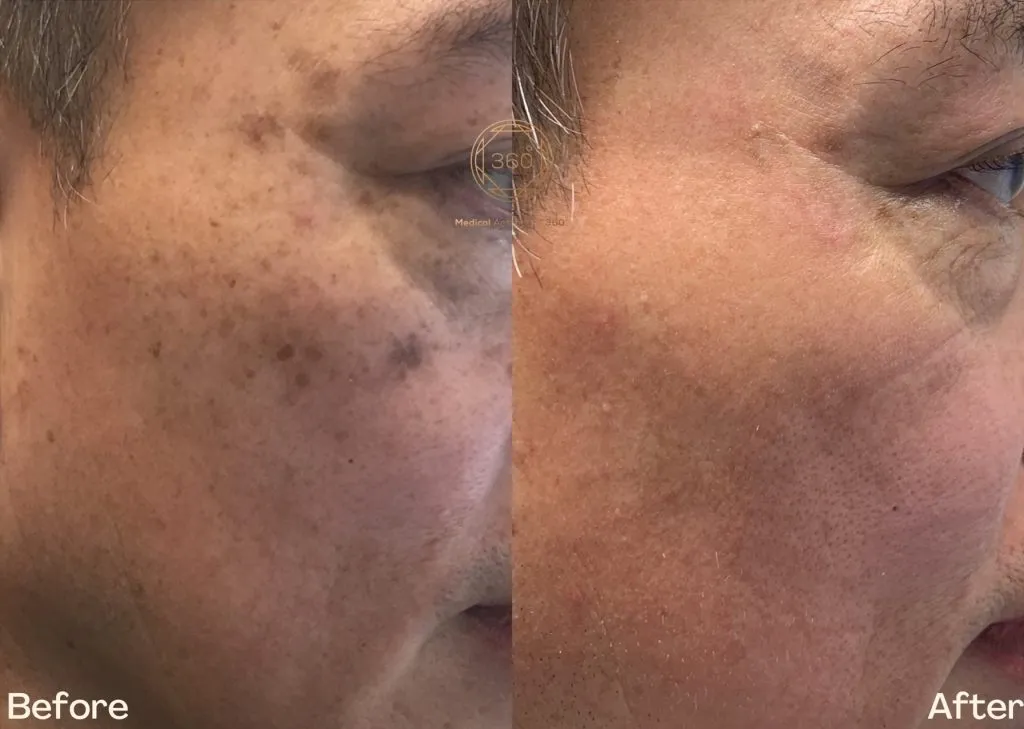
Pigmentation treatment before and after: patient case studies
These cases show varied starting concerns and treatment pathways. Individual outcomes differ and do not predict another patient's response.
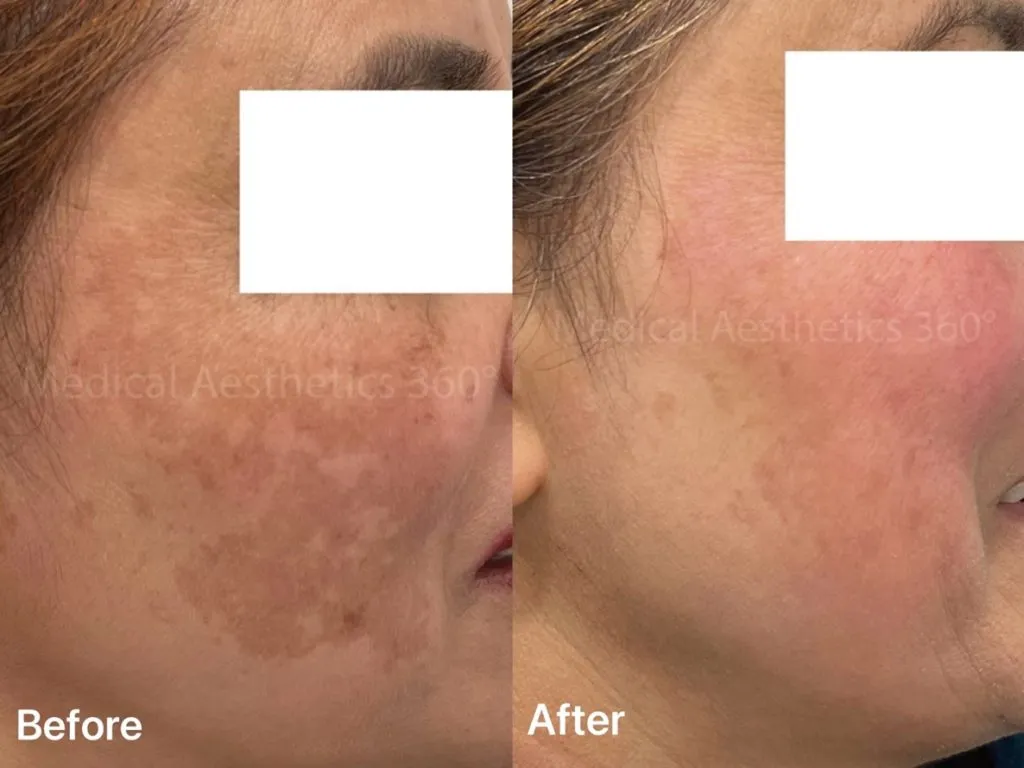
Managing long-standing melasma without chasing a quick fix
Dark patches had gradually developed across the cheeks and forehead. The pathway focused on controlled improvement, skin tolerance and a plan for ongoing maintenance.
Read this case study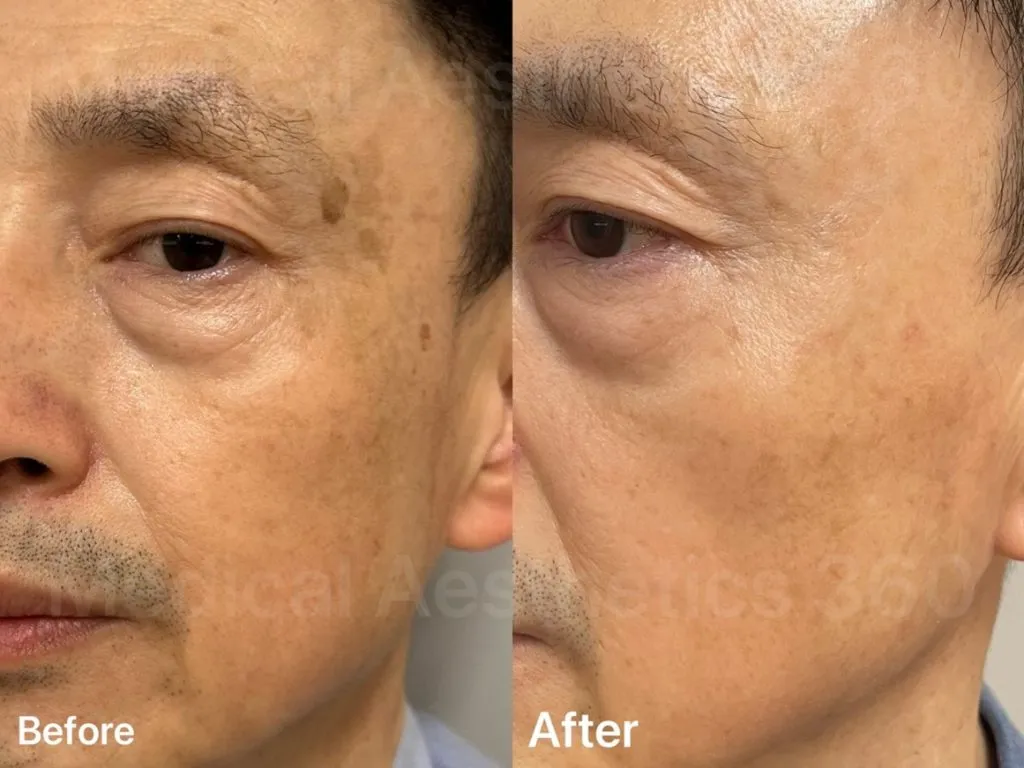
Reducing discrete sun spots while keeping the result natural
This patient wanted a clearer, fresher-looking complexion. Treatment planning considered the darker individual spots as well as the wider background tone.
Read this case study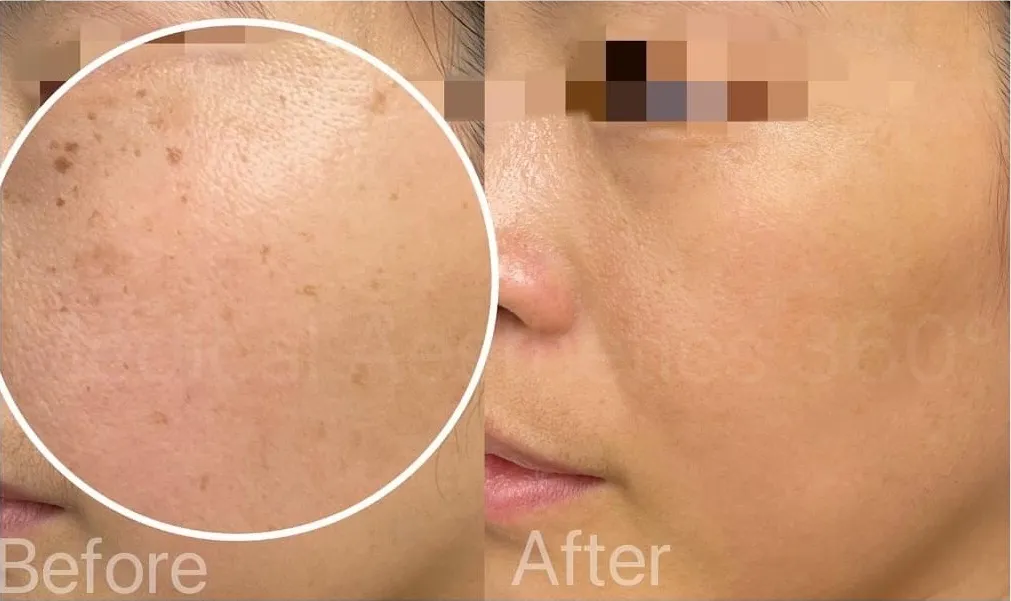
Freckle reduction and a more even-looking complexion
Freckles had become more noticeable over time. The plan was selected for the pigment pattern and the patient's skin response rather than treating the whole face identically.
Read this case study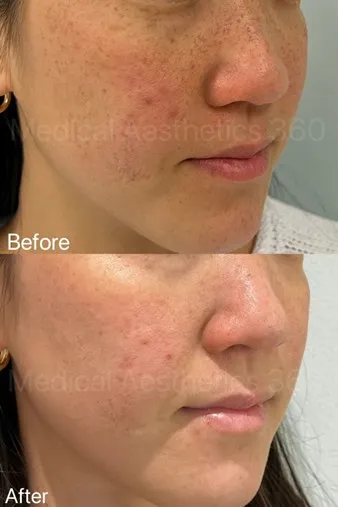
Mixed pigmentation, uneven tone and persistent redness
This case involved more than brown pigment alone. The treatment course considered both colour concerns and the way inflammation was affecting overall skin clarity.
Read this case study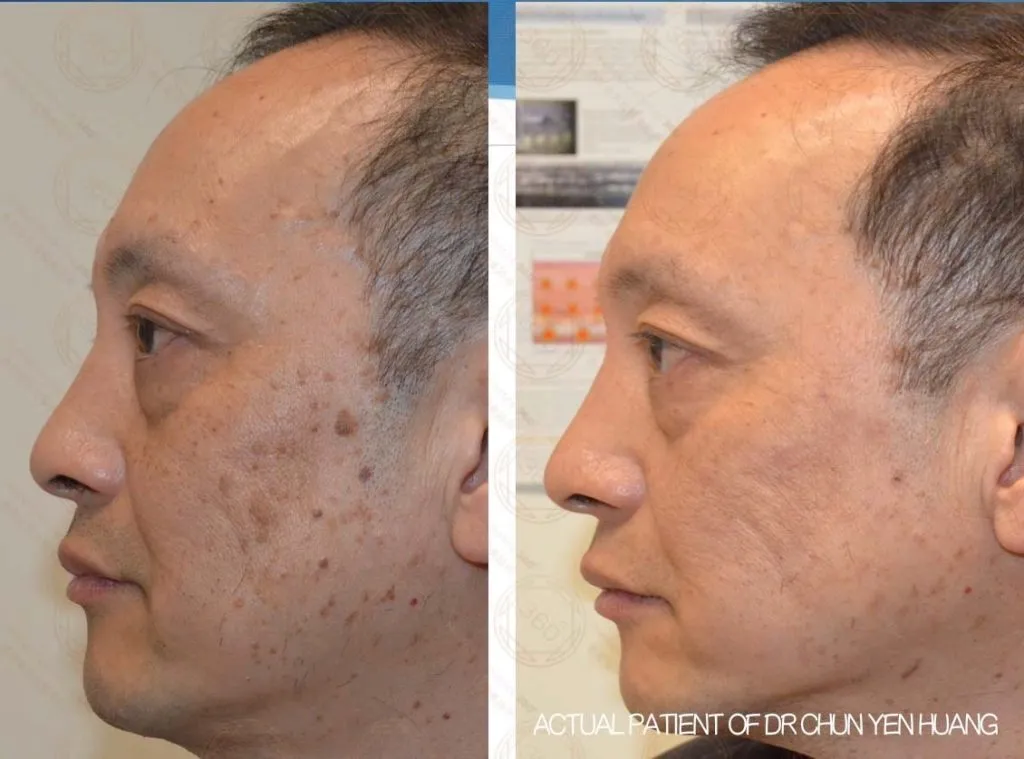
Pigmented spots alongside uneven surface texture
Raised bumps and dark marks had increased gradually. Assessment helped distinguish what could be treated cosmetically and how texture should be approached alongside colour.
Read this case studyMelasma, freckles, sun spots or acne marks: what are you treating?
Brown or grey patches can come from different biological processes. The distinction matters because a treatment that clears a discrete sun spot may irritate melasma or deepen post-inflammatory pigmentation.
The first step is to decide whether the concern is flat pigment suitable for cosmetic treatment, a raised lesion needing a different approach, or a new or changing spot that should be medically assessed.
Freckles
Freckles are often small, multiple and strongly influenced by sun exposure. They may lighten with treatment but can return or new freckles can form with further UV exposure.
Sun spots and age spots (solar lentigines)
Often called sun spots or age spots, these are usually more persistent, well-defined patches linked with cumulative sun exposure. Treatment response depends on diagnosis and depth.
Melasma
Melasma usually forms broader, often symmetrical facial patches. Hormones, UV, visible light and heat can contribute, making control and maintenance as important as initial lightening. Explore our melasma treatment guide for condition-specific planning.
Post-inflammatory hyperpigmentation (PIH)
PIH develops after acne, irritation, eczema, injury or a procedure. Treating the inflammation and protecting the skin barrier are central, particularly in deeper skin tones. Flat brown acne marks are different from indented or raised acne scars, which may need another approach.
Pigmentation treatment options: skincare, laser, BBL and LaseMD
MA360 has access to several laser and light platforms, but access to technology is only useful when the settings, sequence and endpoint suit the skin. Some patients need a single main modality; others need topical care, barrier support or a staged combination.
What does the evidence say about pigmentation treatment?
A 2024 systematic review found variable treatment outcomes for post-inflammatory hyperpigmentation in skin of colour. Laser cleared PIH in some participants, but worsening was also reported. These findings do not establish one best device for all pigmentation or predict an individual result. Diagnosis, control of inflammation and review of the skin’s response remain important. Read the PIH systematic review on PubMed.
Your pigmentation consultation in Chatswood or Hurstville
At the Chatswood and Hurstville clinics, the consultation brings together diagnosis, treatment history and practical priorities. It is also the point to decide whether a suspicious or uncertain lesion needs a different medical pathway before cosmetic treatment.
Pattern and history
The onset, distribution, seasonal change, pregnancy or hormonal history, inflammation and previous procedures help clarify the likely diagnosis.
Skin tone and sensitivity
Baseline melanin, tanning response, barrier health and history of PIH influence device choice, energy and the pace of treatment.
Realistic endpoint
The discussion separates lightening from clearance and explains why melasma control or maintenance may be a better goal than permanent removal.
Course and pricing
The number of sessions, downtime, home care and costs depend on the diagnosis, area, modality and response between treatments.
How much does pigmentation treatment cost in Sydney?
Pigmentation treatment pricing depends on the diagnosis, size and number of areas, device, number of sessions and whether skincare or combination treatment is recommended. A single sun spot and recurrent facial melasma may require very different plans.
Ask for a personalised quotation after assessment, including the likely course and any maintenance. Treatment suitability and pricing should be clear before you decide to proceed.
Ask about assessment and treatment costsWhat to ask at your consultation
- What type of pigmentation do I have, and what improvement is realistic?
- Is skincare, laser or light-based treatment suitable for my skin?
- What does the quote include: consultation, treatment, home care and review?
- How many sessions may be needed, and when will progress be reviewed?
- What downtime, recurrence and ongoing costs should I plan for?
Pigmentation laser recovery, treatment sessions and aftercare
The number of pigmentation treatment sessions and the time between them depend on the diagnosis, treatment area, device and response. Discrete sun spots may follow a different pathway from diffuse melasma or PIH. Downtime can range from mild redness to several days of darkening, flaking or crusting; your plan should explain what to expect.
Assessment
The pigment pattern, skin tone, medical history and any lesion requiring separate review are documented before treatment selection.
Preparation
Sun exposure, irritating actives and barrier disruption may need attention first. Some plans include prescribed or non-prescription topical care.
Treatment
Settings are chosen for the target and skin response. Sensations can include warmth, tingling or a momentary snapping feeling, depending on the modality.
Review
Response, darkening, inflammation and any recurrence guide whether the next session should continue, change or pause.
Temporary effects may include
- Redness, warmth, swelling or sensitivity
- Temporary darkening of treated spots
- Dryness, fine flaking or light crusting
- A short-term change in skin texture
- Uneven fading while different areas respond
Long-term control usually involves
- Consistent broad-spectrum SPF 50+ sunscreen
- Reapplication and physical sun protection as advised
- Avoiding picking, scrubbing and unapproved active products while healing
- Managing acne, eczema or irritation that can trigger PIH
- Maintenance review when melasma or sun-related pigment returns
Read the PicoSure, Fotona and BBL aftercare guide for skin care after treatment. Follow the individual instructions supplied for your procedure.
Pigmentation treatment risks and suitability
Risks vary with the device, wavelength, treatment intensity, diagnosis, recent sun exposure and the skin's tendency to pigment after inflammation.
- Prolonged redness, swelling, irritation or dermatitis
- Post-inflammatory hyperpigmentation or melasma flare
- Patchy lightening or hypopigmentation
- Blistering, crusting, infection or delayed healing
- Scarring or texture change
- Incomplete response, recurrence or need for maintenance
Some spots need diagnosis, not laser
A cosmetic pigmentation page cannot determine whether an individual lesion is benign. New or changing marks should be assessed appropriately before they are removed or lightened.
Arrange medical review
Do not proceed directly to cosmetic treatment for a spot that is new, changing in size, shape or colour, unlike your other marks, repeatedly bleeding, crusting, painful or persistently itchy. If there is diagnostic uncertainty, the priority is assessment rather than cosmetic clearance.
Pigmentation treatment FAQs
What is the best treatment for facial pigmentation?
There is no single best treatment. The choice depends on whether the pigment is melasma, freckles, lentigines, PIH or another condition, as well as its depth, the skin tone and the risk of inflammation. Assessment should come before device selection.
What is the difference between melasma, freckles and sun spots?
Freckles are often small and strongly sun-responsive. Solar lentigines are usually persistent, defined spots related to cumulative sun exposure. Melasma tends to form broader, often symmetrical patches influenced by UV, visible light, heat and hormones.
Can laser make melasma worse?
Yes, it can in some patients. Heat and inflammation may trigger rebound or post-inflammatory darkening. Laser can be part of a melasma plan, but conservative settings, skincare, photoprotection and maintenance are often more important than aggressive clearance.
Is PicoSure suitable for pigmentation?
PicoSure may be considered for selected freckles, lentigines and other pigment patterns. It is not automatically the right choice for every melasma or PIH case. Wavelength, settings, skin tone and diagnosis all influence suitability.
Can BBL or light-based treatment help sun spots?
Broad-spectrum light may suit selected field pigmentation, sun-related colour change and mixed redness. Darker skin tones, recent tanning and melasma require particular caution, so an in-person assessment is important.
How many pigmentation treatment sessions will I need?
The number varies with the diagnosis, area, modality and response. A few discrete spots may need fewer sessions than diffuse melasma or PIH. A staged course allows the plan to change if inflammation or darkening develops.
How much downtime is there?
Downtime ranges from mild redness for some treatments to several days of darkening, flaking or light crusting for others. The likely appearance after treatment should be discussed for the specific device and settings proposed.
Can darker skin tones have pigmentation laser treatment?
They can be suitable for selected treatments, but naturally higher melanin increases the importance of diagnosis, wavelength selection and conservative energy. PIH and hypopigmentation risk must be considered.
Can pigmentation be removed permanently, or will it come back?
Pigmentation can return. Freckles and sun spots may recur or new ones may form with further exposure. Melasma is especially prone to relapse because its triggers remain active. Photoprotection and maintenance help preserve improvement but cannot promise permanent clearance.
How much does pigmentation treatment cost in Sydney?
Cost depends on the diagnosis, treatment area, device, number of sessions and whether home care or combination treatment is recommended. A personalised quotation can be provided after assessment.
Book a pigmentation assessment in Chatswood or Hurstville
Discuss the marks you want to improve, your skin’s sensitivity, previous treatments and recovery needs. The consultation helps clarify the pigment type, suitable options, likely costs and whether cosmetic treatment is appropriate.
Pigmentation treatment in Chatswood · Pigmentation treatment in Hurstville · Meet the medical team
This article provides general information and does not replace individual medical advice or diagnosis. Suitability, alternatives, expected recovery and risks are discussed during consultation. Treatment experiences and results vary between individuals.
Back to top ↑