Story
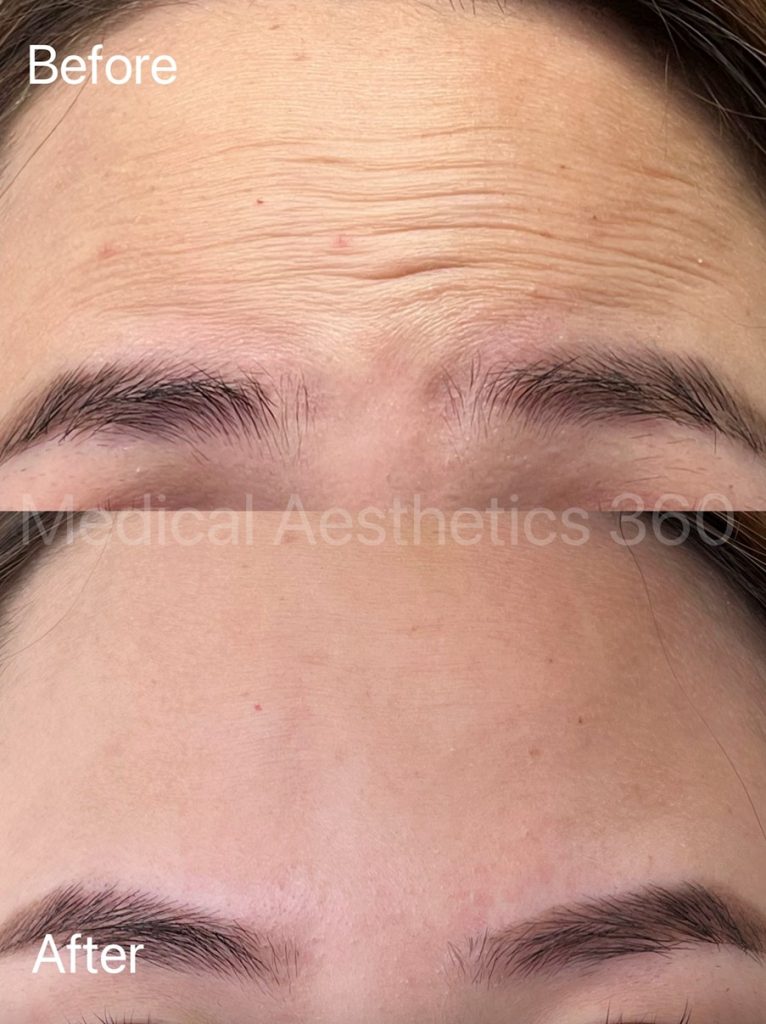
A lovely lady in her 30s came to Medical Aesthetics 360 with a concern that many patients start to notice over time — forehead lines becoming more visible, more persistent, and harder to ignore in photos, makeup, and daily life.
She was not looking for a dramatic change. Her goal was to achieve a smoother forehead, a fresher appearance, and a more youthful-looking upper face, while still maintaining natural expression. Like many patients seeking wrinkle reduction and anti-ageing treatments, she wanted to look refreshed rather than different.
During her consultation, Dr Suzanna Luo performed a doctor-led facial assessment, looking not only at the forehead lines themselves, but also at brow position, eyelid shape, skin quality, facial movement, and the upper face as a whole. This is an important part of planning, because forehead lines are not always caused by just one factor.
In some patients, repeated facial movement plays a role. In others, skin quality, collagen loss, sun exposure, and age-related tissue changes can also contribute. Some patients may also experience a sense of heaviness in the forehead or upper eye area depending on their anatomy, particularly where there is pre-existing hooding of the eyelids, heavier soft tissue around the eyes, or lower-set brows. These points were carefully explained during consultation so the patient could better understand the functional and aesthetic considerations involved.
This type of discussion is important, because there is no single approach that suits everyone. For some patients, treatment may focus more on muscle-related lines. For others, options that support skin rejuvenation, collagen stimulation, or skin tightening may also be considered, depending on the concern and the result they hope to achieve.
At Medical Aesthetics 360, doctor assessment helps guide a more personalised treatment plan. Depending on the patient, suitable options may include a combination of approaches aimed at improving forehead lines, skin quality, texture, and overall facial rejuvenation.
These options may include:
- Doctor-led wrinkle reduction planning
- Laser skin rejuvenation
- Thermage
- Ultherapy
- Sofwave
- Other tailored anti-ageing approaches depending on individual assessment
For this patient, the value of the consultation was not simply about treating lines. It was about understanding the reasons behind them, discussing realistic outcomes, and choosing a plan that respected both facial function and natural appearance.
Visible Results
Following treatment planning and review, the forehead appeared smoother and more relaxed, with reduced visibility of forehead lines and a fresher overall appearance. The upper face looked brighter, more polished, and more youthful, while still maintaining natural expression.
Rather than looking overdone, the result felt balanced and elegant. The skin in the forehead area appeared calmer and more refined, contributing to a more rested and radiant appearance.
This case highlights an important point in anti-ageing treatment: successful rejuvenation is often not about changing the face, but about supporting smoother skin, softer lines, and a fresher overall look in a way that still feels natural.
For patients concerned about forehead wrinkles, fine lines, skin ageing, or a tired-looking upper face, a doctor-led consultation can help identify whether the concern is mainly related to facial movement, skin laxity, collagen loss, or a combination of factors.
That is where options such as laser treatments, Thermage, Ultherapy, and Sofwave may become part of the broader conversation, depending on the individual’s anatomy, skin condition, and treatment goals.
Doctor
Dr Suzanna Yan Ning Luo
AHPRA registration number: MED0001187471
Registration type: General and Specialist Registration – General Practice Consultation, doctor assessment, and treatment planning were performed by Dr Suzanna Luo. At Medical Aesthetics 360, treatments of this nature are guided by individual facial assessment, with doctor involvement in determining suitability and recommending a personalised approach.