Home » Treatment » Eye Bag Removal

Eye Bag Removal Surgery

Scarless Eye Bag Removal Sydney | Radiofrequency | MA360

Eye bag treatment in Sydney

Scarless eye bag removal with transconjunctival radiofrequency fat reduction

Persistent lower-eye fullness can make you look tired even after a good night’s sleep. This targeted, minimally invasive approach uses radiofrequency energy to reduce selected pockets of under-eye fat without an external skin incision.

At Medical Aesthetics 360 in Chatswood and Hurstville, treatment starts with a careful assessment of what is actually creating the shadow or bulge. Fat prominence, loose skin, a tear trough, fluid retention and festoons need different plans, so the right diagnosis matters more than the name of a treatment.

Arrange an eye bag assessment

What “scarless” means here: there is no incision through the outer lower-eyelid skin, so no external skin scar is expected. It does not mean zero healing time or zero risk.

Approach Targeted insulated-needle radiofrequency delivered through an internal lower-eyelid pathway.
Best suited to Selected fat-dominant lower-eye bags rather than every form of dark circle or puffiness.
Visible recovery Swelling, tenderness or bruising can be noticeable during the first week.
Result timing Change develops gradually over the following weeks; some patients need more than one treatment.

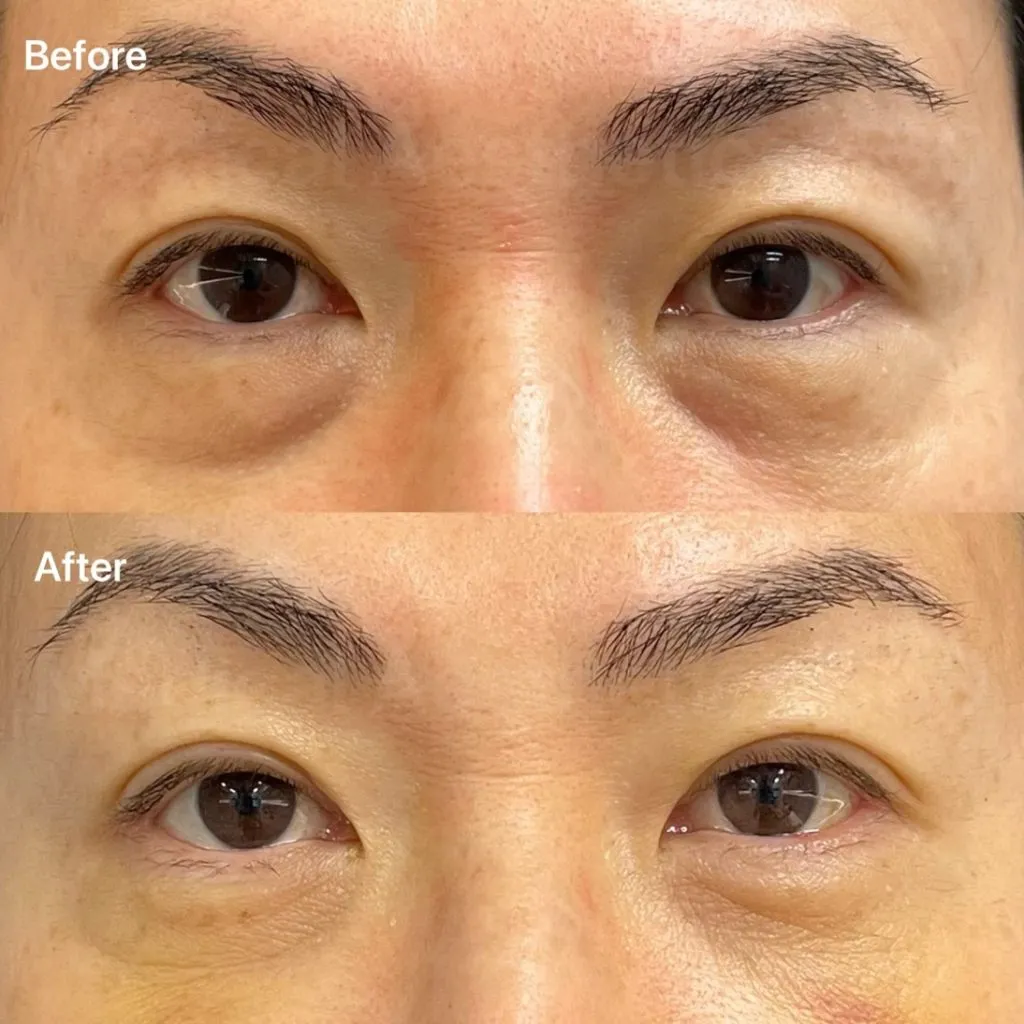
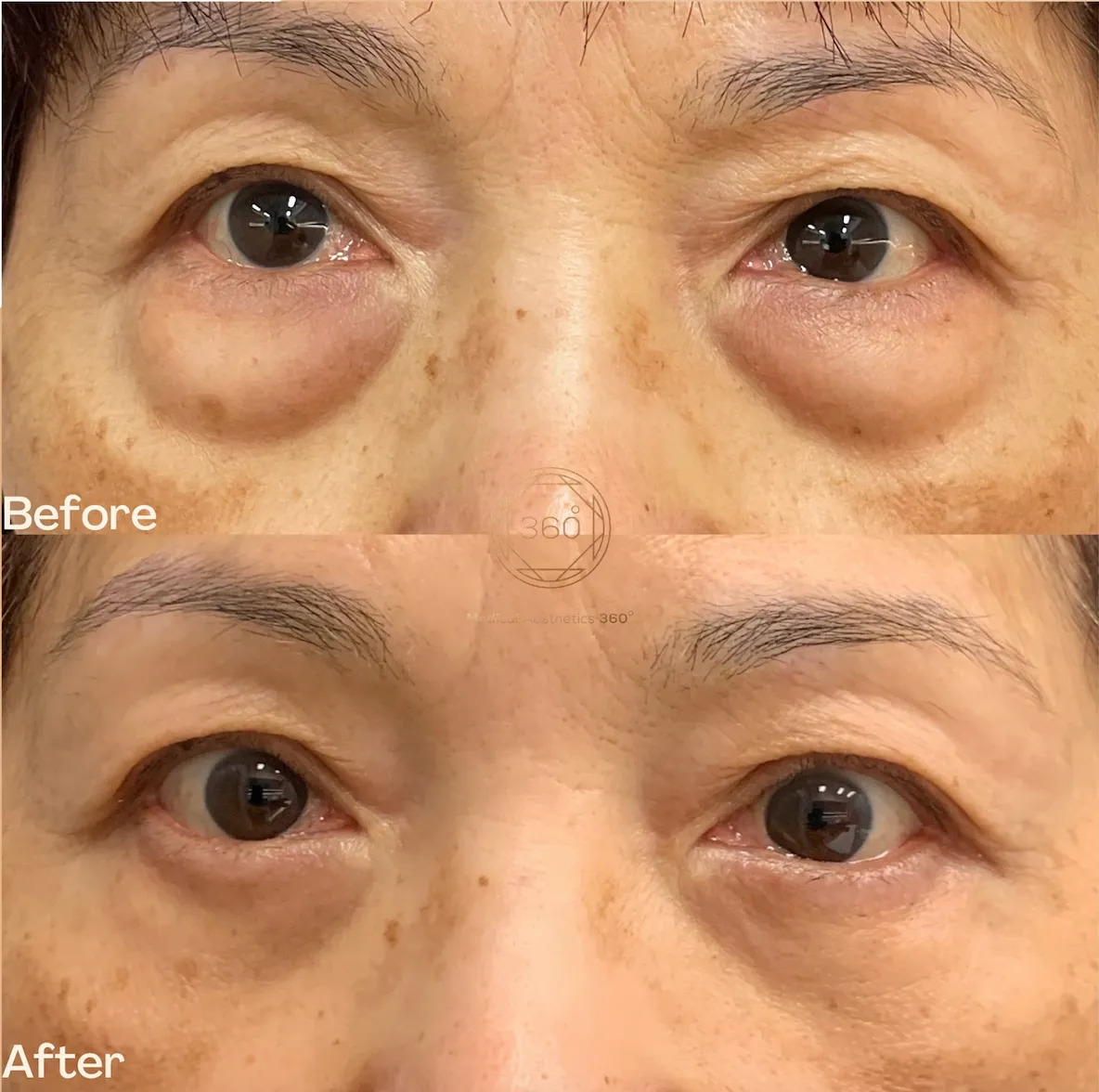
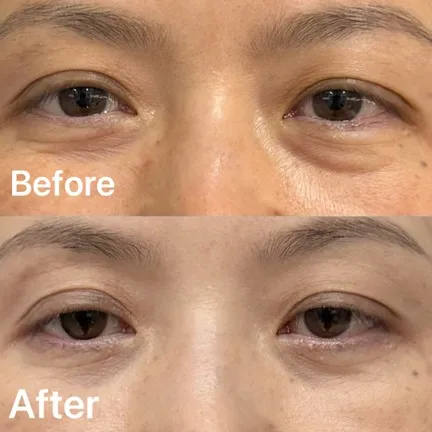
Related case studies

Examples of eye bag treatment

These photographs show individual patients rather than a promised outcome. Anatomy, treatment choice and response vary.

Start with the cause

Why lower eye bags do not all need the same treatment

The under-eye area is a meeting point between fat, skin, muscle, bone and fluid drainage. Two people may both describe “eye bags” while having very different anatomy.

Prominent fat pads A distinct bulge can form as lower-eyelid fat becomes more visible. This is the main concern considered for targeted fat reduction.
Tear trough hollowing A hollow below the bag can deepen the shadow. Reducing fat alone may not create a smooth transition.
Skin and lid laxity Fine creasing or loose skin needs separate assessment. Marked skin excess or lid looseness may need another approach.
Fluid, pigment or festoons Morning swelling, allergy-related puffiness, darker pigment and cheek-level festoons are not the same as lower-eyelid fat.

The treatment explained

What is transconjunctival radiofrequency fat reduction?

Medical Aesthetics 360 uses this term for a targeted treatment in which insulated-needle radiofrequency energy is delivered to selected lower-eyelid fat through an internal lower-eyelid access pathway. The controlled energy is intended to reduce a small, localised pocket of fat while limiting unnecessary heating at the surface.

It is a minimally invasive device procedure, not conventional excisional eyelid surgery. The exact access, needle placement and number of treatment points depend on the individual eye area and are explained during consultation.

A natural result is not simply about removing as much volume as possible. Careful planning aims to soften the bulge without leaving the under-eye area hollow or changing the character of the eyes.

Suitability

Who may be a good candidate?

Suitability is based on examination, medical and eye history, tissue quality and the result you want. A visible bag does not automatically mean fat reduction is the best choice.

It may be considered when

  • The lower-eye bulge is caused mainly by a small, defined pocket of prominent fat.
  • You want a less invasive option and understand that improvement is gradual and variable.
  • Your lower eyelid has suitable tone and there is not a large amount of excess skin.
  • You are well, have realistic expectations and can follow eye-area aftercare.

Another plan may be more appropriate when

  • Dark circles are mainly due to pigment, thin skin, visible vessels or a deep tear trough.
  • There is marked loose skin, significant lower-lid laxity or a need for surgical correction.
  • Puffiness fluctuates with allergies, fluid retention or another medical issue.
  • Malar bags or festoons sit lower on the cheek rather than within the lower eyelid.

What the research says

Evidence for insulated-needle radiofrequency

A small prospective study of 22 people assessed a micro-insulated needle radiofrequency system for lower-eyelid fat bulging. Participants had two treatments four weeks apart, with improvement reported by 12 weeks and maintained at the 24-week follow-up.

Useful evidence, with important limits

The study was uncontrolled, involved a small group and followed participants for six months. It supports the treatment as a potentially useful option, but it does not prove permanent results, predict an individual response or establish equivalence to eyelid surgery.

Read the indexed study on PubMed

Your treatment pathway

From assessment to review

The treatment should be planned around the structure of your lower eyelid, not applied as a standard set of settings.

01

Detailed assessment

Your practitioner reviews medical and eye history, previous procedures, medicines, dry-eye symptoms and what changes through the day.

02

Treatment planning

The lower-eye bulge, tear trough, skin quality, lid tone and facial balance are examined. Alternatives are discussed when fat is not the main issue.

03

Targeted radiofrequency

After appropriate anaesthesia, controlled radiofrequency is delivered to the selected tissue. Appointment length varies with the treatment plan.

04

Healing and review

You receive individual aftercare and review timing. Progress is assessed after early swelling has settled and tissue remodelling has had time to develop.

Recovery and results

What the following weeks may look like

Recovery differs between patients and depends on treatment extent. Plan for visible swelling rather than assuming the eye area will look unchanged immediately afterwards.

First 1–3 days

Swelling, tenderness, redness and bruising may be most noticeable. Some people also experience temporary altered sensation or eye-area sensitivity.

During the first week

Puffiness and bruising usually begin to settle, although the area may still look uneven. Social downtime is personal and can be longer than expected.

Following weeks

Change becomes easier to judge as swelling resolves. Radiofrequency-related tissue response can continue over several weeks, and staged treatment may be advised.

Aftercare essentials

  • Use cool compresses, prescribed products or eye drops only as directed.
  • Keep the area clean and avoid rubbing, pressing or massaging unless instructed.
  • Pause strenuous exercise, swimming, heat exposure and eye makeup for the advised period.
  • Wear sunglasses outdoors and attend the recommended review appointments.

How long do results last?

Treated fat cells are not expected to behave like temporary swelling, but the face continues to age and untreated tissues can change. Longevity varies with anatomy, treatment response and the original cause of the eye bag.

No procedure can guarantee a permanent result. A conservative second session or a different treatment may be more appropriate than aggressive correction in one visit.

Informed decision-making

Possible side effects and risks

The lower eyelid is a delicate anatomical area. Your consultation should cover common short-term effects, less common complications and the possibility that the result may not meet your expectations.

Possible effects include

  • Swelling, bruising, redness, tenderness and temporary numbness or sensitivity.
  • Temporary eye irritation, watering, dryness, light sensitivity or blurred vision.
  • Asymmetry, contour irregularity, under-correction, over-correction or a hollow appearance.
  • Persistent oedema, infection, skin injury, pigment change, scarring or prolonged discomfort.
  • A need for further treatment or referral for a different procedure.

Patient questions

Scarless eye bag removal FAQs

What is transconjunctival radiofrequency fat reduction?
It is Medical Aesthetics 360’s name for a minimally invasive treatment that applies controlled radiofrequency energy to a chosen pocket of lower-eyelid fat. Access is from inside the eyelid, so the outer skin is not cut.
Is scarless eye bag removal really scarless?
“Scarless” refers to the absence of an external lower-eyelid skin incision. The treatment still creates a controlled tissue response, requires healing and carries a small risk of complications, including scarring.
Is this eye bag treatment surgery?
It is described here as a minimally invasive radiofrequency procedure rather than conventional excisional eyelid surgery. It does not remove loose skin and is not a substitute for surgery when marked skin excess or lid laxity needs correction.
Who is most likely to be suitable?
It may suit adults with a small, defined lower-eyelid fat bulge, suitable lid tone and realistic expectations. A face-to-face examination is needed because puffiness and dark circles can have several causes.
Will it treat dark circles, loose skin or tear troughs?
Not necessarily. Pigmentation, visible vessels, thin skin, hollowing and skin laxity need their own assessment. A combined or entirely different plan may create a more balanced result.
How many treatments will I need?
Some patients may be treated once, while others may benefit from a staged course. The amount of fat, tissue response and preference for conservative correction influence the recommendation.
How much downtime should I allow?
Expect some swelling, tenderness and possible bruising during the first week. The point at which you feel comfortable returning to work or social plans depends on treatment extent and your own healing.
When will I see a result, and how long can it last?
Early swelling can obscure the result. Improvement is generally assessed over the following weeks as the area settles. Results vary, and natural ageing continues, so permanence cannot be promised.
What are the main risks?
Risks include bruising, swelling, altered sensation, eye irritation, asymmetry, contour change, infection, pigment change, scarring, an unsatisfactory result and the need for additional treatment. Rare but serious eye symptoms require urgent assessment.
How much does eye bag treatment cost in Sydney?
Pricing depends on the anatomy being treated, complexity and whether a staged plan is advised. A personalised quotation is provided after assessment rather than before the cause of the eye bag has been established.
General information only. It does not replace a medical consultation or individual advice. Suitability, recovery, risks and outcomes vary between patients.