


Temple Volumising Sydney: Natural Upper-Face Balance
Hollow temples can make the upper face look sharper, more tired or less softly contoured, even when the concern is difficult to pinpoint. Temple volumising aims to restore gentle support between the forehead, brow and cheek while preserving the features that make your face recognisably yours.
At Medical Aesthetics 360, temple hollowing is assessed in the context of the whole face. Consultations in Chatswood and Hurstville focus on proportion, realistic change and whether treatment is appropriate for your anatomy and goals.
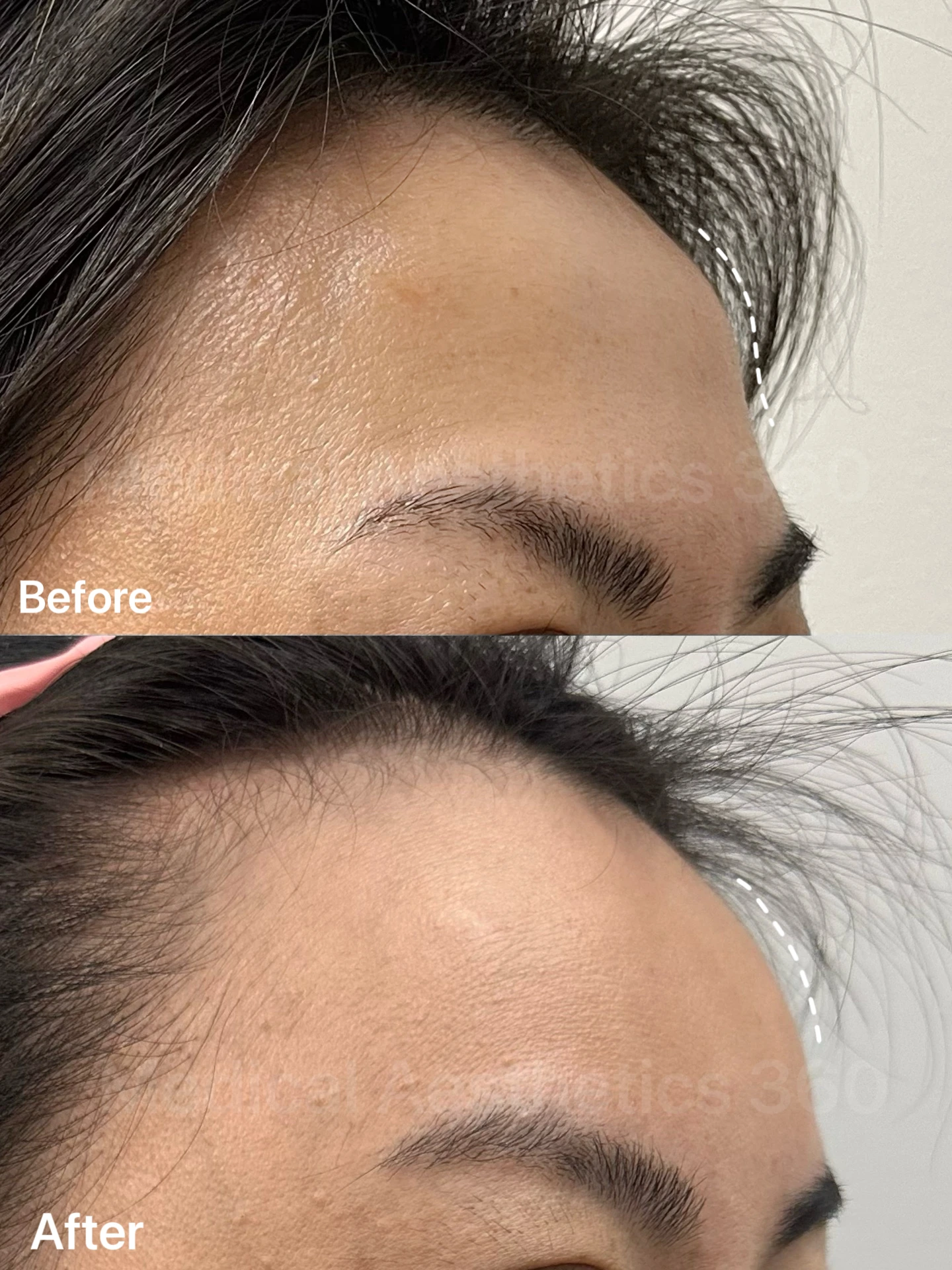
Temple Volumising Case Studies
These examples show how temple hollowing can change upper-face contour. The images are displayed in their original proportions and have not been cropped.
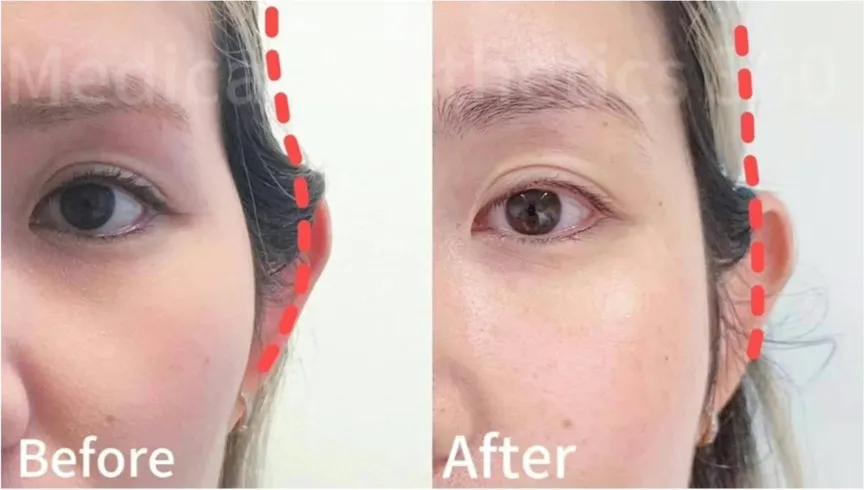
When Sunken Temples Affect Facial Softness
A whole-face assessment explored why the upper face appeared more angular and tired, with temple hollowing identified as an important part of the overall contour.
Read the sunken temples case study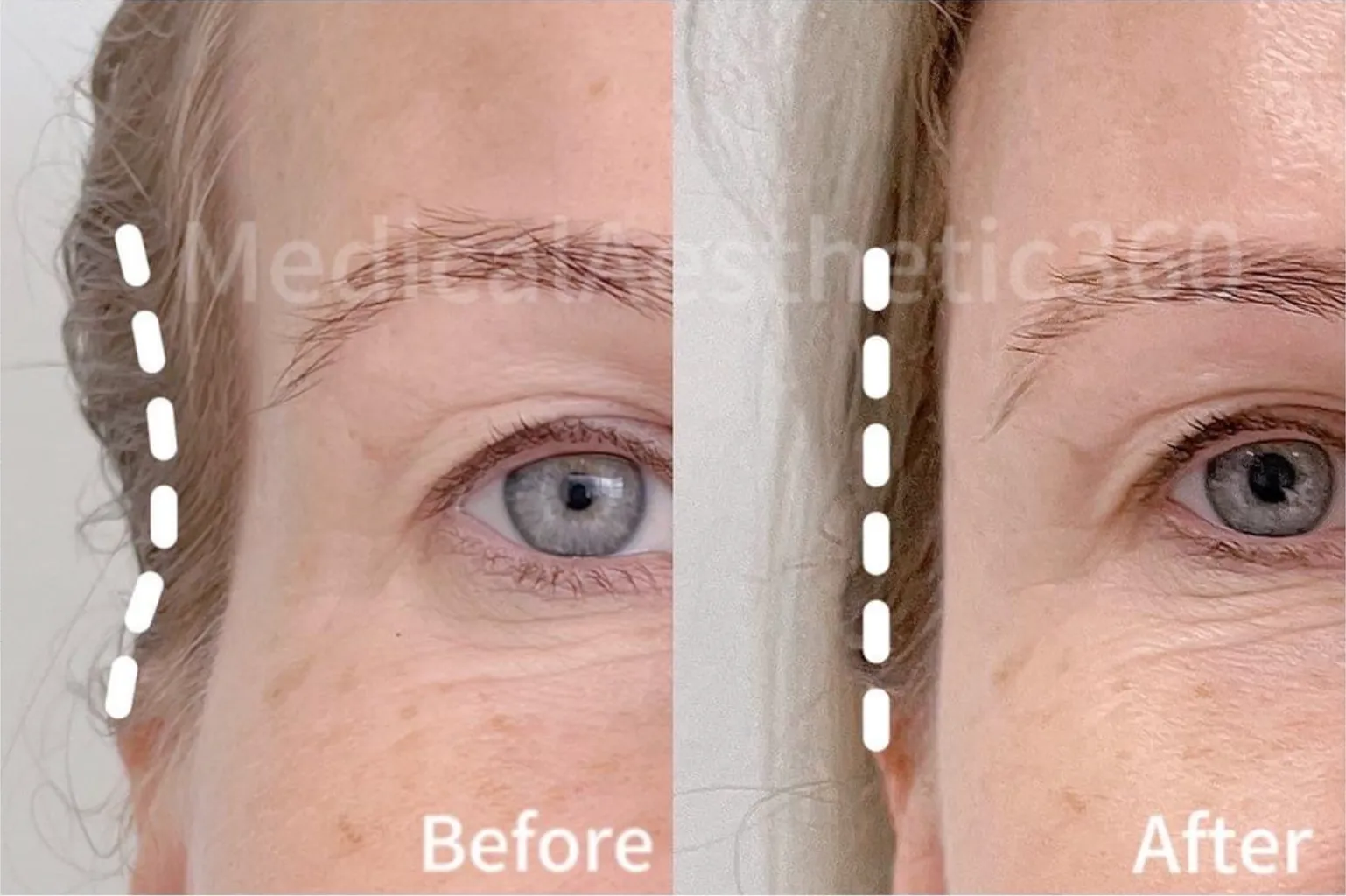
Restoring a Smoother Upper-Face Contour
This plan focused on creating a gentler transition through the temple while retaining natural movement, proportion and facial character.
Read the temple contour case studyWhat Is Temple Volumising?
The temples sit between the forehead, brow and cheek. This area may look hollow because of natural facial structure, age-related changes in fat and bone, or weight change. As support reduces, the side of the forehead can appear more concave and the upper face may look more angular.
Temple volumising is a non-surgical approach intended to restore selected areas of lost support. The aim is not to make the temple prominent. It is to soften excessive concavity and create a smoother visual transition through the upper face.
The right degree of correction is different for every person. Some patients benefit from temple treatment alone, while others may be better served by addressing another area or choosing no treatment after assessment.
Why the Temple Should Never Be Assessed Alone
A successful plan is based on anatomy and proportion, not a standard amount of correction.
Whole-Face Assessment
The forehead, brow, lateral eye area and cheeks are considered together because each can change how temple hollowing is perceived.
Measured Correction
The amount and location of support are tailored to your degree of hollowing, facial structure and preferred level of change.
Natural Proportion
The goal is a softer contour that belongs with the rest of your face, rather than a rounded or visibly over-corrected temple.
A Detailed Assessment Matters in This Area
The temple contains blood vessels, nerves and multiple tissue layers, and anatomy varies between people. This is why treatment decisions require a clear understanding of the area, a conservative plan and discussion of both common and uncommon risks before proceeding.
Temporary swelling, tenderness, redness, bruising, asymmetry or lumpiness can occur. Less common but serious complications may involve infection, vascular compromise, skin injury or visual disturbance. Urgent symptoms and the clinic's aftercare pathway should be explained before treatment.
What to Expect
Appointment length and recovery vary with the individual plan. Treatment itself is often completed in 15 to 30 minutes, with additional time for assessment and preparation.
Facial Assessment
Your concerns, health history, facial proportions and temple anatomy are reviewed. Photos may be used to support planning and an honest discussion of likely benefit.
Personalised Plan
If treatment is suitable, the proposed approach, expected degree of correction, alternatives, costs, risks and consent are discussed before proceeding.
Settling and Aftercare
Mild swelling or bruising may be noticeable for several days. You will receive advice about pressure, exercise, skin care and when to seek prompt review.
Results That Settle Into the Face
A change may be visible soon after treatment, although early swelling can temporarily affect symmetry and contour. The result is better judged after the area has settled.
Longevity is not identical for every patient. It depends on the selected treatment, amount used, individual metabolism, tissue characteristics and future facial ageing. Maintenance, if appropriate, should be based on review rather than a fixed schedule.
What does the evidence show?
A 2025 multicentre randomised controlled trial of one hyaluronic acid product reported significantly greater improvement in temple hollowing than no treatment at three months, with response remaining high through 13 months. The findings are product- and protocol-specific, several authors reported industry relationships, and they do not predict an individual result. Read the temple hollowing study on PubMed.
Temple Volumising FAQ
Clear answers to the practical questions patients commonly ask before a temple hollowing consultation in Sydney.
What causes hollow or sunken temples?
Temple shape reflects genetics, bone structure, soft tissue volume and skin quality. Ageing and weight change can reduce support and make a naturally concave area more noticeable.
Will temple volumising make my face look wider?
A conservative plan is intended to soften excessive hollowing, not create obvious width. The degree of correction is chosen in relation to your forehead, brow and cheek proportions.
How soon can I see a result?
Some improvement may be visible immediately, but swelling can temporarily change the contour. The area should be allowed to settle before the result is assessed.
How long do temple volumising results last?
Duration varies with the treatment selected, the amount used and individual factors. Published results for one studied product extended beyond a year, but this should not be treated as a guarantee for every patient or treatment approach.
How much downtime should I allow?
Many patients return to usual activities quickly, although swelling, tenderness, redness or bruising can last several days. Plan around important events in case visible bruising takes longer to settle.
Is temple treatment painful?
Sensation varies. You may feel pressure, tenderness or short-lived discomfort during treatment. Comfort options and what to expect should be explained as part of your plan.
What are the warning signs after treatment?
Increasing or severe pain, unusual pale or mottled skin, coolness, rapidly worsening swelling, visual change or neurological symptoms require immediate contact with the treating clinic and urgent assessment.
Can temple volumising be combined with other treatments?
Sometimes, but more treatment is not automatically better. Adjacent areas may be considered only when they meaningfully affect balance and when combination treatment is suitable for you.
Related Facial Treatments and Sydney Clinics
Learn how neighbouring areas can influence facial balance or find the Medical Aesthetics 360 location most convenient for you.
Suitability, alternatives, expected recovery and risks are confirmed during an individual consultation. Results and recovery vary between patients.