For lips that look smoother, softly defined and subtly fuller without adding injectable volume.
LipLase uses Fotona laser energy inside the mouth and across selected external lip areas to support gradual tissue remodelling. At Medical Aesthetics 360, treatment planning begins with the shape of your lips, the quality of the surrounding skin and the degree of change you actually want.
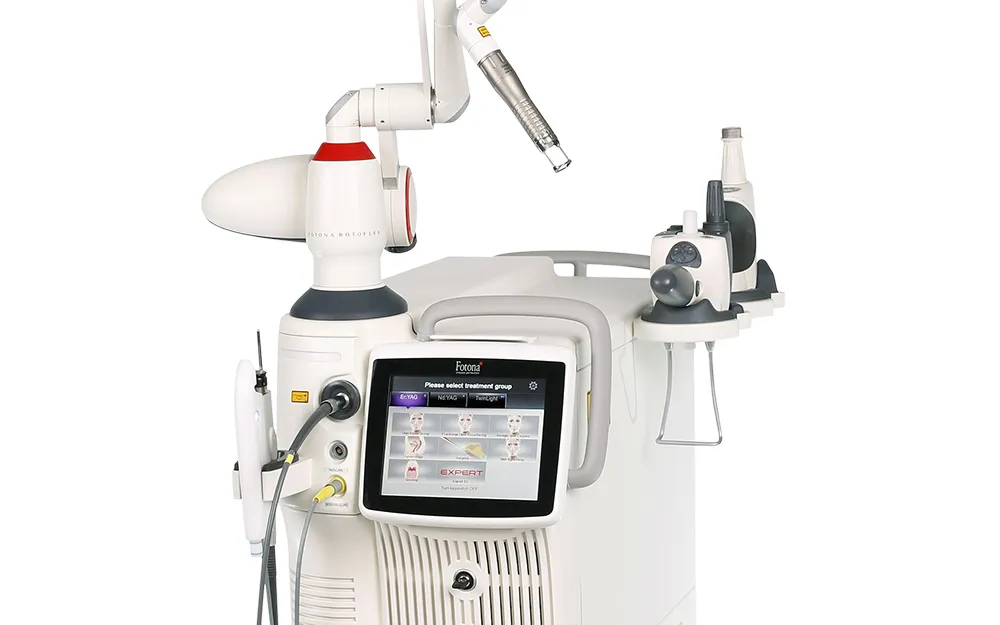
Fotona technology used for lip and perioral treatment planning.
No needlesA laser-based approach without injected volume
15-30 minutesTypical treatment time after assessment and preparation
Usually a courseOften three to four sessions, tailored to response
Gradual changeDesigned for subtle remodelling rather than dramatic volume
A different kind of lip enhancement
Refinement from the tissue itself
LipLase is selected when a patient prefers a non-invasive pathway and understands that the change is usually modest. It is not intended to reproduce the immediate projection or precisely placed volume achievable with an injectable treatment.
May soften the look of fine surface lines
Can support a clearer lip border and smoother texture
May improve mild age-related softening around the mouth
Leaves facial expression and lip movement unchanged
The Fotona platform supports several facial protocols; the treatment mode and target area determine what it is being used to address.
Realistic treatment goals
What LipLase can and cannot do
Good treatment planning starts with a clear understanding of the likely degree of change. LipLase is best considered for goals that match its gradual, subtle approach.
It may be useful for
Naturally fine lips where only a subtle improvement is wanted
Early age-related loss of softness, definition or firmness
Selected lip lines and mild creasing around the mouth
Patients who prefer a treatment without needles or implanted material
Supporting lip quality as part of a wider Fotona facial plan
It is not a substitute for every option
It cannot reliably create a large or precisely measured volume increase
It may not correct marked asymmetry or structural imbalance
Deep folds or significant volume loss may need a different strategy
Temporary swelling should not be mistaken for the final result
Some patients see little visible change despite completing a course
How Fotona LipLase works
Two treatment directions, one lip-focused plan
LipLase uses a 2940 nm Er:YAG laser in a non-ablative thermal mode. Because this wavelength is strongly absorbed by water, the way energy is delivered matters: the aim is controlled heating and remodelling rather than cutting or adding a foreign material.
Treatment may include both intraoral and external passes. The exact sequence, coverage and energy are adjusted to anatomy, sensitivity and the concerns being treated.
01
Inside the mouth
Non-ablative passes are delivered to selected inner lip and oral mucosal areas to create a controlled thermal effect from within.
02
Lip body and border
External treatment can focus on the vermilion, lip border and selected zones where definition or texture is the priority.
03
Surrounding mouth area
Where appropriate, the plan may extend to the philtrum, mouth corners or fine perioral lines rather than treating the lips in isolation.
Who may consider treatment
Suitability depends on the lips, not just the wish list
Assessment separates concerns that may respond to gradual laser remodelling from those that need structural support, diagnosis or a different procedure.
Often considered
Subtle lip definition or smoothness goals
Early softening of the lip border
Mild perioral lines
A preference to avoid needles
Needs careful discussion
Previous lip procedures or implanted material
Frequent cold sores
Melanin-rich skin with a history of pigment change
Medicines affecting healing or light sensitivity
Usually postpone
Active cold sores, mouth ulcers or infection
Broken or significantly inflamed skin
Recent dental or lip procedures until reviewed
Pregnancy or other circumstances where elective treatment is deferred
LipLase versus injectable volume treatment
The right choice depends on the change you want
These approaches are not interchangeable. One encourages gradual tissue response; the other is used when placed volume and contour adjustment are the main goals.
Comparison point
Fotona LipLase
Injectable volume treatment
Main aim
Subtle definition, texture and lip-quality support
Placed volume, projection and contour adjustment
How change develops
Gradually across a course and subsequent remodelling
Immediate volume with settling over the following days
Typical magnitude
Usually subtle and dependent on biological response
More predictable volume change, still anatomy-dependent
Treatment course
Commonly several sessions around one month apart
Often a single appointment followed by review
Best fit
Patients prioritising a needle-free, understated direction
Patients seeking defined volume or structural correction
32
participants in a published study of a different non-ablative laser approach for lip volume, texture and colour.
That study used a 1064 nm Q-switched Nd:YAG laser, not the Fotona Er:YAG LipLase protocol. Smaller reports involving non-ablative Er:YAG and more recent combined laser studies also suggest potential improvement in upper-lip firmness and perioral lines, but the overall evidence base remains limited by modest sample sizes, short follow-up and inconsistent protocols.
What this means for patients: there is a plausible collagen-remodelling rationale and early clinical evidence for laser-based lip rejuvenation, but results should be described as variable and generally subtle. Brand-specific, long-term comparative evidence is still developing.
What happens at an appointment
A short treatment with careful preparation
The procedure itself is relatively brief, but screening and technique matter because the lips are sensitive and cold-sore history can change the plan.
01
Assessment
Lip structure, symmetry, skin quality, goals, health history and previous procedures are reviewed.
02
Preparation
The treatment area is checked and eye protection is used. Comfort and cold-sore precautions are discussed.
03
Laser passes
Controlled passes are delivered internally and externally according to the selected LipLase protocol.
04
Aftercare
You receive guidance for lip care, heat exposure, sun protection and symptoms that warrant review.
Treatment course and results
Collagen timing cannot be rushed
A common starting plan is three to four sessions around four weeks apart. Some published and manufacturer protocols use different schedules, so the course should respond to your tissue, tolerance and progress rather than follow a rigid package.
Any early plumping from swelling settles. A more meaningful assessment is made after the treatment course, with collagen-related change potentially continuing for three to four months. Maintenance is considered only if the initial response justifies it.
Appointment
Often about 15 to 30 minutes after preparation
Common course
Three to four treatments, often around one month apart
Early response
Warmth and temporary swelling may be visible first
Developing result
Gradual change over the course and following months
Maintenance
Individualised after review rather than automatically every three months
Recovery and safety
Minimal downtime does not mean zero reaction
Most people can return to usual activities promptly, but lips can react visibly because the tissue is delicate and highly vascular.
Common short-term effects
Warmth, tenderness or sensitivity
Mild redness or swelling
Dryness, tightness or light peeling
Temporary accentuation of lines as the lips dehydrate
Risks that need discussion
Cold-sore reactivation
Burn, blistering or delayed healing
Temporary or persistent pigment change
Scarring, infection, uneven response or no meaningful improvement
Fotona LipLase questions
Frequently asked questions
Clear answers about results, comfort, recovery and treatment planning.
What is Fotona LipLase?
Fotona LipLase is a non-invasive laser protocol for the lips and surrounding mouth area. It uses a non-ablative Er:YAG mode to deliver controlled thermal stimulation, with the aim of supporting collagen remodelling and a subtly smoother, more defined appearance.
Is LipLase the same as lip filler?
No. LipLase does not place a volumising material into the lips and cannot create the same measured or immediate projection as an injectable volume treatment. It is generally considered when the goal is gradual, subtle refinement of lip texture, border and perioral skin.
What can LipLase improve?
Depending on anatomy and response, LipLase may support smoother lip texture, a more visible vermilion border, mild fullness and improvement in selected fine lines around the mouth. It will not correct every cause of lip asymmetry, volume loss or deep perioral folds.
How does Fotona LipLase work?
The protocol uses controlled Er:YAG laser energy on the inner lip and selected external lip or perioral areas. The thermal effect is intended to stimulate tissue remodelling without surgical incisions or injectable material. Technique and settings should be adapted to the individual.
How long does a LipLase appointment take?
Treatment commonly takes about 15 to 30 minutes after assessment and preparation. Appointment length varies with the areas treated, the selected protocol and whether LipLase is part of a broader Fotona plan.
Is LipLase painful?
The lips are sensitive, so comfort varies. Patients commonly describe warmth, prickling or brief hot sensations. Treatment intensity can be adjusted and pauses can be taken; it should not be promoted as completely painless for everyone.
How many LipLase sessions are usually needed?
A course often involves three to four sessions around four weeks apart, although some protocols and individual plans differ. The appropriate number depends on baseline lip structure, treatment response, goals and tolerance.
When are LipLase results visible?
Temporary swelling can create an early change, but this is not the final result. Collagen-related improvement is expected to develop gradually across the treatment course and may continue over the following three to four months.
How long do LipLase results last?
Longevity varies and robust long-term LipLase data are limited. Ageing, sun exposure, smoking, lip movement and the initial treatment response can all influence duration. Maintenance should be based on review rather than a fixed timetable.
Is there downtime after Fotona LipLase?
Many patients return to routine activities promptly, but temporary redness, warmth, swelling, tenderness, dryness or light peeling can occur. Social downtime is often limited, although recovery varies with settings and individual sensitivity.
Can LipLase trigger a cold sore?
Laser treatment around the lips can reactivate herpes simplex in susceptible people. Tell the clinic about any history of cold sores before treatment so the timing and need for medical advice or preventive medication can be considered. Active cold sores require postponement.
What aftercare is recommended after LipLase?
Follow the aftercare supplied for your settings. This commonly includes gentle lip care, avoiding picking or exfoliation, using appropriate sun protection on the surrounding skin and avoiding excessive heat until sensitivity settles.
Who should postpone LipLase?
Treatment is usually postponed for active cold sores, mouth ulcers, infection, broken skin or significant inflammation. Pregnancy, relevant medicines, recent procedures and a history of abnormal scarring or pigment change should be discussed during consultation.
Is LipLase available in Chatswood and Hurstville?
Medical Aesthetics 360 provides Fotona treatment planning in Sydney through its Chatswood and Hurstville clinics. Availability and suitability should be confirmed when arranging an appointment.
How much does LipLase cost in Sydney?
Cost depends on the treatment area, protocol, number of sessions and whether LipLase is combined with another Fotona treatment. A personalised plan and current pricing can be provided after assessment.
Medical Aesthetics 360 Sydney
LipLase planning in Chatswood and Hurstville
A useful consultation is less about selling one device and more about deciding whether your goal is texture, border definition, structural volume or a combination. That distinction helps avoid asking a subtle collagen treatment to do the job of a different procedure.
Chatswood
Suite 203/38B Albert Avenue Chatswood NSW 2067
Hurstville
41-43 Dora Street Hurstville NSW 2220
Explore related treatment information
Lip, skin and Fotona treatment directory
Compare adjacent options and learn how the wider treatment plan may change when volume, lines, skin quality or another facial area is the main concern.
This information is general and does not replace personal medical advice. Treatment response, recovery and complications vary. Suitability, settings and any need for cold-sore precautions must be assessed individually. No cosmetic treatment can promise a particular result.