


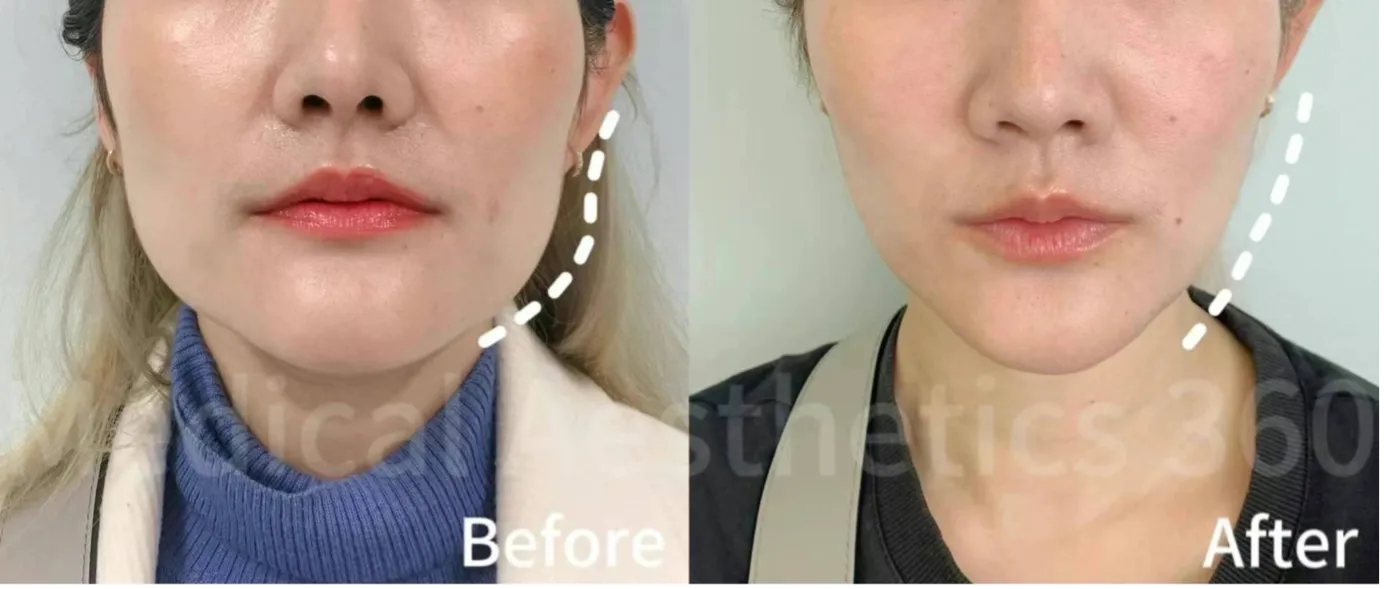
Jaw muscle and profile assessment
This example considers lower-face shape alongside a history of jaw tension rather than treating appearance in isolation.
View this jaw tension case studyMedical Aesthetics 360° · Chatswood & Hurstville
Understand what shapes your lower face. Explore face slimming, masseter prominence and jawline balance with a doctor-led assessment at MA360.
A broader or square jaw can reflect muscle, bone, facial fat, skin support or chin position. We start with the cause, your chewing function and your priorities, then explain what may be appropriate—and what may not need treatment.
Visit our Chatswood clinic or Hurstville clinic. You can enquire with your concern; you do not need to choose a procedure first.
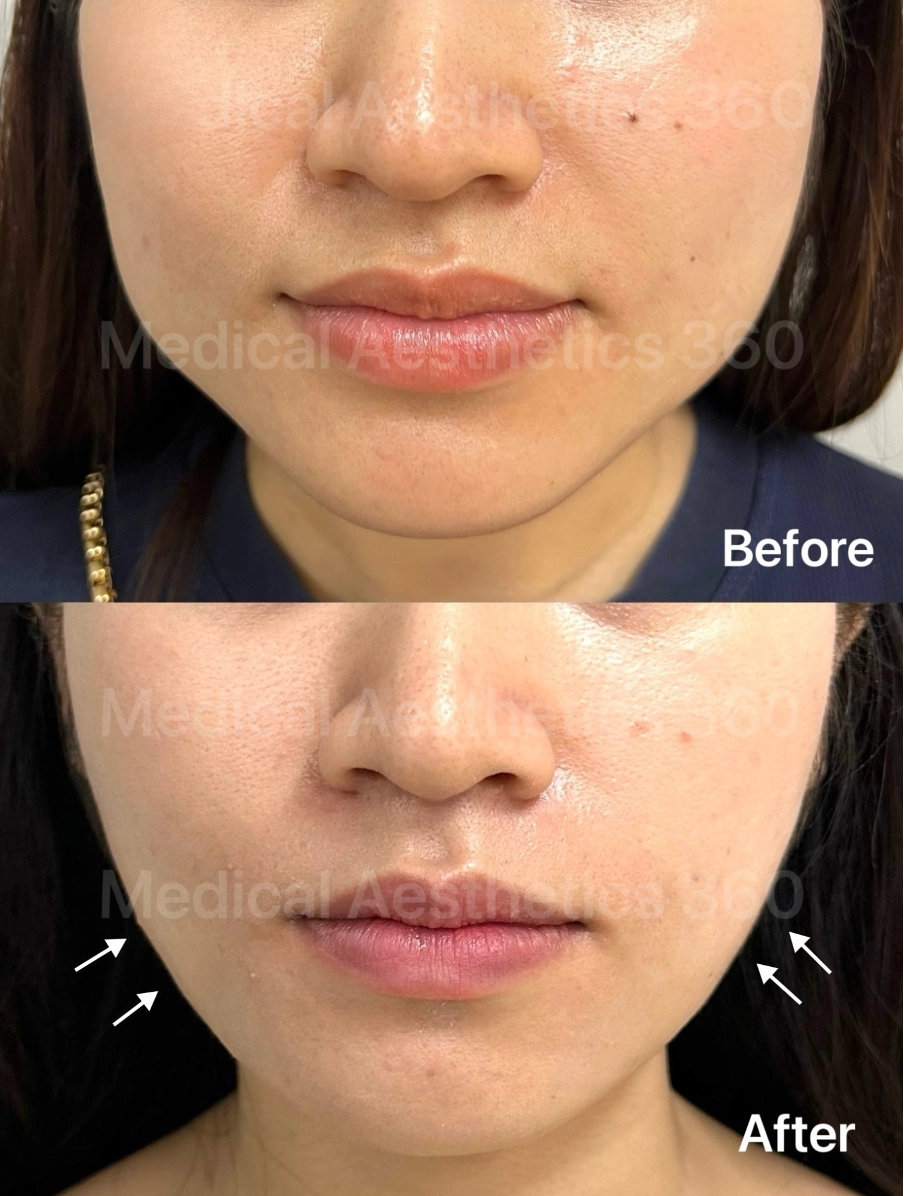
Individual before-and-after examples. Outcomes vary; photographs cannot predict your result. The original images are shown without cropping.
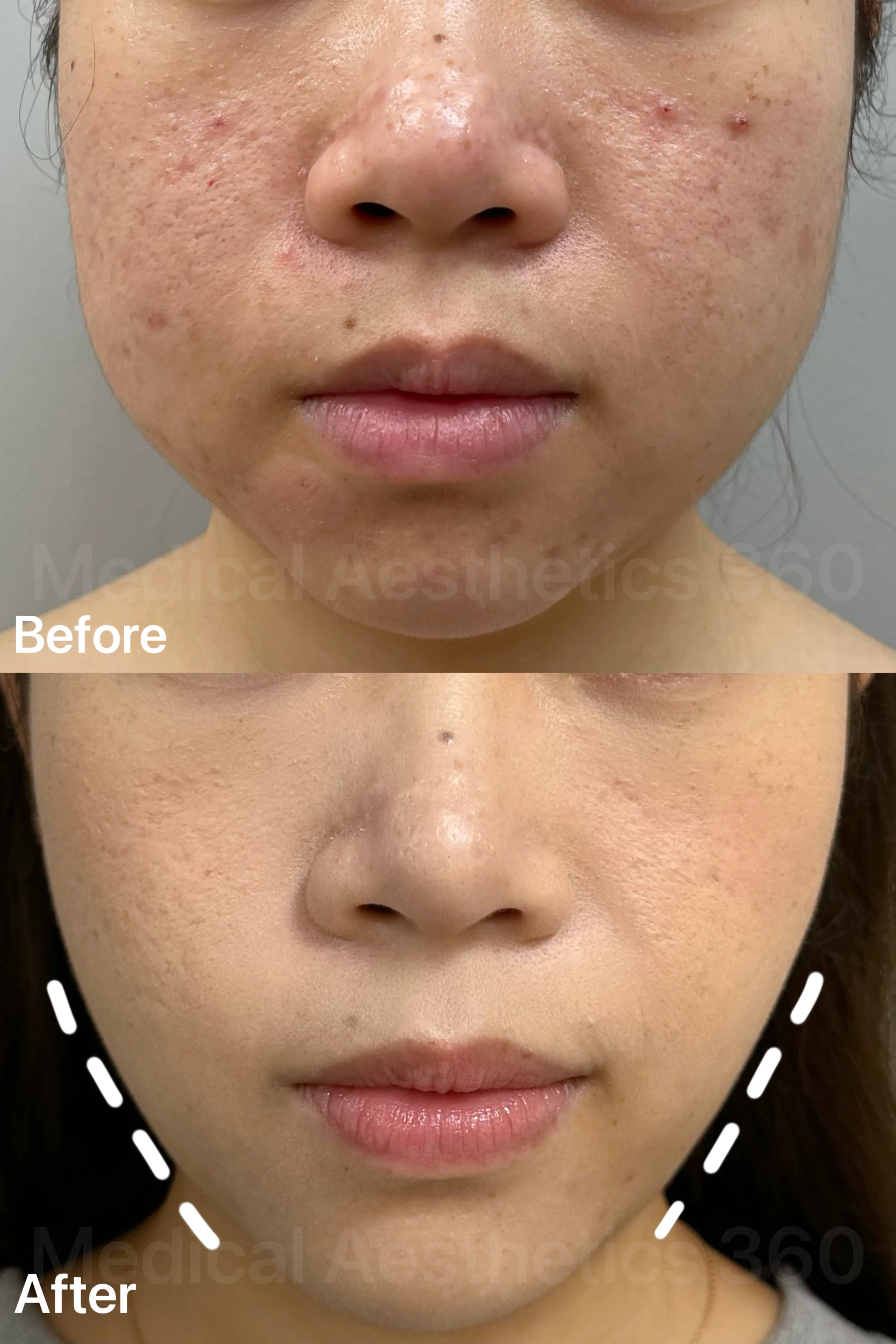
Understanding lower-face width
Strong masseter muscles can make the area near the back of the jaw look wider, especially when you clench. But the same impression may come from the underlying mandible, fullness beneath the skin, reduced skin support or a chin that appears short or recessed.
This distinction matters. An approach aimed at muscle activity will not narrow bone, remove facial fat or tighten loose skin. Assessment helps avoid choosing a treatment for the wrong tissue.
Muscle-driven width often becomes more obvious on clenching. Strength, symmetry and chewing function all need consideration.
What a masseter assessment involves →The natural width and angle of the mandible are structural features. A non-surgical muscle approach does not change the bone.
Understand suitability and limits →Under-chin fullness or skin laxity can blur the jawline even when the masseter is not enlarged.
Compare under-chin fullness with skin laxity and tightening; they are different concerns.
Projection, length and the relationship between the chin, cheeks and jaw may influence how wide the lower face appears.
Read about chin profile assessment and jawline definition when facial balance is your main question.
Related face slimming case studies
Read each case for its individual context. The full photographs are shown without cropping. Cosmetic appearance and jaw symptoms require separate assessment; an image cannot establish functional improvement.
This example considers lower-face shape alongside a history of jaw tension rather than treating appearance in isolation.
View this jaw tension case study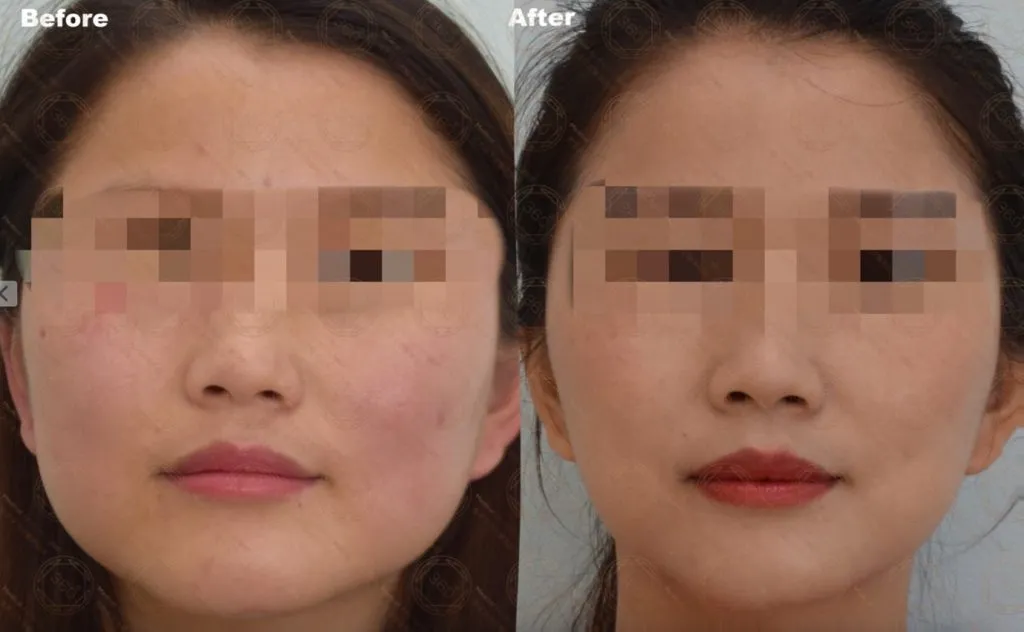
This case illustrates why the jaw, chin and surrounding facial proportions are reviewed together.
View this facial proportion case study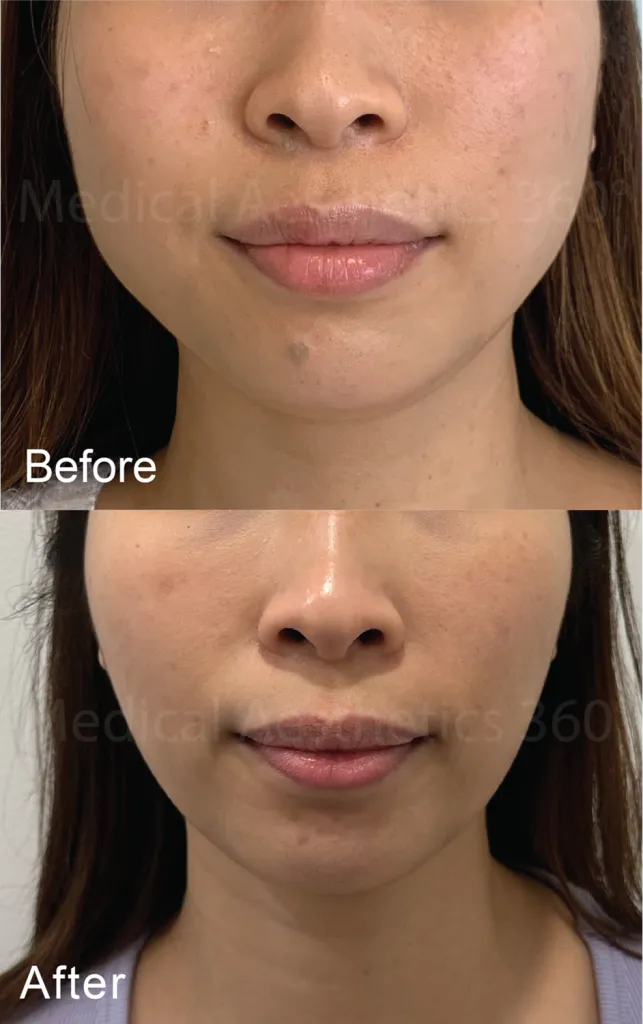
This example brings teeth grinding, muscle activity and cosmetic goals into the same assessment.
View this teeth grinding case studyBruxism, clenching and jaw tension
Bruxism is clenching or grinding that is separate from normal chewing. It may happen while awake or asleep, and some people do not know it is occurring until a dentist finds tooth wear or a partner hears grinding at night.
A prominent masseter does not prove that you have bruxism. In the same way, reducing jaw muscle activity does not repair tooth damage, protect teeth from further wear or address every trigger for grinding.
For dental context, read the NIH guide to teeth grinding and clenching. Cosmetic assessment does not replace dental diagnosis or care.
A night guard can protect teeth and serves a different purpose from a procedure intended to change muscle activity. Some patients may need both cosmetic and dental perspectives; others may need dental care alone.
Evidence in context
A 2026 systematic review and meta-analysis included five randomised, placebo-controlled trials with 536 participants who had masseter muscle hypertrophy. Masseter-directed treatment was associated with short-term improvement in muscle prominence, muscle thickness and patient-reported satisfaction.
The authors also found substantial variation between studies. They could not define an optimal protocol and called for standardised trials with longer follow-up. This means research can support a discussion, but it cannot predict an individual result. Read the masseter hypertrophy systematic review on PubMed.
This review concerns a specific intervention for masseter hypertrophy. It does not establish benefit for every face shape, jaw disorder or treatment pathway.
Your consultation
The term face slimming can refer to different clinical approaches. If muscle is the main contributor and a non-surgical option is suitable, the details are discussed privately after assessment. Changes from muscle-directed care develop gradually rather than immediately, and any effect is temporary.
If bone structure, facial fat, skin laxity or chin position is more relevant, another treatment category may be considered. A practitioner should also be comfortable recommending no cosmetic treatment when the likely benefit is small or the concern needs dental or medical care first.
Explore MA360’s doctors and the profiles of Dr Suzanna Luo, Dr Chun-Yen Huang and Dr Elena Luo. The team confirms the appropriate practitioner and availability at your preferred clinic.
Recovery and risk
The exact risk profile depends on the option discussed. A consultation should make both common and less common problems easy to understand.
Redness, tenderness, bruising, swelling, headache or discomfort may occur around the treated area.
Chewing fatigue, reduced bite force, asymmetry, altered smile or effects on nearby muscles can occur.
Possible outcomes include inadequate change, unwanted hollowing, skin appearing looser or temporary bulging of part of the masseter.
Your aftercare must match the treatment selected. If a skin-tightening pathway is recommended instead, read our skin-tightening aftercare guide alongside your clinician’s instructions.
Suitability and expectations
Treatment may not be appropriate during pregnancy or breastfeeding, for people under 18, where there is infection or inflammation in the area, or with certain neuromuscular conditions, medicines or previous reactions. Your practitioner needs a complete health history before making a recommendation.
Marked jaw asymmetry, a new or one-sided facial mass, persistent pain, bite change or restricted movement also deserves appropriate medical or dental investigation rather than being assumed to be cosmetic masseter enlargement.
There is no single fee that applies to every patient. Cost depends on the cause of the concern, clinical suitability and the individual plan. A written estimate can be provided after consultation, once the recommended approach and likely follow-up are clear.
Your estimate should also make the likely follow-up clear, so you can consider the overall time and financial commitment before deciding.
Choose your Sydney clinic
Read your clinic’s local information, plan your journey and request an appointment. Both locations offer an assessment-led starting point.
Sydney’s North Shore
Convenient for Chatswood and surrounding North Shore suburbs, with clinic access and travel information on the location page.
Explore the Chatswood clinicRequest a consultation · select Chatswood →St George & southern Sydney
For patients from St George, the Sutherland Shire and those travelling from Wollongong or the Illawarra. Plan your visit on the clinic page.
Explore the Hurstville clinicRequest a consultation · select Hurstville →Tuesday–Saturday, 9:00 am–5:30 pm · 1300 338 307. Confirm the appointment address with our team; Hurstville MediSpa uses a separate address.
Questions patients ask
Your next step
Bring your questions about lower-face width, masseter prominence or jawline balance. We will help you arrange a consultation at your preferred MA360 clinic.
Select Chatswood or Hurstville on the form. Our team confirms your appointment; an enquiry does not confirm a booking.