Choosing the right platform
How LaseMD compares with other skin treatments
Several technologies can improve skin quality, but they act differently. The best match depends on whether the priority is pigment, vascular redness, deep scarring, pores or laxity.
Treatment
Often considered for
Main distinction
Typical recovery
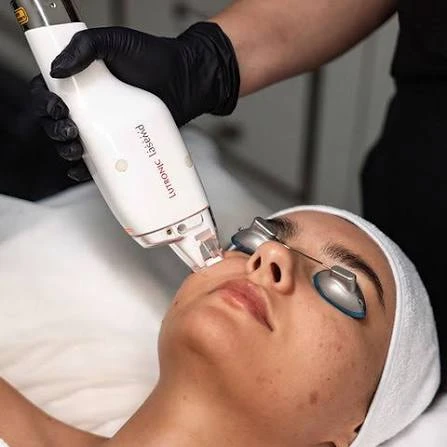
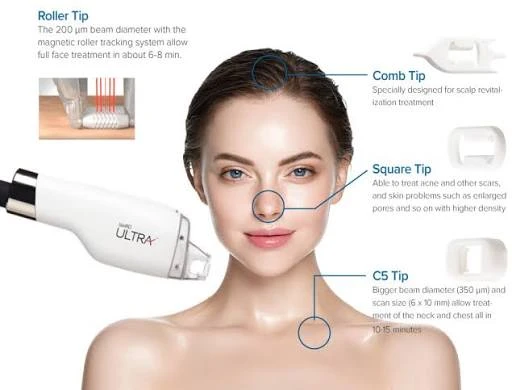
LaseMD
Often considered forSun damage, uneven tone, pores and superficial texture
Main distinctionNon-ablative 1927 nm fractional thulium treatment
RecoveryVariable; redness, bronzing and flaking increase with intensity
PicoSure
Often considered forSelected pigment, tattoo ink and photoageing applications
Main distinctionPicosecond pulses with wavelength-specific pigment targeting
RecoveryDepends on the lens, wavelength and target
Sciton BBL
Often considered forDiffuse redness, visible vessels and selected brown spots
Main distinctionBroadBand Light uses filters rather than a single laser wavelength
RecoveryOften mild, though pigment can darken before clearing
eCO2 laser
Often considered forDeeper acne scars, wrinkles and more intensive resurfacing
Main distinctionAblative fractional carbon dioxide laser
RecoveryUsually greater than non-ablative fractional treatment
Morpheus8
Often considered forPores, textural scarring and selected laxity concerns
Main distinctionRadiofrequency energy delivered through microneedles
RecoveryRedness and swelling vary with depth and energy