


Xanthelasma removal in Sydney, planned for delicate eyelid skin
Yellow plaques around the inner eyelids can be small and flat, or extend across the upper and lower lids. At Medical Aesthetics 360, treatment is selected after examining the lesion, the eyelid and the way the skin is likely to heal.
Xanthelasma is usually benign, but similar-looking eyelid lesions do exist. A careful assessment comes before any discussion of laser or surgery.
Arrange a xanthelasma consultationReal xanthelasma treatment examples
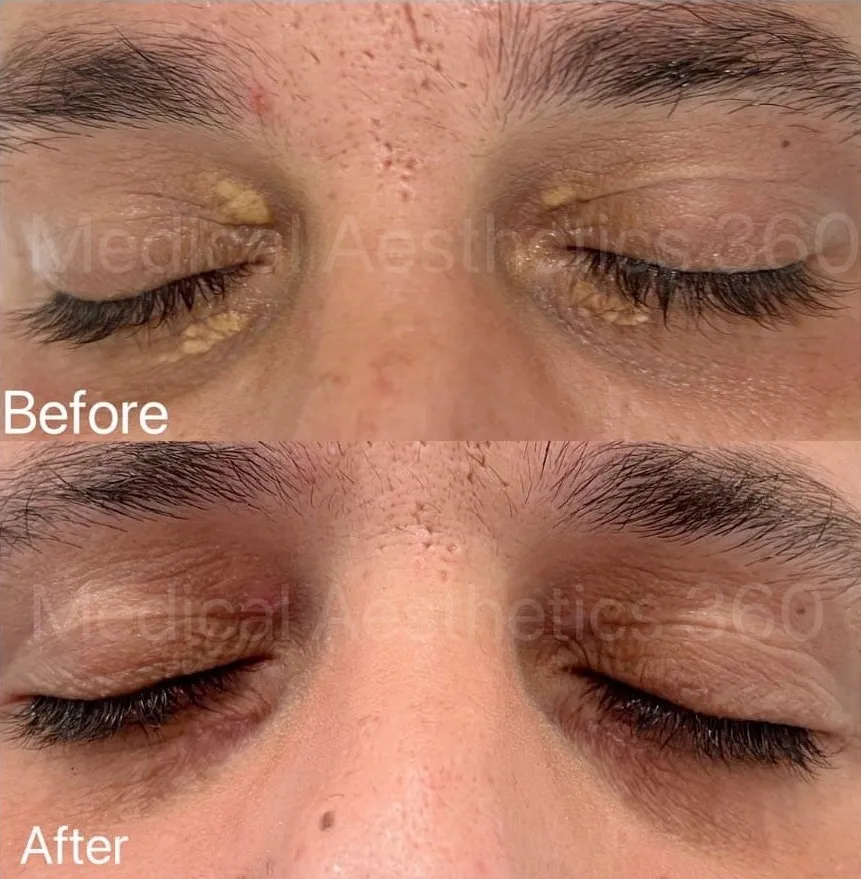 Upper and lower eyelid plaques
View the complete case study
Upper and lower eyelid plaques
View the complete case study
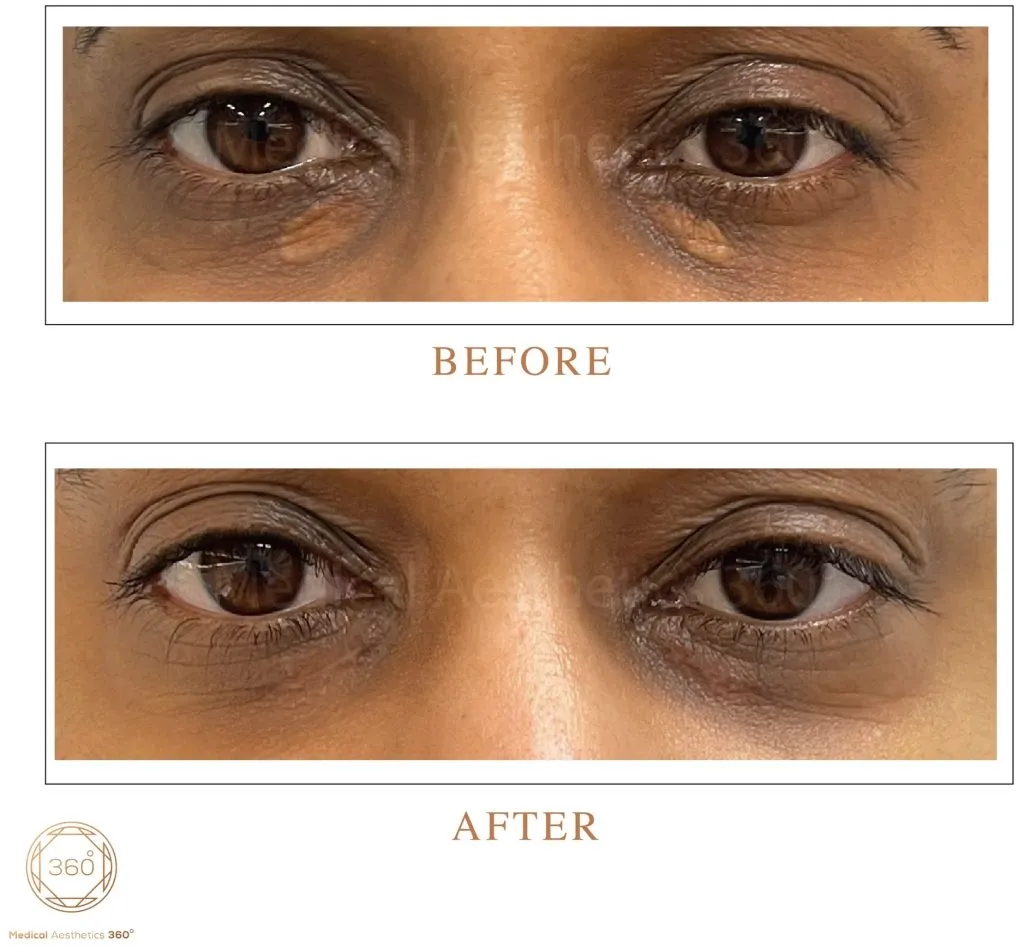 Inner upper eyelid plaques
View the complete case study
Inner upper eyelid plaques
View the complete case study
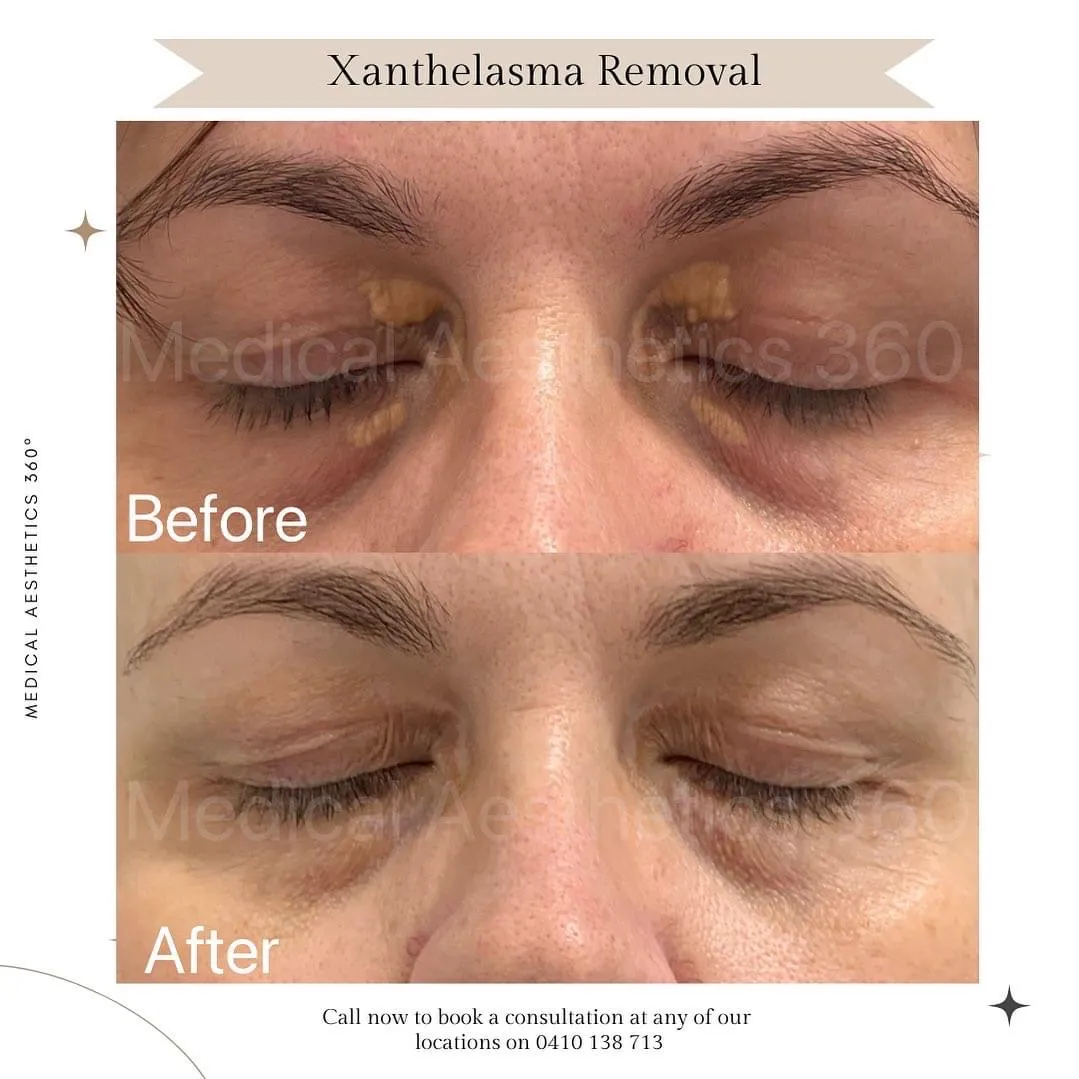 More extensive xanthelasma
View the complete case study
More extensive xanthelasma
View the complete case study
These photographs show individual patients at different stages of care. Results, healing time and the most suitable method vary from person to person.
What is xanthelasma?
Xanthelasma palpebrarum is the name for soft yellow or cream-coloured plaques that most often appear near the inner corners of the eyelids. They contain lipid-laden cells within the skin and may occur on the upper lids, lower lids or both.
The plaques are usually painless and harmless. They rarely disappear without treatment and can slowly become broader or more noticeable. Because eyelid skin is thin and highly visible, removing a plaque is only one part of the plan; preserving natural lid movement, contour and a neat cosmetic finish also matters.
Not every yellow or pale eyelid lesion is xanthelasma. If the appearance is unusual, changing quickly or does not fit the expected pattern, the diagnosis may need further medical review before cosmetic treatment is considered.
What determines the most suitable approach?
A flatter plaque and a thick, well-defined plaque do not necessarily benefit from the same treatment. The assessment brings five practical details together.
A single small plaque is different from changes across several eyelids.
Surface appearance helps indicate whether a staged or excisional approach may be more appropriate.
The lid fold, inner corner, lash line, skin laxity and lower-lid support all influence planning.
Skin tone, scarring history and previous pigment change help frame the risk discussion.
Recurrent plaques and previously treated skin may require a different strategy.
Laser or surgical xanthelasma removal?
Neither method is automatically better. The useful question is which approach offers a reasonable balance of plaque clearance, healing, pigment change, scarring and eyelid safety for the individual lesion.
Laser removal
A controlled ablative approach for selected plaques.
- The plaque is relatively flat or superficial
- Removing skin by excision would be less desirable
- A precise, layer-by-layer treatment is appropriate
- Larger or deeper plaques may need staged treatment
- Crusting, redness and temporary colour change can occur
- Incomplete clearance, scarring and recurrence remain possible
Surgical removal
Excision and closure for selected thicker or more extensive plaques.
- The plaque is thick, deeper or clearly defined
- The surrounding eyelid skin permits an appropriate closure
- Direct removal offers a more suitable pathway
- An incision and visible healing period are expected
- Scarring, asymmetry and eyelid contour or position change are possible
- Large lower-lid lesions need particular care to protect lid support
Staged planning
A measured option when one aggressive treatment would create unnecessary risk.
- Several plaques affect different eyelid areas
- Depth varies across the same plaque
- Healing needs to be reviewed before treating further
- More than one appointment may be needed
- Progress is gradual rather than immediate
- The plan may change after the first area has healed
Why an individual plan matters
A 2024 review covering 45 contemporary studies found that xanthelasma can be treated with several laser, surgical and other procedural methods, but direct comparative evidence remains limited and management is not fully standardised. The practical message is important: the method should follow the lesion and eyelid assessment, with a frank discussion of healing and recurrence, rather than a single treatment being promoted for everyone. Read the xanthelasma treatment review on PubMed.
From assessment to aftercare
A useful consultation should make the reasoning understandable, including why a particular method is suitable and what its limitations are.
Confirm the lesion
The eyelids are examined to decide whether the appearance is consistent with xanthelasma and whether further review is needed.
Map the eyelid
The plaque borders, thickness, upper or lower lid position, nearby structures and skin laxity are considered together.
Compare the options
Laser, surgery or staged care is discussed in relation to downtime, likely clearance and the risks that matter for that eyelid.
Plan recovery
Aftercare, expected skin changes, review timing and warning signs are covered before treatment proceeds.
How does xanthelasma removal heal?
Eyelid skin often heals efficiently, but it is also thin, visible and close to the eye. Downtime depends on the method, the amount of skin treated and individual healing.
After laser treatment
Redness, swelling, sensitivity, weeping or crusting may occur before the surface closes. Pinkness and lighter or darker colour can remain for longer, particularly after a deeper treatment. The area should be protected from picking, friction and unprotected sun exposure.
After surgical removal
Bruising, swelling, tenderness and a visible incision are expected early on. Suture care and review depend on the procedure. The scar generally changes over time, but no procedure can promise a scar-free result.
Possible risks
- Temporary or persistent pigment change
- Scarring, infection, bleeding or delayed healing
- Incomplete clearance or a need for further treatment
- Asymmetry or a change in eyelid contour or position
- Recurrence in the same area or a new eyelid site
Recurrence
Xanthelasma can return after laser or surgery, even when cholesterol levels are normal or medically controlled. The chance of recurrence cannot be predicted precisely for an individual, so follow-up photographs and review can be useful if a new plaque appears.
Xanthelasma removal cost in Sydney
A meaningful fee can only be given after the eyelids have been assessed. A small, localised plaque is usually simpler to plan than several thick plaques affecting upper and lower lids.
The quoted plan should state the proposed method, whether treatment is staged, what review is included and whether further treatment would carry an additional cost.
Xanthelasma removal FAQs
Is xanthelasma dangerous?
Does xanthelasma always mean high cholesterol?
Will lowering cholesterol remove existing plaques?
Can xanthelasma disappear on its own?
Who may be suitable for laser xanthelasma removal?
When might surgical removal be considered?
Will xanthelasma removal leave a scar?
Can treatment change the colour of my skin?
Can xanthelasma return after removal?
How many treatment sessions will I need?
How much downtime should I expect?
How is xanthelasma removal priced?
Xanthelasma consultations in Chatswood and Hurstville
Chatswood
A North Shore location for patients seeking assessment of upper or lower eyelid xanthelasma.
Hurstville
A southern Sydney location offering the same assessment-led approach to treatment planning.