


Upper blepharoplasty in Sydney for hooded or heavy eyelids
Upper blepharoplasty, also called upper eyelid surgery, may address excess upper-eyelid skin, heaviness and hooding around the eyes. The right plan depends on what is creating the fold—not simply where it is noticed.
At MA360, assessment separates excess eyelid skin and fat from true eyelid droop (ptosis), brow descent, hollowing and dry-eye concerns. This helps determine whether upper blepharoplasty, lower blepharoplasty, combined eyelid surgery or a different option is more appropriate.
Arrange an upper-eyelid consultation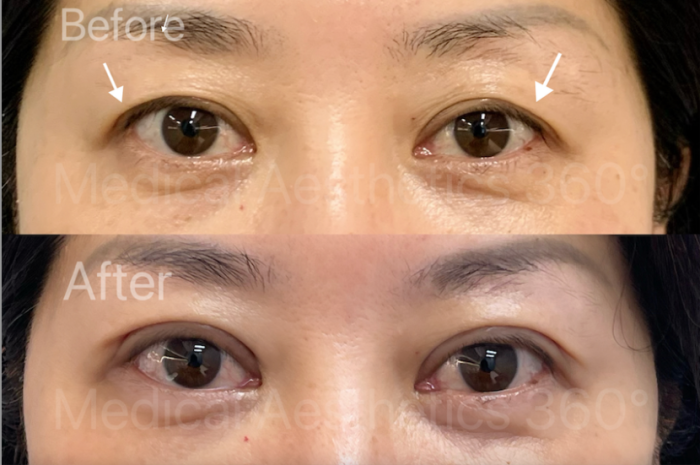
- Procedure
- Upper, lower or combined eyelid surgery
- Timing
- Often 60-90 minutes; combined surgery may take longer
- Early recovery
- Expect visible swelling and bruising
- Results
- Long-lasting, while natural ageing continues
Upper eyelid surgery is planned for the individual concern
These cases show different starting anatomy and treatment goals. They are individual outcomes, not a prediction of another patient's result.
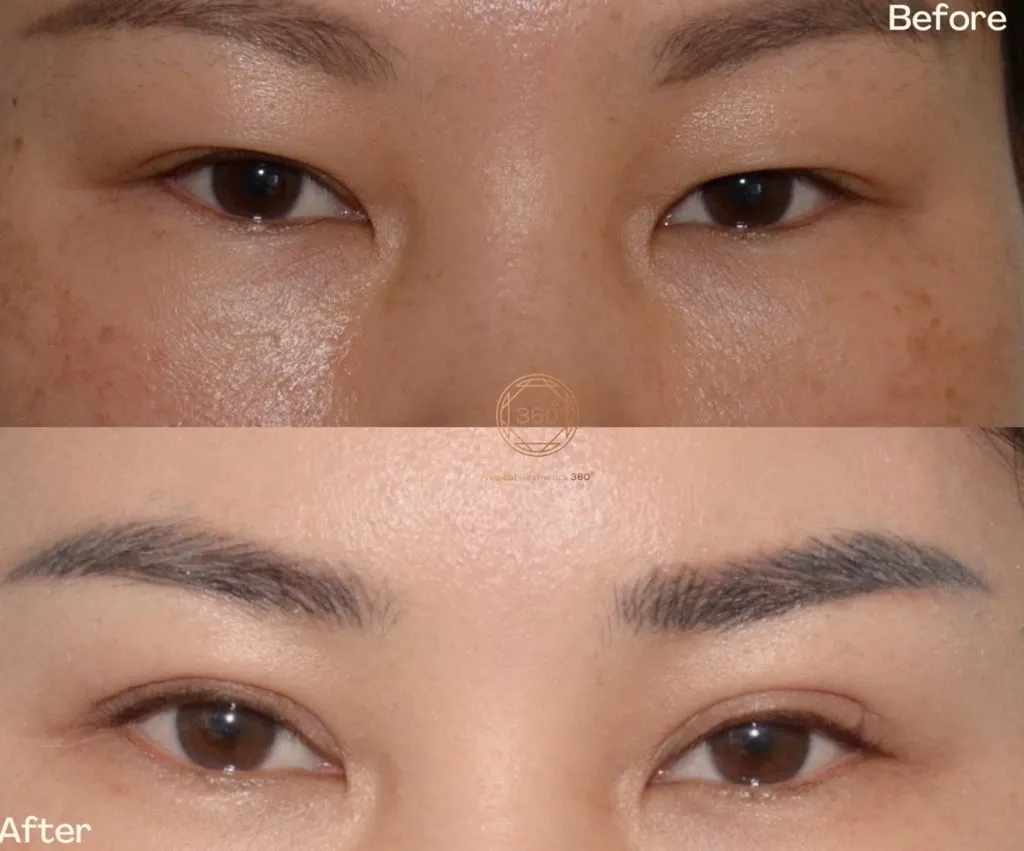
A stable crease for eyelids that looked puffy and heavy
This patient described an upper-eyelid fold that could disappear from day to day. Planning focused on clearer definition without an exaggerated crease.
Read the double-eyelid crease case study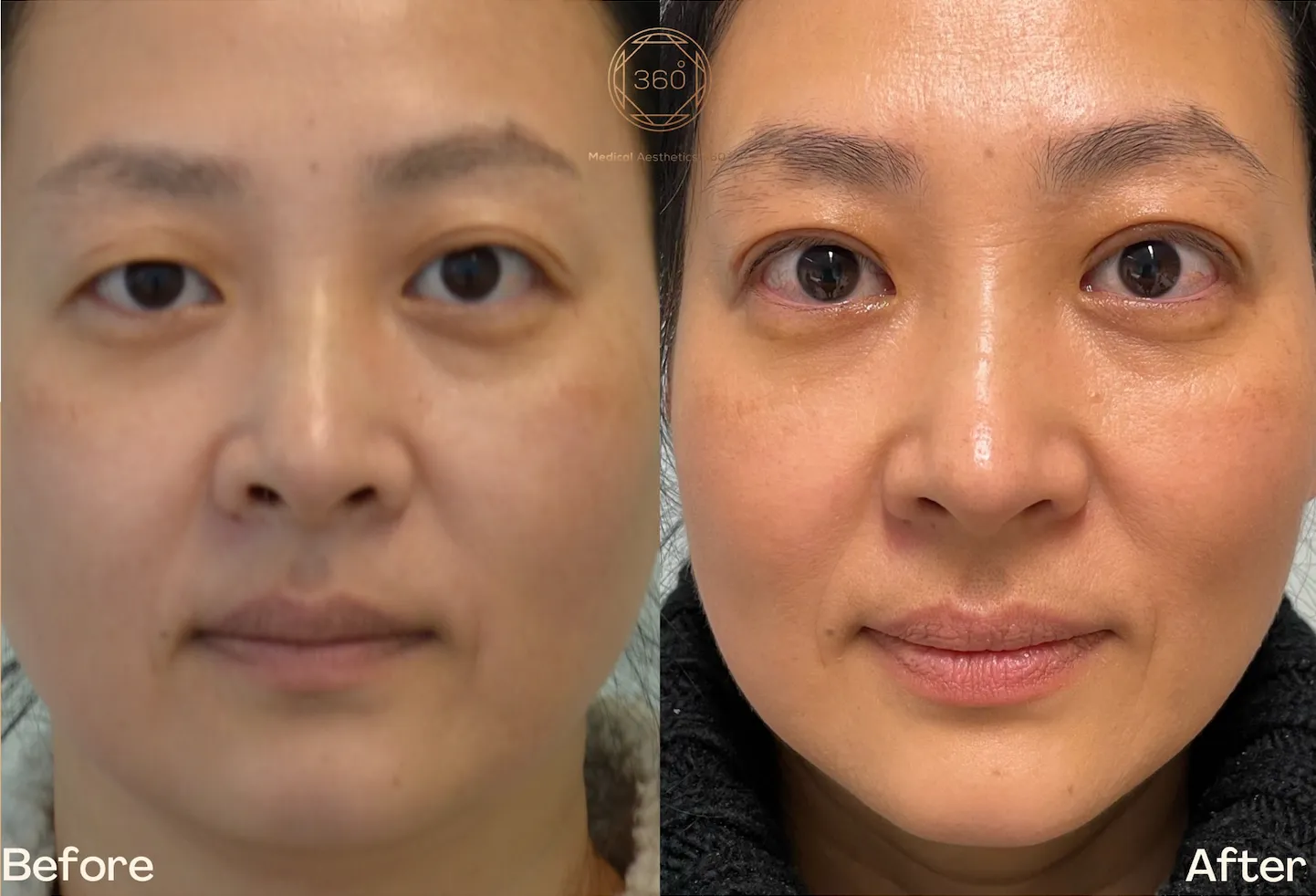
Upper-eyelid correction for a visible difference between the eyes
One eye appeared more open because the creases and tissue distribution were different. The plan considered the asymmetry rather than applying the same change to both sides.
Read the upper-eyelid asymmetry case studyHooded eyes, droopy eyelids and brow descent are not the same
Several issues can look similar in photographs but need different treatment. Recognising them before surgery protects function and makes the expected change more realistic.
True eyelid droop
Ptosis relates to eyelid-opening function. Removing skin alone may not correct it and can leave the original problem visible.
Brow descent
A low brow can push tissue towards the upper lid. Brow position should be assessed before deciding how much eyelid skin can be safely removed.
Hollowing or shadow
Under-eye hollowing, cheek support and pigmentation can create darkness without a true eye bag. Blepharoplasty does not directly treat every cause of dark circles.
Dry eye and lid laxity
Existing dryness, previous eye surgery, thyroid eye disease, incomplete closure or lower-lid looseness may alter suitability and surgical planning.
How upper eyelid surgery is planned
Upper blepharoplasty is not designed from a standard template. The incision and tissue adjustment are chosen after examining the eyelids, brow position, eye closure and the amount of skin that can be treated conservatively. Upper and lower procedures have different risks, scars and recovery patterns.
- Upper eyelid approach
- The incision usually follows the natural upper-lid crease. Skin removal is measured conservatively. Fat or muscle is adjusted only when it contributes to the agreed concern.
- Lower eyelid approach
- The route may be inside the eyelid or just below the lashes. The choice depends on fat prominence, skin excess, lid support and whether repositioning or tightening is needed.
- Anaesthesia and time
- Anaesthesia is selected for the procedure and the patient. A straightforward eyelid procedure is often discussed in the 60-90 minute range, while combined or more complex surgery may take longer.
- Scars and symmetry
- Scars generally soften with time but cannot be promised invisible. Surgery may improve asymmetry, although normal differences between the eyes remain.
- Longevity
- The structural change can be long-lasting. Skin quality, brow position, fat distribution and the surrounding face continue to age, so no fixed number of years applies to everyone.
Technique matters, especially when protecting eye closure
A 2025 systematic review of randomised trials on upper blepharoplasty reported that outcomes varied with surgical technique. In the included studies, removing muscle with skin was associated with more lagophthalmos, or incomplete eyelid closure, than skin-only excision. The review supports careful tissue selection rather than assuming that more removal creates a better result. It examined upper blepharoplasty and should not be generalised to every lower-eyelid procedure. Read the systematic review on PubMed. For an independent Australian overview, see Healthdirect's blepharoplasty information.
Upper blepharoplasty consultations in Chatswood and Hurstville
At MA360's Chatswood clinic and Hurstville clinic, the consultation connects the appearance you notice with the anatomy causing it. This is where suitability, alternatives, upper eyelid surgery recovery and a personalised quotation can be discussed without reducing the decision to a package.
History and eye comfort
Dryness, contact lenses, vision procedures, thyroid disease, allergies, medicines and previous eyelid surgery all inform the plan.
Functional examination
Eye closure, eyelid opening, brow position, lower-lid tone, asymmetry and skin or fat distribution are assessed.
Design and consent
The proposed incision, tissue adjustment, likely scar, trade-offs, alternatives and risks are explained before a decision is made.
Surgery and review
Most patients return home after observation with written aftercare, urgent contact information and planned follow-up.
Upper eyelid surgery recovery and downtime
Many patients allow roughly one to two weeks before returning to less visible social commitments after upper blepharoplasty, but recovery varies. Lower or combined eyelid surgery may take longer to settle. Swelling can make the eyelids look uneven or over-corrected before the final contour becomes clearer.
First 72 hours
Swelling, bruising, tightness, watering, dryness, light sensitivity and temporary blur can occur. Follow the written plan for compresses, cleaning and medication.
First week
Bruising may change colour as it fades. Upper-lid sutures are often reviewed or removed around this stage when non-dissolving sutures are used.
Weeks two to four
The eye area usually looks more settled, although puffiness, numbness, firmness and side-to-side differences may remain.
Following months
Scars soften and the eyelid contour continues to refine. Lower-eyelid and combined procedures can take longer to fully settle.
Common temporary effects
- Swelling, bruising and mild tenderness
- Watery or dry-feeling eyes
- Temporary blur or light sensitivity
- Tightness, altered sensation or itch
- Early asymmetry while swelling differs between sides
General care principles
- Use compresses, drops and medicines only as directed
- Keep the head elevated if advised
- Avoid rubbing the eyes or disturbing incisions
- Resume contact lenses, makeup, exercise and swimming only when cleared
- Protect healing scars from strong sun and attend scheduled reviews
Understand the full risk profile
All surgery carries risk. Upper, lower and combined blepharoplasty have overlapping but different complication profiles.
- Bleeding, infection, delayed healing or noticeable scarring
- Dry eye, irritation, watering or difficulty closing the eyelids
- Asymmetry, contour irregularity, persistent swelling or dissatisfaction
- Lower-lid retraction, lid lag or ectropion after lower-eyelid surgery
- Temporary or persistent altered sensation and eye-muscle disturbance
- Need for observation, treatment or revision surgery
- Rare vision-threatening bleeding or visual change
Know when not to wait
Routine bruising and swelling should be distinguished from symptoms that are severe, one-sided or changing quickly.
Seek immediate assessment
Contact the surgical team urgently for rapidly increasing swelling, escalating pain, marked bleeding, fever, spreading redness, inability to close the eye or new double vision. Sudden reduction or loss of vision, severe eye pain, eye bulging or neurological symptoms require emergency care; call 000.
Blepharoplasty FAQs
What is upper blepharoplasty?
Upper blepharoplasty is upper eyelid surgery planned to treat selected excess skin and fullness around the upper eyelids. The amount and type of tissue adjustment depend on eyelid anatomy, brow position, eye closure and the concern being treated.
Can upper eyelid surgery treat hooded eyes?
It may help when true upper-eyelid skin excess is creating the hooding. A low brow, ptosis or a naturally full eyelid can look similar, so examination is needed before deciding whether upper blepharoplasty is suitable.
Is upper blepharoplasty the same as an eyelid lift?
“Eyelid lift” is a common informal search term, but upper blepharoplasty does not literally lift every structure around the eye. It may treat selected upper-eyelid skin or fat; brow descent and true eyelid droop may require different planning.
Is eyelid ptosis corrected by blepharoplasty?
Ptosis is weakness or dysfunction in eyelid opening and is different from loose skin. It may require a separate ptosis procedure. Blepharoplasty alone should not be assumed to correct it.
Where are upper blepharoplasty scars placed?
An upper-eyelid incision is usually positioned within the natural crease. Scars generally soften with time, but healing and visibility vary, and no scar can be promised to become invisible.
Is blepharoplasty painful?
Anaesthesia is selected for the planned procedure. During recovery, patients more commonly describe tightness, tenderness, stinging or pressure than severe pain. Pain that is intense, increasing or associated with visual symptoms needs urgent review.
How long is upper blepharoplasty recovery?
Visible bruising and swelling commonly affect the first one to two weeks, but recovery varies. Residual puffiness, tightness, numbness and scar maturation can continue for longer. Work demands and comfort around other people should be considered when planning time away.
How long do blepharoplasty results last?
The removed or repositioned tissue does not simply return, so the change can be long-lasting. However, the brow, skin and surrounding face continue to age. Longevity cannot be reduced to one reliable number for every patient.
Can upper blepharoplasty improve vision?
It may improve the superior visual field when documented excess upper-lid skin obstructs vision. A functional assessment is different from cosmetic planning and may require formal examination or visual-field testing.
How much does upper blepharoplasty cost in Sydney?
Upper blepharoplasty cost depends on the surgical plan, anaesthesia, facility requirements and complexity. A written quotation can be provided after examination at MA360 in Chatswood or Hurstville. Advertising one package price before assessment can hide meaningful differences between patients and procedures.
Explore related MA360 information
These pages cover related eyelid concerns, non-surgical eye-area options, clinical examples and clinic information.
Eyelid procedures and cases
Other eye-area options
Medical Aesthetics 360
This article provides general information and does not replace individual medical or eye-care advice. Suitability, alternatives, expected recovery and risks are discussed during consultation. Surgical experiences and results vary between individuals. Before-and-after images show one person's outcome only and do not predict another patient's result. Return to the top.