


Muscle tone
Lower gluteal tone or limited upper-glute projection may respond to muscle-focused treatment.
A non-surgical butt lift is not one treatment. It is a planning approach that may use electromagnetic muscle stimulation, selected biostimulation or treatment of the surrounding contour, depending on what is making the buttocks look flat, less firm or out of proportion.
The aim is a measured improvement in tone, projection, hip-dip contour or skin quality without surgical fat transfer or implants. Results are more subtle than surgery and develop gradually. The most useful starting point is to identify whether the concern comes mainly from muscle, soft-tissue volume, skin laxity or the way the waist and thighs frame the area.
Arrange a contouring assessmentSome patients want a stronger upper-glute contour; others are more concerned by hollowing, hip dips, skin texture or a flatter side profile. These concerns involve different tissues, so one device or procedure cannot address them all in the same way.

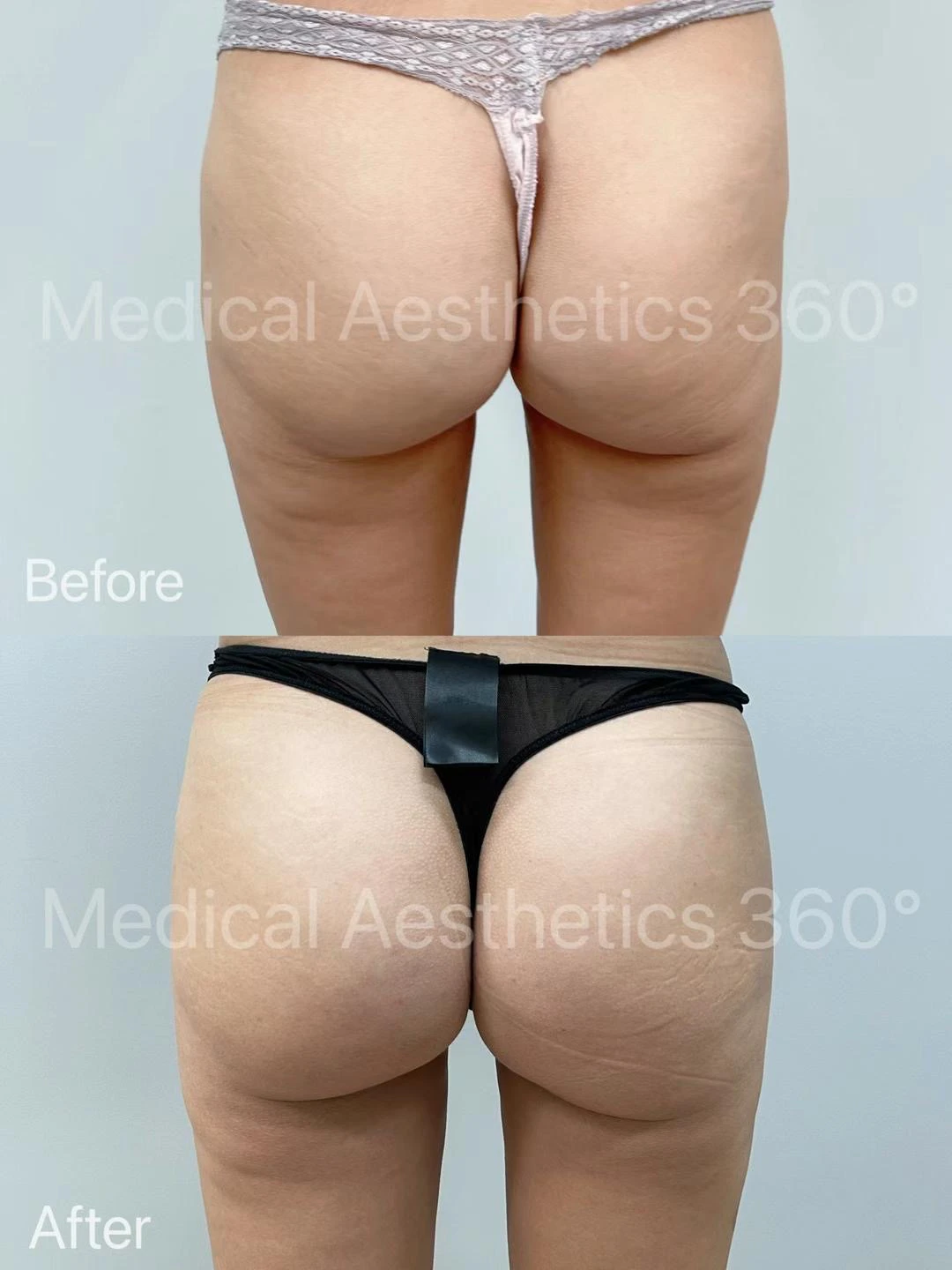
Results vary. The photographs are an individual example rather than a prediction of what muscle stimulation or another pathway will achieve. Clothing, posture and lighting are not identical.
Read the complete buttock contouring case studyThe word "lift" is convenient, but it can hide important differences. Electromagnetic stimulation contracts muscle. Injectable biostimulation works within soft tissue. Skin-tightening and fat-reduction technologies affect other layers. A useful plan treats the layer that is contributing most to the concern.
Lower gluteal tone or limited upper-glute projection may respond to muscle-focused treatment.
Hip dips or hollowing may reflect bone structure and soft-tissue distribution, not weak muscle alone.
Crepiness, laxity and cellulite are separate concerns that need their own assessment.
Waist, flank and thigh proportions can change how projected or rounded the buttocks appear.
A combined plan is only useful when each component has a clear role. More treatments do not automatically create a better result.
A treatment applicator creates repeated involuntary contractions through the gluteal muscles. In suitable patients, this may improve visible tone, muscle thickness and upper-buttock shape over a series of sessions.
Best understood as: a contouring adjunct for muscle, not a substitute for strength training, nutrition or treatment of loose skin.
When hollowing, skin quality or soft-tissue support is more important than muscle tone, an injectable biostimulation pathway may be discussed. Change develops gradually as the treated tissue responds.
Best understood as: a medical procedure with injection-specific risks, product limits and a different recovery profile from a non-invasive device.
Selected fat-reduction, skin-tightening or body-contouring treatments may refine nearby areas when the waist, flanks or thighs are affecting the overall silhouette.
Best understood as: framing the buttock contour rather than directly adding gluteal volume.
The evidence should be matched to the treatment being considered. Data from electromagnetic muscle stimulation cannot be used to predict the result of an injectable or skin-tightening procedure.
A 2024 systematic review identified 15 clinical studies of high-intensity focused electromagnetic treatment with or without radiofrequency. Four included the buttocks. The usual research protocol involved four treatments over two to four weeks, with follow-up commonly limited to one to six months.
Overall, electromagnetic treatment may support gluteal muscle contour in selected patients, but the evidence does not show that it replaces exercise or produces the volume change of surgery.
Read the systematic review on PubMedNon-surgical treatment is most persuasive when the desired change is modest and the tissue being treated matches the concern.
The exact appointment varies because a non-invasive muscle session and an injectable medical procedure are not the same experience.
Shape, symmetry, gluteal tone, hip dips, skin quality, medical history, exercise habits and previous procedures are reviewed.
The plan identifies the tissue to treat, the expected scale of change, risks, likely session number and whether a staged combination is justified.
Results are assessed after temporary soreness or swelling has settled. Further treatment is based on response rather than an automatic package.
One generic downtime promise is not appropriate for three different treatment types. Aftercare, exercise restrictions and review timing should follow the procedure actually performed.
The session feels like strong rhythmic contractions. Temporary muscle fatigue, tightness or workout-like soreness may follow. There is no incision or injection, and many patients return to routine activity promptly.
Swelling, bruising, tenderness and temporary unevenness can occur. Changes are gradual, and early fullness from swelling is not the final contour. Pressure, massage, exercise and sitting advice must be procedure-specific.
Recovery varies with the selected technology. Warmth, tenderness, swelling or skin sensitivity may occur, and visible change often develops over several weeks.
Tell the practitioner about pregnancy, medicines, allergies, previous injections or surgery, active skin problems, medical conditions, implants and any electronic device before treatment is selected.
Electromagnetic muscle stimulation may be unsuitable with certain pacemakers, implanted electronics or metal near the treatment area. Injectable procedures require separate medical screening and informed consent.
The choices differ in mechanism, potential change, recovery and risk. The least invasive option is not automatically the right one if it cannot reasonably meet the goal.
Gluteal muscle tone and thickness.
Expected scaleSubtle contour and tone support rather than added soft-tissue volume.
RecoveryUsually limited to temporary workout-like fatigue or soreness.
Selected soft-tissue contour, skin quality or hollowing.
Expected scaleGradual improvement that depends on anatomy, product limits and tissue response.
RecoveryBruising, swelling and tenderness are possible, with injection-specific risks.
More substantial volume, tissue repositioning or skin removal where appropriate.
Expected scaleLarger change than non-surgical treatment can provide.
RecoveryLonger recovery, surgical aftercare and a different risk profile.
MA360 assesses Sydney patients through its Chatswood and Hurstville clinics. The useful part of the consultation is not choosing from a long menu. It is deciding whether muscle, soft tissue, skin or surrounding proportion is the main concern, then setting a realistic endpoint.
Convenient for the North Shore, including Willoughby, Artarmon, Lane Cove, Roseville and Lindfield.
Convenient for St George and southern Sydney, including Kogarah, Penshurst, Allawah, Carlton and Beverly Hills.
General answers for patients comparing buttock contouring in Sydney. Individual advice depends on examination, medical history and the procedure being considered.
Continue with the treatment pathway most relevant to muscle tone, soft-tissue support, skin firmness or surrounding body contour.
General information only. It does not replace an individual medical assessment. Suitability, risks, treatment stages, costs and outcomes vary between patients.
An individual consultation can help you compare suitability, expected recovery and costs.