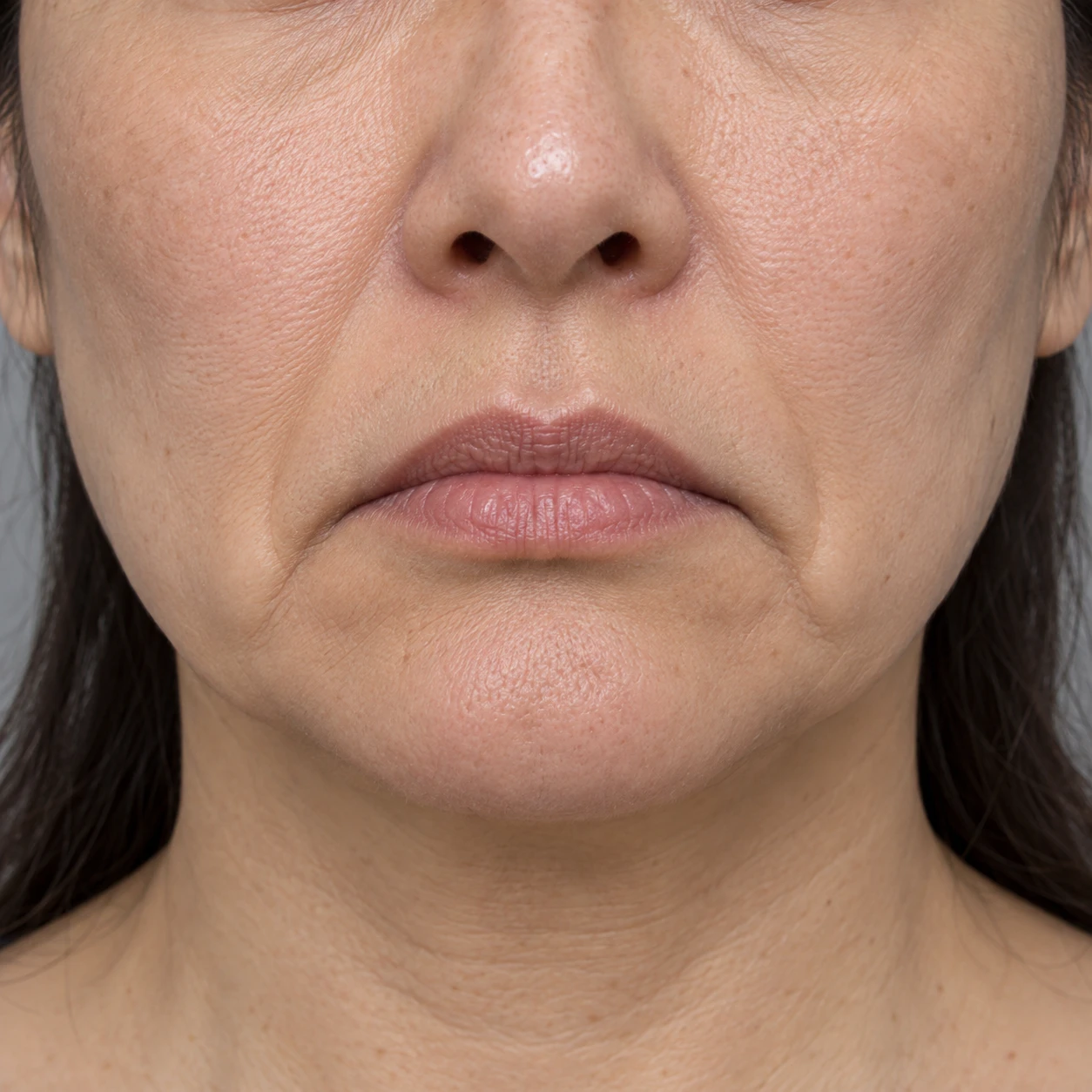
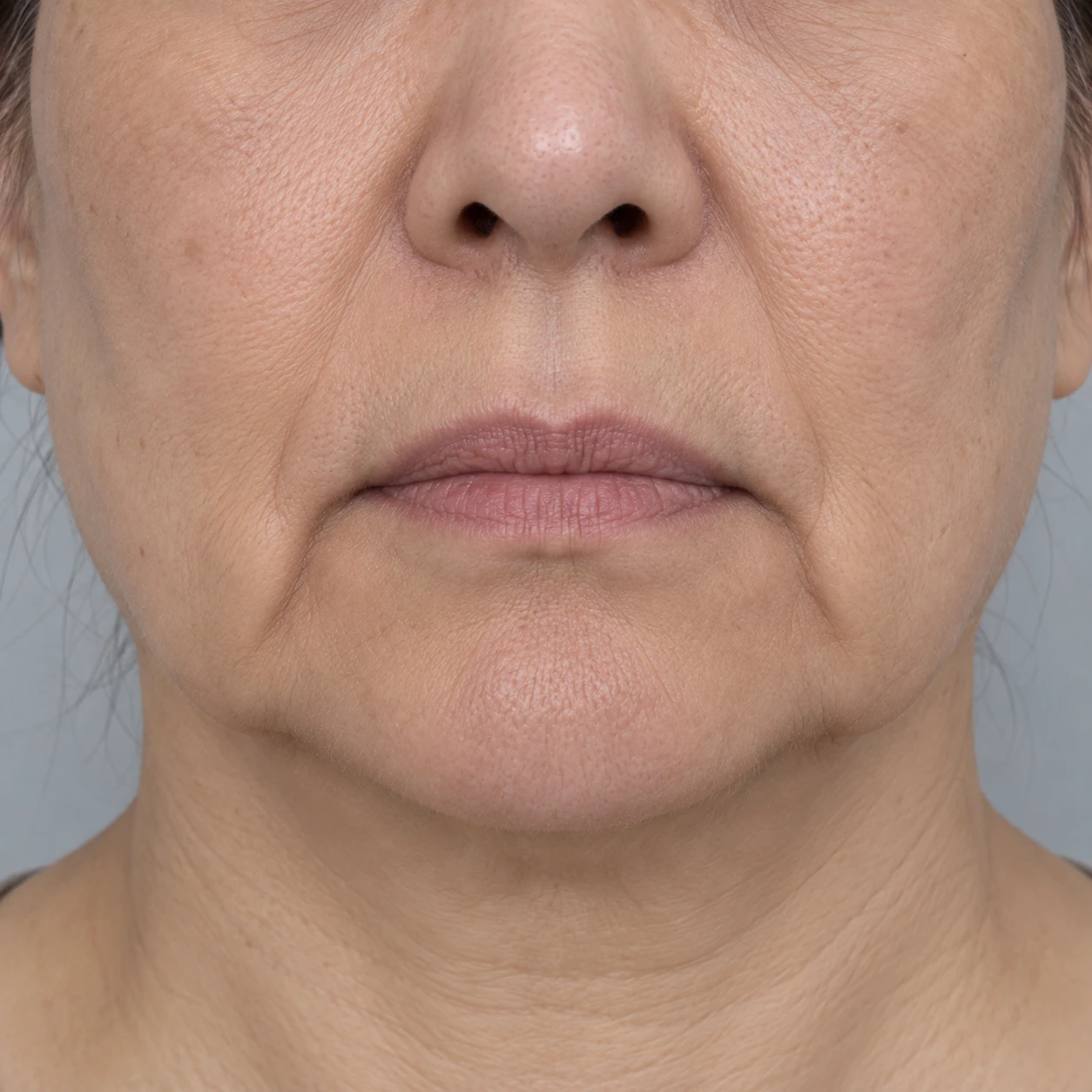
Skin tightening and mid-face rejuvenation
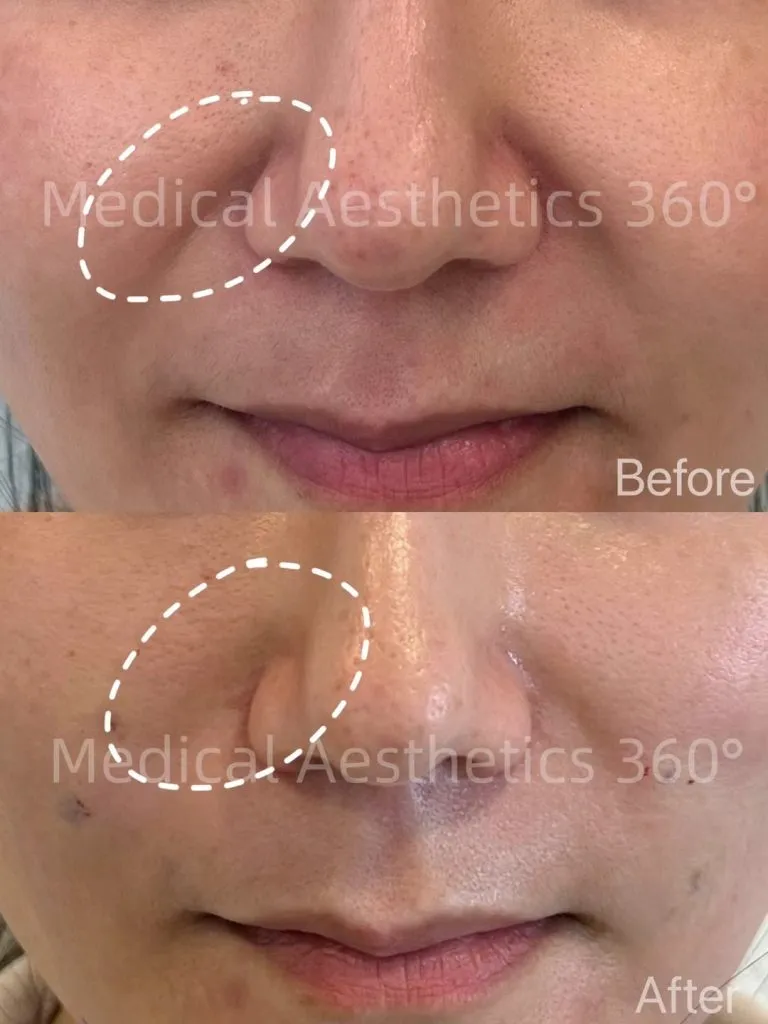
An example showing how laxity and facial support can influence the area beside the mouth.
Read the complete case studyNasolabial folds are the natural lines running from the sides of the nose towards the corners of the mouth. They help the face move and express. When they deepen, the cause may sit in the cheek, the skin, the underlying facial structure or the fold itself.
At Medical Aesthetics 360° in Chatswood and Hurstville, consultation looks beyond one crease. The aim is to identify the dominant change, compare suitable pathways and avoid adding unnecessary fullness to a face that may need a different kind of support.
Arrange a smile-line assessment
An example showing how laxity and facial support can influence the area beside the mouth.
Read the complete case studyThese cases illustrate different treatment plans. A case may include more than one procedure and cannot predict another person's result.
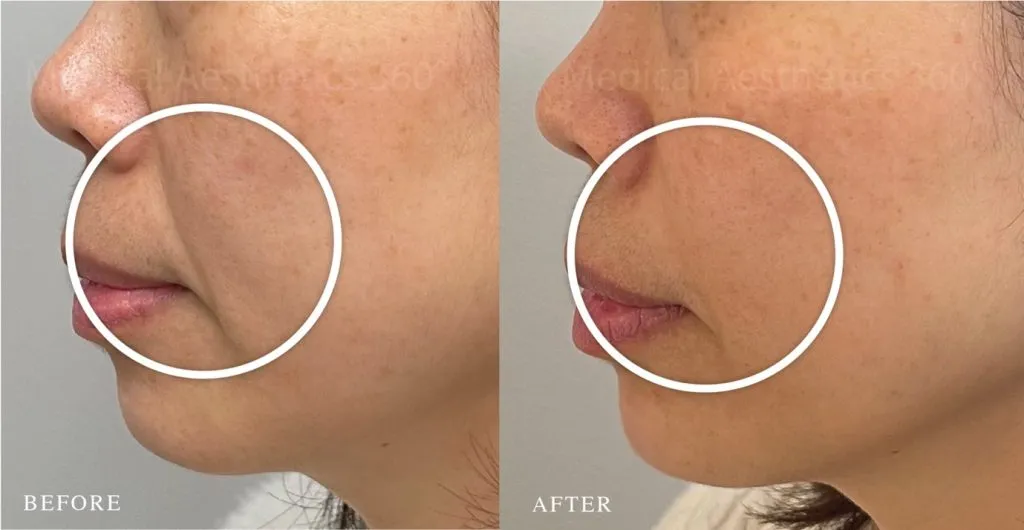
A side-view example focused on facial support and the transition between the cheek and mouth.
Read the complete case study
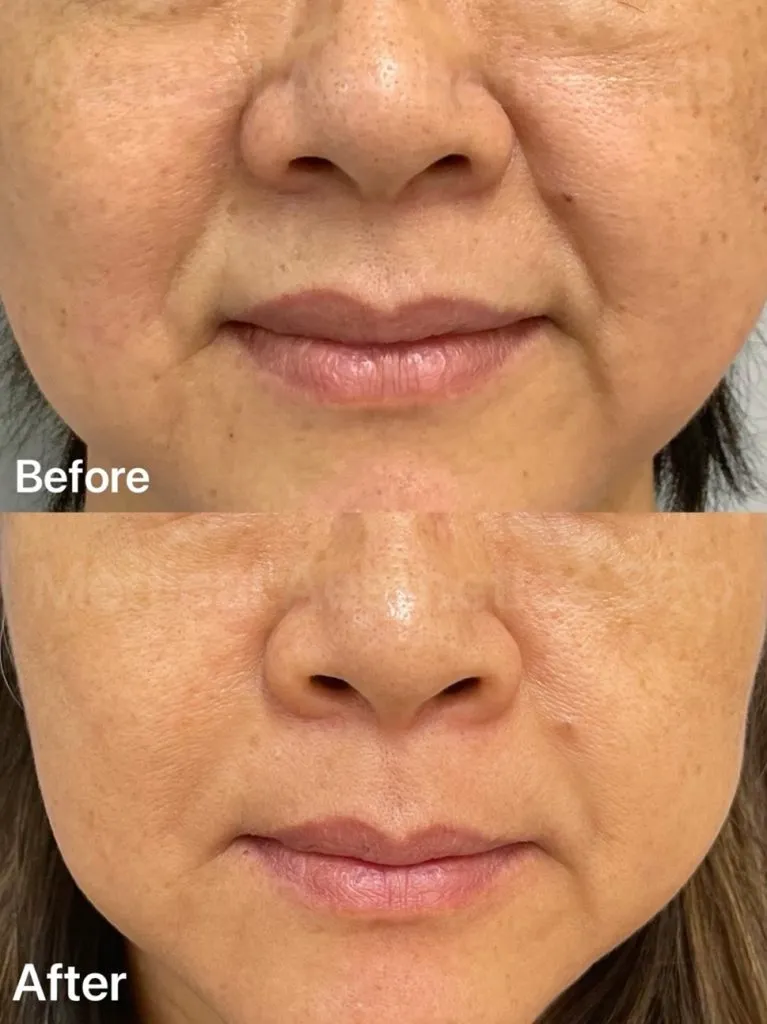
A front-view case showing a softer fold while maintaining the patient's recognisable expression.
Read the complete case studyIndividual results vary. Images are shown uncropped and are examples only. Anatomy, facial movement, treatment history, selected procedure and healing response can all affect the outcome.
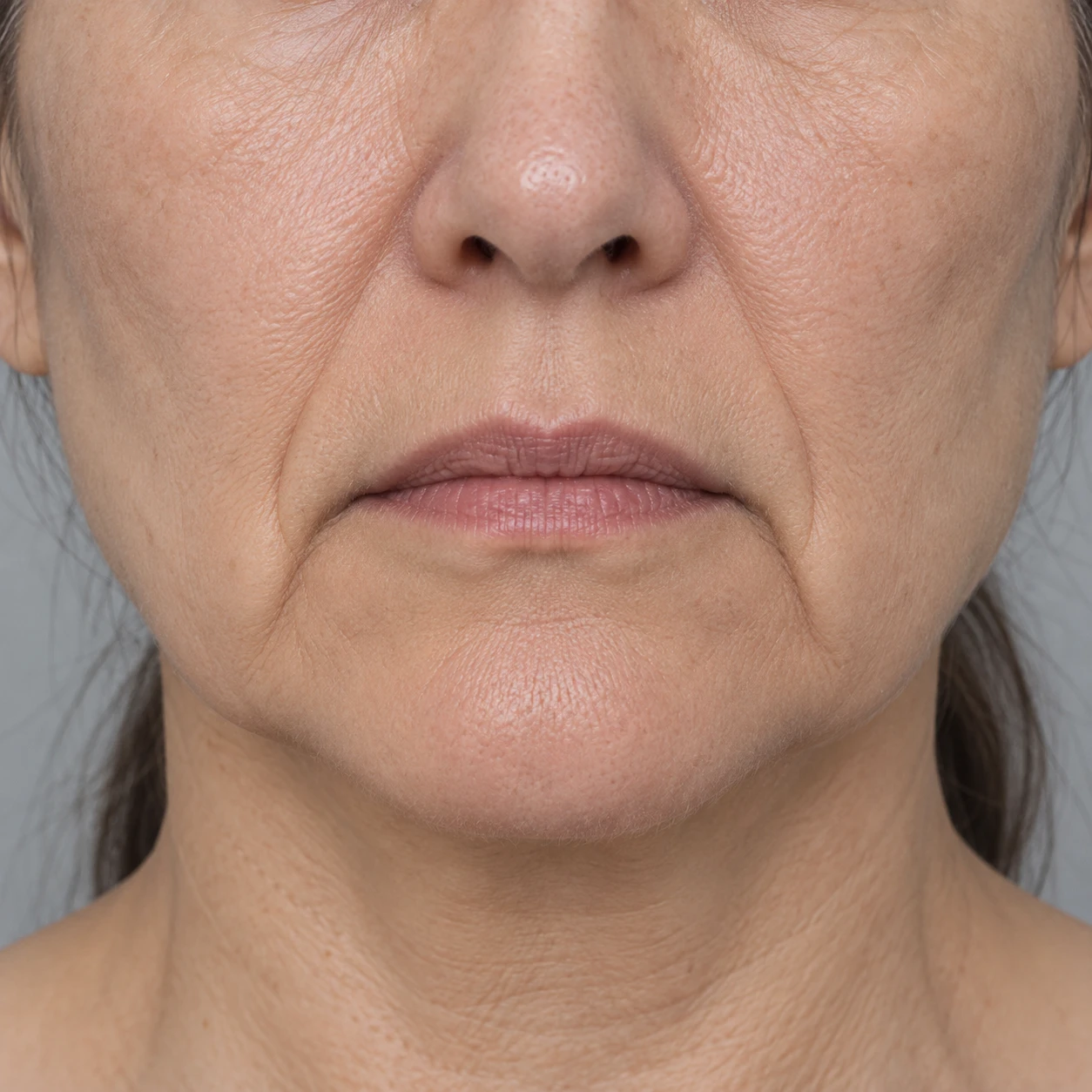
Nasolabial folds form the boundary between the upper lip area and the cheek. They are visible to some degree in almost everyone and usually become more pronounced during smiling. A fold is a three-dimensional change in contour; it is more than a surface wrinkle.
Marionette lines begin at the corners of the mouth and travel towards the chin. They belong to the lower face and may be influenced by chin support, jowling, mouth-corner position and skin laxity. Treating them as though they are simply an extension of the nasolabial fold can miss the reason they are present.
Facial ageing is not a single process. Several changes may occur together, and their relative importance differs between people.
Age-related change around the upper jaw and pyriform area can reduce the foundation supporting the tissues beside the nose.
Deflation in deeper mid-face compartments may flatten the cheek and make the transition into the fold look sharper.
Redistribution or descent of cheek tissue can create fullness above the crease rather than a simple hollow within it.
Collagen loss, sun damage and reduced elasticity can make an existing fold look more etched or less able to rebound.
The muscles of expression naturally deepen the fold during smiling. Static and moving components should be assessed separately.
A deep fold does not always mean missing volume. If tissue has descended or the cheek is already full, adding more support in the wrong place can increase heaviness instead of improving it.
The options below are not interchangeable. A consultation may lead to one pathway, a staged combination or a recommendation not to treat.
People searching for nasolabial fold filler in Sydney are often hoping to soften a deep smile line without changing the character of their face. Dermal filler may be one option discussed after a clinical assessment, but it is not the right answer for every fold and it should not be viewed as a one-size-fits-all treatment.
A consultation should look at the fold at rest and in motion, as well as cheek support, skin quality, tissue descent and previous cosmetic treatment. Where loss of structural support is contributing, the clinician may discuss support elsewhere in the mid-face rather than placing material directly into the line. Where the cheek is already full or tissue has descended, adding volume can create heaviness.
The aim of a conservative plan is usually to reduce a shadow or soften the transition between the cheek and mouth while preserving natural expression. Complete removal of a nasolabial fold is neither necessary nor always realistic.
Direct treatment and cheek support solve different anatomical problems. A localised crease may sometimes be approached at the fold, while mid-face volume loss may call for broader structural planning. Some people have a combination of both. The amount, placement and whether treatment should proceed at all can only be decided after an individual assessment.
Dermal filler for smile lines does not tighten loose skin or correct every etched surface line. Skin-quality treatments, an energy-based option, a lifting procedure or surgical advice may be more relevant when laxity or tissue descent is the main concern.
Swelling, tenderness, redness, bruising, firmness and temporary asymmetry can occur after an injectable procedure. An early change may be visible, but swelling can disguise the settled result. Review timing and aftercare depend on the procedure used, the area treated and the individual response.
There is no reliable fixed duration for every person. Longevity can vary with the material selected by the prescriber, placement, facial movement, metabolism, anatomy and treatment history. Maintenance should be based on reassessment rather than an automatic schedule, and further treatment may not always be advisable.
Safety comes before volume. Dermal filler procedures can cause uncommon but serious complications, including vascular occlusion, tissue injury and, very rarely, visual or neurological harm. Treatment should only follow an appropriate consultation, informed consent and a discussion of alternatives, aftercare and what to do if concerning symptoms develop.
A 2023 review of mid-face ageing describes a complex interaction between skeletal remodelling, changing fat compartments and soft-tissue movement. The authors found that many common ageing changes are related to soft tissue, while also noting variation in study quality and some conflicting findings.
This helps explain why the same visible fold can call for different plans. It also argues against promising that one product, device or treatment point will reliably correct every nasolabial fold.
Nasolabial fold treatment is usually most convincing when the line becomes less dominant without flattening the natural architecture of the smile.
The fold is viewed at rest, while speaking and during a full smile. Photographs can help with comparison, but the face in motion is central to planning.
You can explain whether the issue is a resting shadow, heaviness, an etched line, asymmetry or a broader change in facial balance.
Cheek support, fold depth, skin quality, laxity, lower-face balance, movement and previous treatment are reviewed together.
The clinician discusses expected benefit, limits, alternatives, recovery, costs and risks relevant to any proposed pathway.
If treatment is appropriate, a conservative or staged approach allows the result to settle before deciding whether more is useful.
There is no single recovery profile for nasolabial folds. Skin devices, needle-based procedures, lifting treatments and surgery have different risks and aftercare.
Depending on the procedure, swelling, bruising, redness, tenderness, firmness, temporary asymmetry or altered sensation may occur. Visible recovery can last longer than expected.
Possible problems include infection, nodules, contour irregularity, pigment change, burns, dimpling, prolonged swelling or an unsatisfactory result. Not every option is reversible.
Where a needle-based treatment is proposed, material entering or compressing a vessel can cause skin injury and, very rarely, visual or neurological complications. Prompt recognition matters.
Seek urgent help after a needle-based facial procedure for severe or increasing pain, pale or mottled skin, dusky colour, unusually cool skin, visual disturbance, a sudden severe headache, weakness or difficulty speaking.
Tell the clinician what was used, where it was placed, when it was performed and whether you experienced swelling, nodules or another complication. Unclear treatment history may change what can be recommended safely.
Active infection, inflamed skin, pregnancy or breastfeeding, certain medical conditions, allergies or medications may mean treatment should be postponed or avoided. Suitability must be confirmed for the specific option being considered.
Some changes can be seen early, while collagen remodelling and skin tightening develop more gradually. Initial swelling can temporarily alter the appearance.
Duration varies with the treatment, anatomy, ageing process and individual response. Maintenance should follow reassessment rather than an automatic timetable.
Cost depends on the agreed pathway, complexity, number of areas, treatment staging and follow-up. A quote should be provided after assessment.
Answers to common questions about smile lines, cheek support, marionette lines and treatment planning in Sydney.
Medical Aesthetics 360° provides consultations for nasolabial folds, smile lines and related facial concerns at Chatswood and Hurstville in Sydney. This page is general information and cannot determine which treatment, if any, is suitable for you.