


Acne scars
For selected rolling and shallow boxcar patterns where dermal remodelling may soften the uneven terrain.
For smoother-looking texture, softer acne scars and a treatment approach tailored to you—not a standard setting.
Morpheus8 can improve the look of selected acne scars, visible pores, uneven texture and mild laxity. At MA360, we tailor the depth and intensity to your skin and facial structure—and if another treatment is more suitable, we will explain why.
Two Sydney clinics. Choose Chatswood or Hurstville when you enquire.
Watch this short message from InMode recognising MA360's Morpheus8 work in New South Wales. It reflects the trust our patients place in the team and the experience behind every carefully planned treatment.
Recognition matters, but it never replaces individual assessment. Your settings, treatment depth and aftercare are selected for your skin, facial structure and goals.
Morpheus8 is often considered when texture, selected acne scars or mild laxity are the main concern. Your consultation is where we separate what it may help from what needs a different approach.
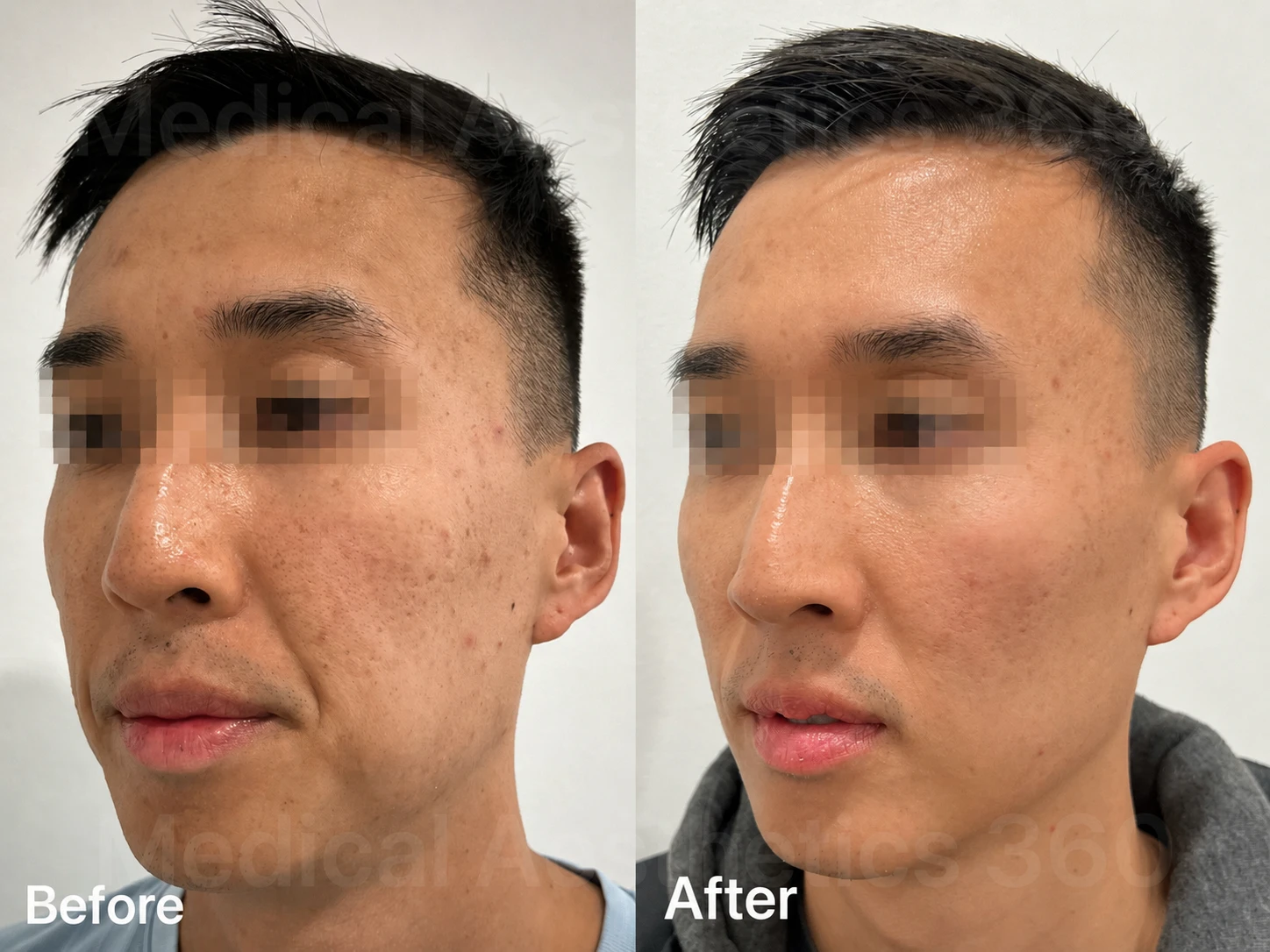
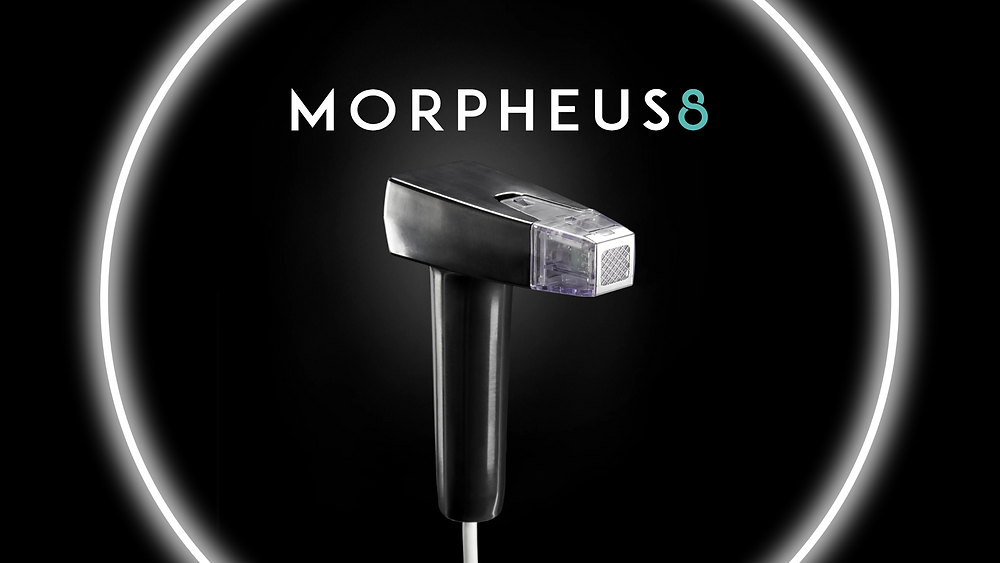
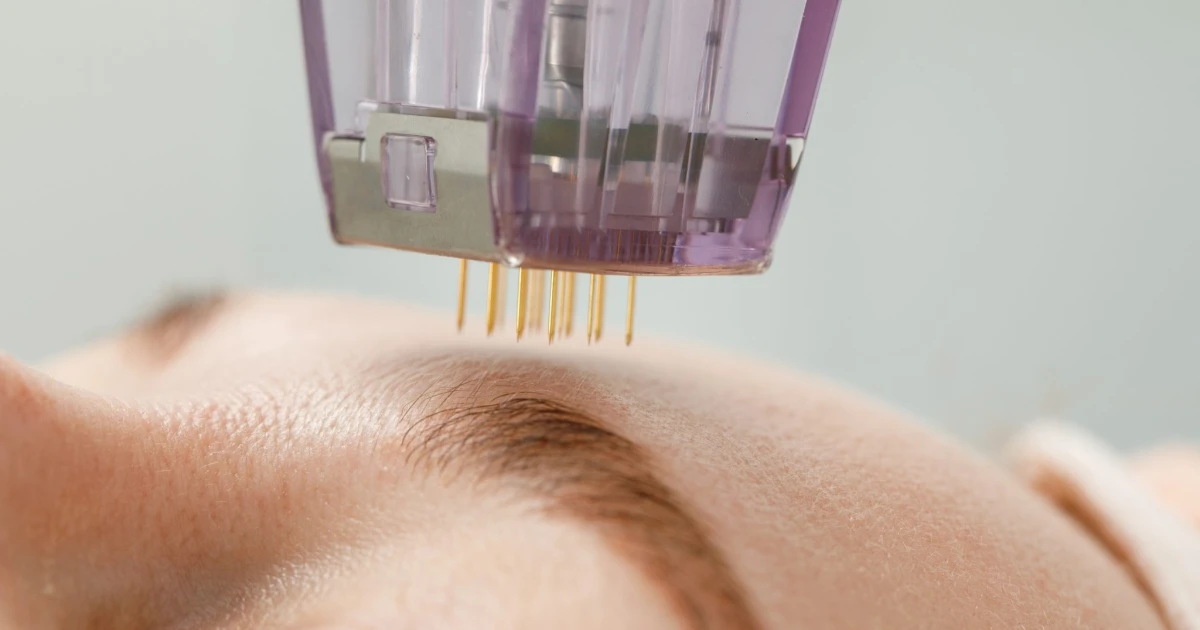
The patient example above shows the type of refined, gradual change Morpheus8 may support when treatment is carefully matched to the skin. These images show the handpiece and microneedle array used to deliver RF energy.
Our detailed case study follows a patient with mixed rolling, boxcar and ice-pick scarring and shows why treatment is planned around the full skin pattern, not just one visible mark.
Read the Morpheus8 acne scar case studyFine microneedles deliver radiofrequency energy beneath the skin, creating controlled treatment zones that encourage collagen remodelling over time. This can help improve uneven texture, soften selected acne scars and support firmer-looking skin.
The quality of the result depends on more than the device itself. Needle depth, energy, number of passes and treatment density all need to be adjusted for the area, skin thickness and concern being treated.
This is why MA360 focuses on personalised settings rather than simply using the strongest treatment possible. Careful treatment planning can create a more balanced result while protecting delicate or naturally lean areas.
Morpheus8 is especially useful when the main goal is to improve skin texture and support gradual collagen remodelling. It can soften and refine the appearance of concerns, although it cannot permanently close pores or replace surgery.
For selected rolling and shallow boxcar patterns where dermal remodelling may soften the uneven terrain.
For coarse texture and visible pores when surrounding collagen support is part of the problem.
For selected crepey or less resilient skin where a gradual firming effect is realistic.
For local textural change or mild laxity after tissue thickness and healing risk are assessed.
Many people have more than one type of acne scar. Combining or staging treatments can often create a more complete improvement than relying on one device for every concern.
RF microneedling may soften selected scars by remodelling the dermis. If rolling scars are tethered underneath, releasing that tether may be more important than repeatedly heating the surface.
Narrow deep tracts and defined edges may need targeted scar procedures or resurfacing. Morpheus8 alone may improve the surrounding texture without fully correcting the deepest point.
Post-inflammatory redness and pigmentation are not indentations. Vascular, pigment-focused or calming treatment may be more relevant than deeper RF microneedling.
Research on RF microneedling is encouraging, but devices, settings and treatment plans vary. Published results cannot predict exactly how one person will respond.
A 2026 systematic review of 41 RF microneedling studies found general improvement in acne-scar scores, with some studies also reporting changes in laxity and photoageing. The authors also found wide variation in devices, settings and reporting.
In October 2025, the US FDA reported serious complications with certain uses of RF microneedling, including burns, scarring, fat loss, disfigurement and nerve damage, sometimes requiring medical or surgical treatment. These outcomes are not expected, but they belong in a balanced consent discussion.
Your treatment is planned around the area, skin tone, scar pattern and desired outcome, with settings selected specifically for you.
Medical history, medicines, skin tone, active conditions, scars, tissue thickness, previous procedures and downtime tolerance are reviewed.
Recent sun exposure and the skin barrier are checked. Topical anaesthetic is commonly used, and any antiviral or skincare plan is individual.
A sterile single-use cartridge is applied in a mapped pattern. Pressure, heat and sharp sensations may still be felt despite numbing.
Gentle cleansing, barrier support and sun protection are prioritised. Active products and heat exposure are restarted only as advised. For treatment-specific instructions, read our Morpheus8 aftercare guide.
Many patients feel comfortable returning to normal activities within three to five days, although recovery can take longer after a stronger treatment or in reactive skin. Texture and firmness continue to improve gradually after the surface has settled.
Redness, warmth, swelling, tenderness and pinpoint marks are often most visible. The skin may feel tight or sunburnt.
Dryness, flaking, tiny crusts or a temporary grid-like texture can appear. Picking, exfoliation and avoidable heat can delay recovery.
Texture and firmness are assessed after healing, with remodelling developing gradually. Early swelling should not be mistaken for the final result.
Treatment may need to be delayed, modified or avoided with active infection or inflammatory acne, an eczema or psoriasis flare, poor wound healing, pregnancy, immune suppression, a significant keloid tendency, some implanted electronic or metal devices, or recent procedures in the area.
Blood-thinning medicines, isotretinoin use, cold-sore history, allergies to anaesthetic and previous pigment problems should be disclosed. Do not stop prescribed medicine without advice from the prescriber.
The best option depends on what you want to improve. Morpheus8 focuses on deeper texture and collagen remodelling, while lasers may be more suitable for surface resurfacing, pigment or redness. In some cases, a carefully staged combination gives the most balanced result.
Mixed texture, pores, selected rolling scars and mild laxity where dermal RF remodelling is useful.
Main limitationIt may not fully correct deep ice-pick scars, sharply edged boxcar scars or tethering on its own.
Surface resurfacing, defined textural scars and more intensive ablation where the skin type and recovery allowance are suitable.
Main limitationRecovery and pigment-risk planning can be more demanding, particularly with ablative treatment.
Brown marks, redness or laxity without a major texture concern.
Main limitationThese pathways do not replace scar remodelling when true indentation is the problem.
The same settings should not be copied from the cheek to the neck or body. Tissue thickness, nearby structures and the amount of underlying fat change the plan.
For selected acne scars, coarse texture and visible pores after the scar pattern is mapped.
For texture and mild firmness concerns where the risk of unwanted volume change is considered.
For selected crepey texture or mild laxity using settings appropriate to thinner tissue.
For local textural change, scars or mild laxity after skin thickness and healing risk are assessed.
Consultations and personalised Morpheus8 treatment planning are available in Chatswood and Hurstville. We consider your skin, facial structure, preferred downtime and goals before recommending Morpheus8—or explaining a more suitable alternative.
Convenient for the North Shore, including Willoughby, Artarmon, Lane Cove, Roseville and Lindfield.
Convenient for St George and southern Sydney, including Kogarah, Penshurst, Allawah, Carlton and Beverly Hills.
Straightforward answers to the questions we hear most often. Your own advice will depend on your skin, medical history and treatment plan.
That is exactly what the consultation is for. We will look at your skin, talk through the result you want and explain the options that make sense for you—without forcing every concern into one treatment.
Appointments available at MA360 Chatswood and Hurstville.
Read about the concern that matters to you, compare treatments or learn more about your nearest MA360 clinic.
General information only. It does not replace individual medical assessment or informed consent. Suitability, settings, risks, recovery, costs and outcomes vary between patients.