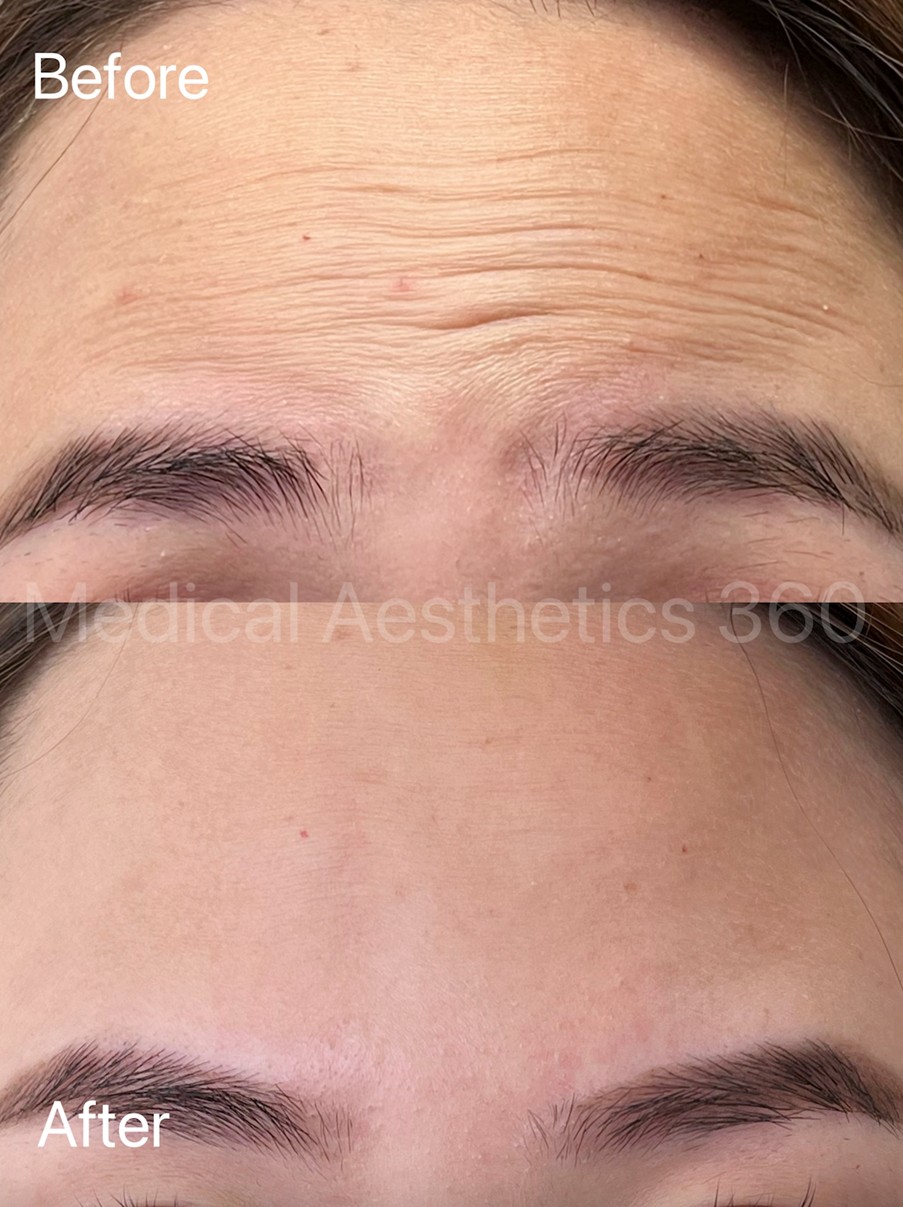
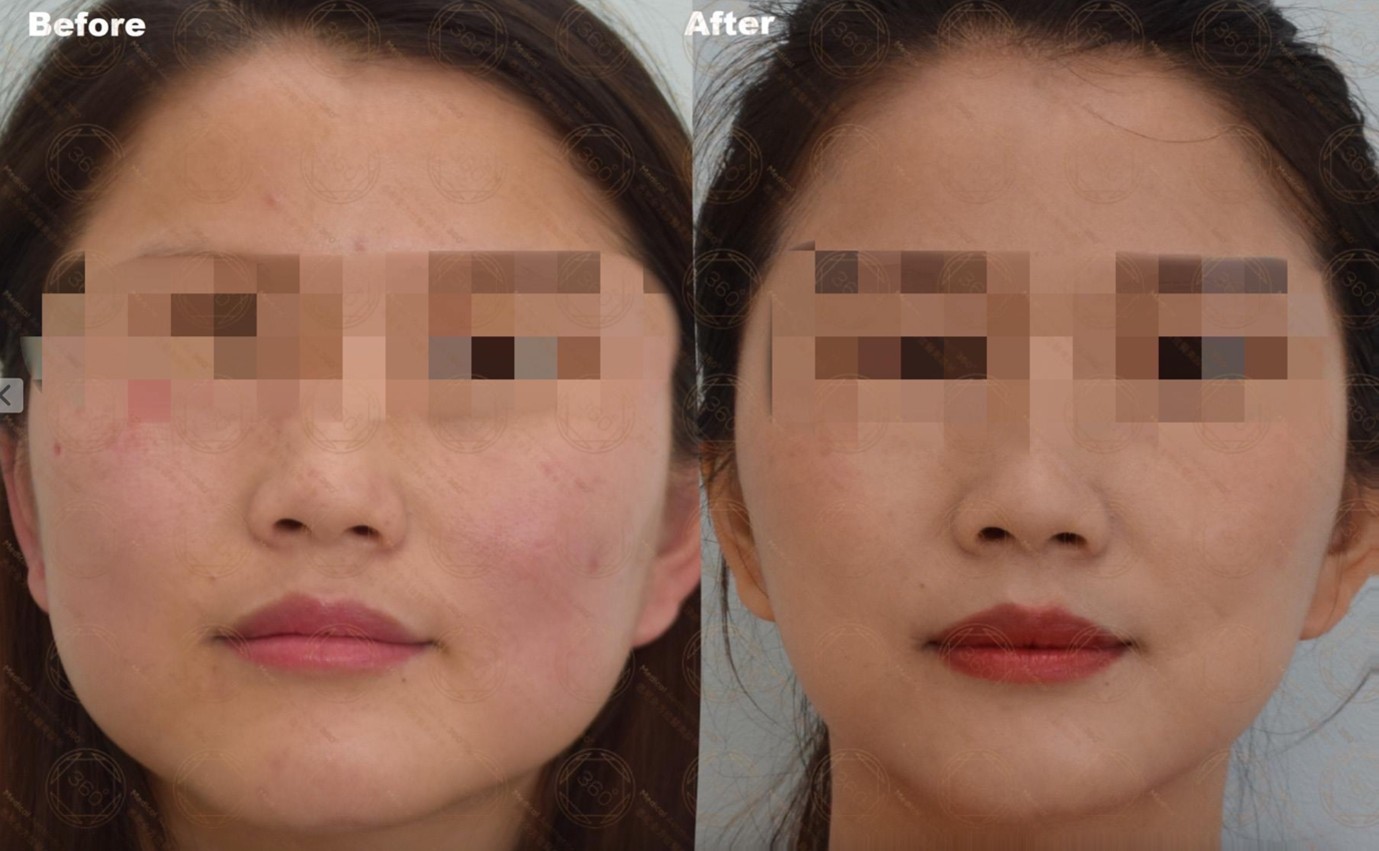
Crow’s feet, frown lines (often called “11s”), and horizontal forehead lines are some of the most common facial concerns searched online. These lines are known as dynamic wrinkles because they form from repeated muscle movement—smiling, squinting, concentrating and raising the brows. Over time, natural collagen changes can make these lines more visible, even at rest.
How Wrinkle Treatment Works
After a personalised medical consultation, a registered health practitioner will assess your facial anatomy, muscle activity and aesthetic goals. For suitable patients, one option may involve a prescription-only medicine that temporarily relaxes specific facial muscles responsible for creating expression lines. By reducing repetitive muscle contraction, the skin above can appear smoother and more refreshed.
Treatment is tailored to each individual. Small, precise placements are used to soften movement while maintaining natural expression. The goal is not to remove character or personality, but to achieve balanced, subtle improvement appropriate to your facial proportions.
Because this involves a regulated, prescription-only medicine, it cannot be advertised directly to the public. Suitability, product selection and dosing are determined only after a thorough consultation and informed consent process.
Frequently Asked Questions
Will I look unnatural or “frozen”?
A conservative, individualised approach aims to preserve expression. Appropriate dosing and technique are essential.
When will I see results?
Many patients notice gradual changes within several days, with full effect typically developing over one to two weeks. Results vary between individuals.
How long does it last?
Effects are temporary. Duration varies depending on muscle strength, metabolism and treatment plan, but maintenance treatments are commonly required.
Is it painful?
Most patients describe brief, mild discomfort. Comfort measures can be discussed during your appointment.
What are the risks?
All medical procedures carry risks. Possible side effects include redness, swelling, bruising, headache and temporary asymmetry. In rare cases, drooping of the eyelid or brow may occur. Your practitioner will discuss risks, benefits and alternatives before proceeding.
When to make an appointment.
If crow’s feet, frown lines (11s) or forehead lines are concerning you, book a consultation with an experienced medical practitioner to discuss appropriate wrinkle treatment options and develop a personalised plan.
Disclaimer
This information is general in nature and does not replace individual medical advice. Prescription-only treatments are available only following a consultation and may not be suitable for everyone. Individual results vary. All procedures should be performed by appropriately qualified and registered health practitioners in accordance with Australian regulatory guidelines.