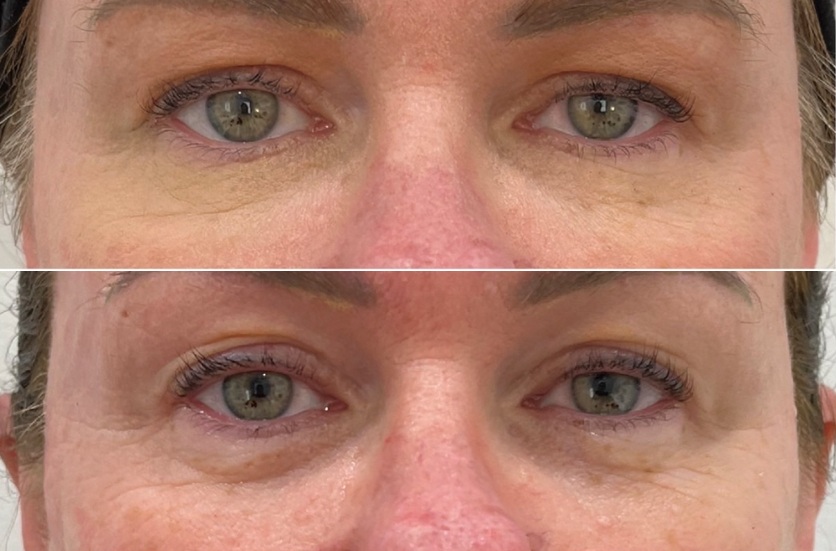
Under-eye hollowing (often called a “tear trough”) is one of the most common reasons people feel they look tired, drawn, or older than they feel. At Medical Aesthetics 360, a personalised assessment is used to identify what’s driving the concern—contour change, skin thinning, laxity, or uneven tone—so the treatment plan stays natural and balanced.
What Is Under-Eye Hollowing?
Under-eye hollowing describes a visible dip or groove under the lower eyelid that can create shadowing. Some people notice it mostly in photos or certain lighting. Others feel it makes concealer settle into lines or emphasises a tired look.
Why Under-Eye Hollowing Happens
Under-eye hollowing is rarely caused by one factor alone. Common contributors include:
- Volume changes in the under-eye and upper cheek (mid-face support)
- Thinning skin and reduced collagen, which can make contours or vessels more visible
- Skin laxity, which can exaggerate a “step-off” between lower lid and cheek
- Dark circles due to pigment, vascular tone, or shadowing
- Lifestyle factors such as sleep quality, allergies, dehydration, and frequent rubbing
The Medical Aesthetics 360 Approach: A Layered, Multi-Modal Plan
Because under-eye hollowing often involves a mix of contour change, skin thinning, laxity, and uneven tone, the most natural results typically come from combining complementary treatments rather than relying on a single option. A tailored plan at Medical Aesthetics 360 may include:
- Under-skin boosters to improve hydration and fine texture
- Biostimulator strategies to support collagen and thicken delicate under-eye tissue over time
- Thermage to tighten and firm the skin for a smoother lid-to-cheek transition
- Rejuran for regenerative skin support and bio-stimulation
- Laser toning when dark circles or uneven tone are also present
Step 1: Under-Skin Boosters for Hydration and Subtle Support
When the under-eye looks crepey, dry, or tired (even without significant volume loss), under-skin boosters can help improve hydration and surface texture. The aim is not to create puffiness, but to refine skin quality so the hollow appears less harsh and makeup sits more smoothly.
This option is often considered when hollowing is mild to moderate, the skin is thin or dehydrated, and fine lines or makeup creasing are key concerns.
Step 2: Consider a Biostimulator to Thicken the Under-Eye Area
In many cases, the under-eye looks hollow because the skin and supporting tissue have become thinner and less resilient. Biostimulator approaches can encourage collagen support over time, helping to strengthen the under-eye area gradually and naturally.
This may suit patients who prefer progressive improvement and long-term skin quality enhancement—particularly where translucency (visible vessels or bluish tone) contributes to a tired appearance.
Step 3: Thermage for Skin Tightening and Smoother Eye Contours
If under-eye hollowing is accompanied by laxity, tightening can make a meaningful difference. Thermage can support improved firmness and a smoother transition between the lower lid and upper cheek, which often reduces the look of shadowing.
Thermage is commonly considered when the concern includes softness or early laxity rather than only a groove. It may also complement booster and regenerative strategies in a staged plan.
Step 4: Rejuran for Regenerative Skin Support and Bio-Stimulation
For patients focused on improving under-eye skin quality and resilience, Rejuran may be included to support texture, elasticity, and overall skin vitality in this delicate area. It is often used as part of a broader approach alongside tightening and collagen-supporting strategies.
Step 5: If Dark Circles Are Also Present, Add Laser Toning for Tone Refinement
Not all dark circles are the same. Some are caused by shadowing from hollowing, while others relate to pigment or vascular tone. When assessment suggests uneven tone or pigmentation, laser toning may be added to refine brightness and improve overall uniformity—reducing the contrast that can make hollows look deeper.
For many people, the best improvement comes from treating both contour and colour, because even subtle tone contrast can emphasise an under-eye dip.
What Results Can You Expect?
Most patients benefit from a staged plan: early improvements in hydration and texture, followed by progressive strengthening and support over weeks to months. Maintenance intervals vary depending on the options chosen and individual factors.
The key is matching the plan to your anatomy and priorities—some people need more tightening, some need more skin quality support, and some benefit most from tone refinement alongside contour smoothing.
Book an Under-Eye Assessment at Medical Aesthetics 360
If under-eye hollowing or dark circles are making you look tired, book a personalised consultation at Medical Aesthetics 360. A clinical assessment helps clarify the cause (hollowing vs pigmentation vs laxity) and maps out a treatment plan designed for natural, balanced results.
Important Disclaimer
This article is general information only and is not medical advice. Treatment suitability, risks, downtime, and expected outcomes vary between individuals. A consultation and clinical assessment are required to determine the most appropriate options. All cosmetic procedures carry potential risks and may not be suitable for everyone.