


Movement
Repeated expression creates predictable folds. The aim of any movement-related discussion is to preserve a face that still looks and feels like your own.
Understand your lines. Explore your options. A doctor-led consultation helps you make sense of forehead lines, frown lines, crow’s feet and changes in skin quality.
A wrinkle is not a diagnosis. Movement, sun exposure, skin quality and deeper facial support can contribute in different ways. At MA360, we assess the cause before discussing a plan, its likely benefits, limitations, recovery and risks.
Doctor-led assessment in Chatswood and Hurstville. Bring your questions; you do not need to arrive with a treatment chosen.
Facial ageing happens across several layers. The skin becomes thinner and less elastic, fat compartments and deeper support change, and repeated muscle movement continues to fold the skin. Sun exposure adds its own changes to collagen, elastic fibres and pigmentation.
This is why a treatment that suits a faint smile line may not suit an etched forehead crease. It also explains why treating movement alone may leave a resting line largely unchanged, or why resurfacing alone may not address a fold caused by deeper support.
A useful consultation separates what can reasonably improve from what is unlikely to respond to the proposed pathway.
An evidence-based review describes age-related change across the facial skeleton, fat compartments, muscle and skin. This supports assessing the face in three dimensions rather than treating every wrinkle as a surface problem. Read the facial ageing review on PubMed.
Many lines start with expression and become visible at rest as skin structure changes over time.
These are most visible when you smile, frown, squint or lift the brows. They reflect normal facial movement and are often first noticed around the eyes, forehead and between the brows.
These remain visible when the face is relaxed. Repeated folding may contribute, but reduced collagen, sun damage, skin thinning, laxity and structural change can also matter.
Repeated expression creates predictable folds. The aim of any movement-related discussion is to preserve a face that still looks and feels like your own.
Fine lines may reflect changes in hydration, barrier health, collagen, elasticity and cumulative ultraviolet exposure.
Deeper folds can reflect changes in fat, ligaments, bone and laxity. In these cases the wrinkle may be a sign of a broader structural change.
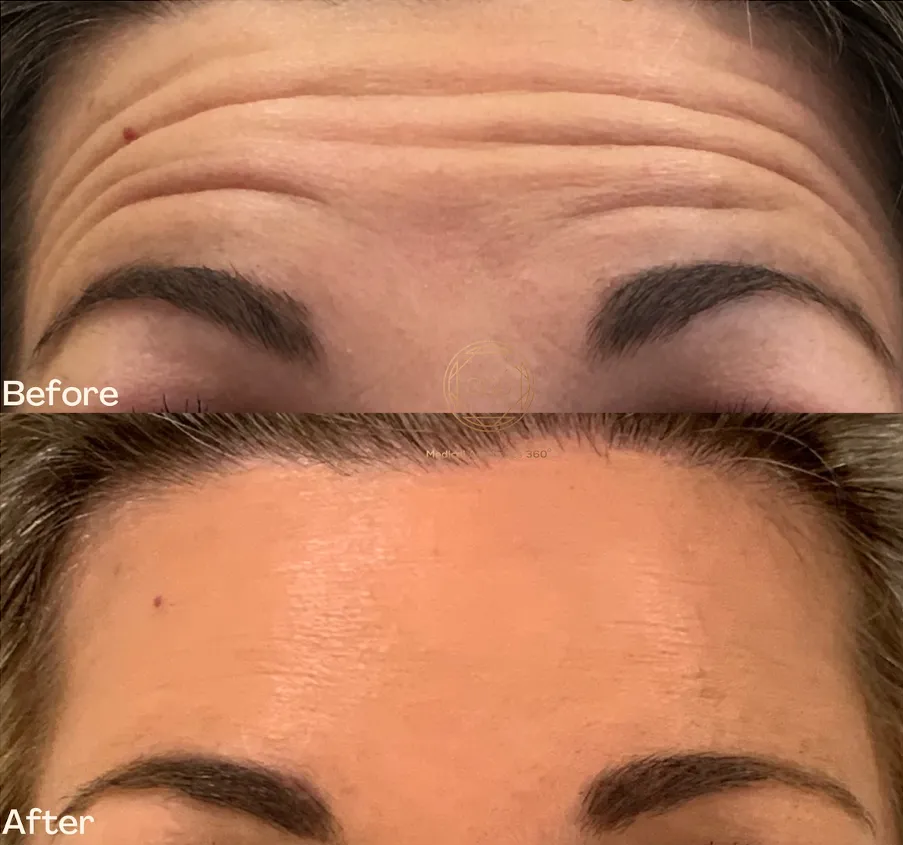
Read each case for its context. These individual examples are not a prediction of your result, and assessment may lead to a different plan or no treatment.
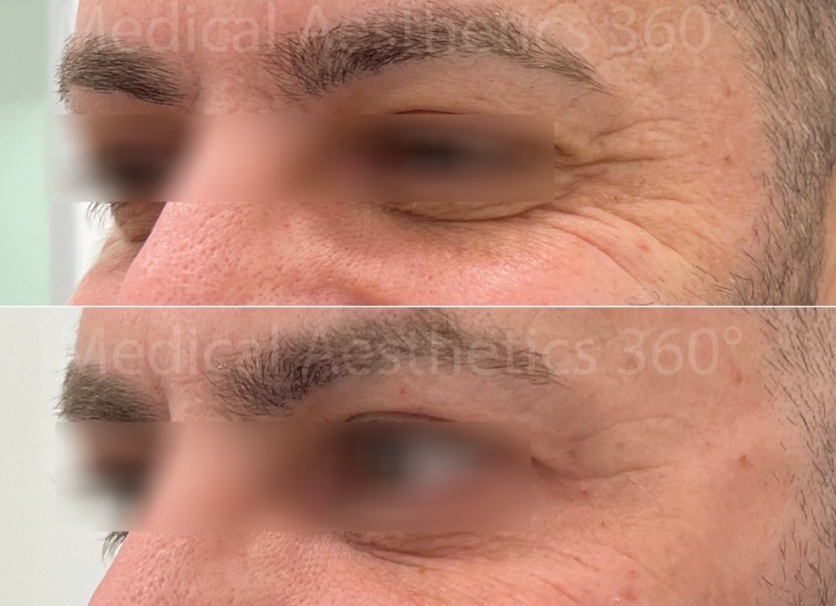
Smile-related movement, eye shape, sun exposure and the quality of the surrounding skin are considered together.
Explore the crow's feet example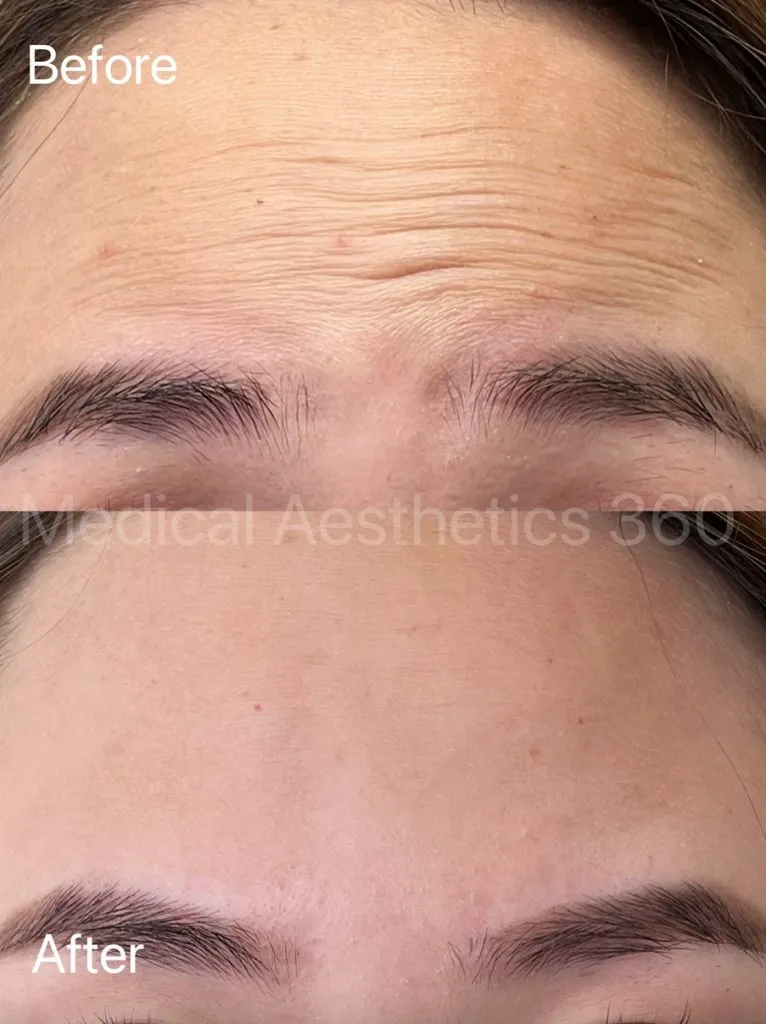
Horizontal creases are assessed alongside brow position and the way the forehead helps lift the eyebrows.
Explore the forehead line example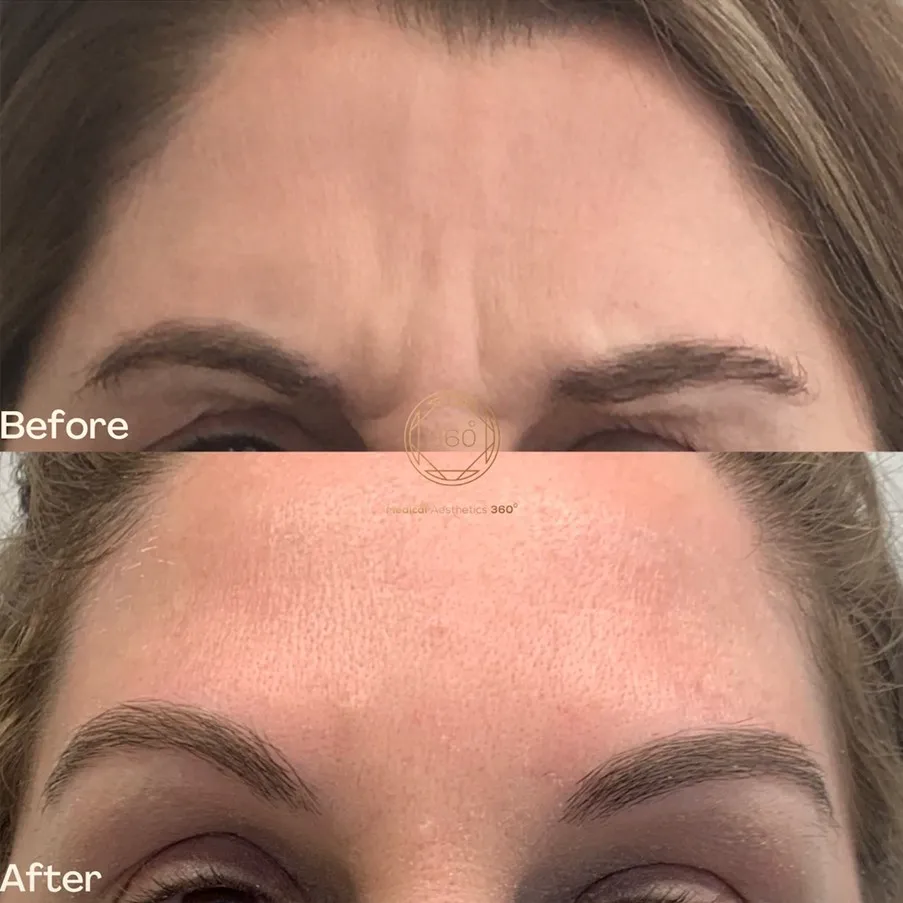
The strength of brow movement and whether a crease remains when the face relaxes help shape the discussion.
Explore the frown line example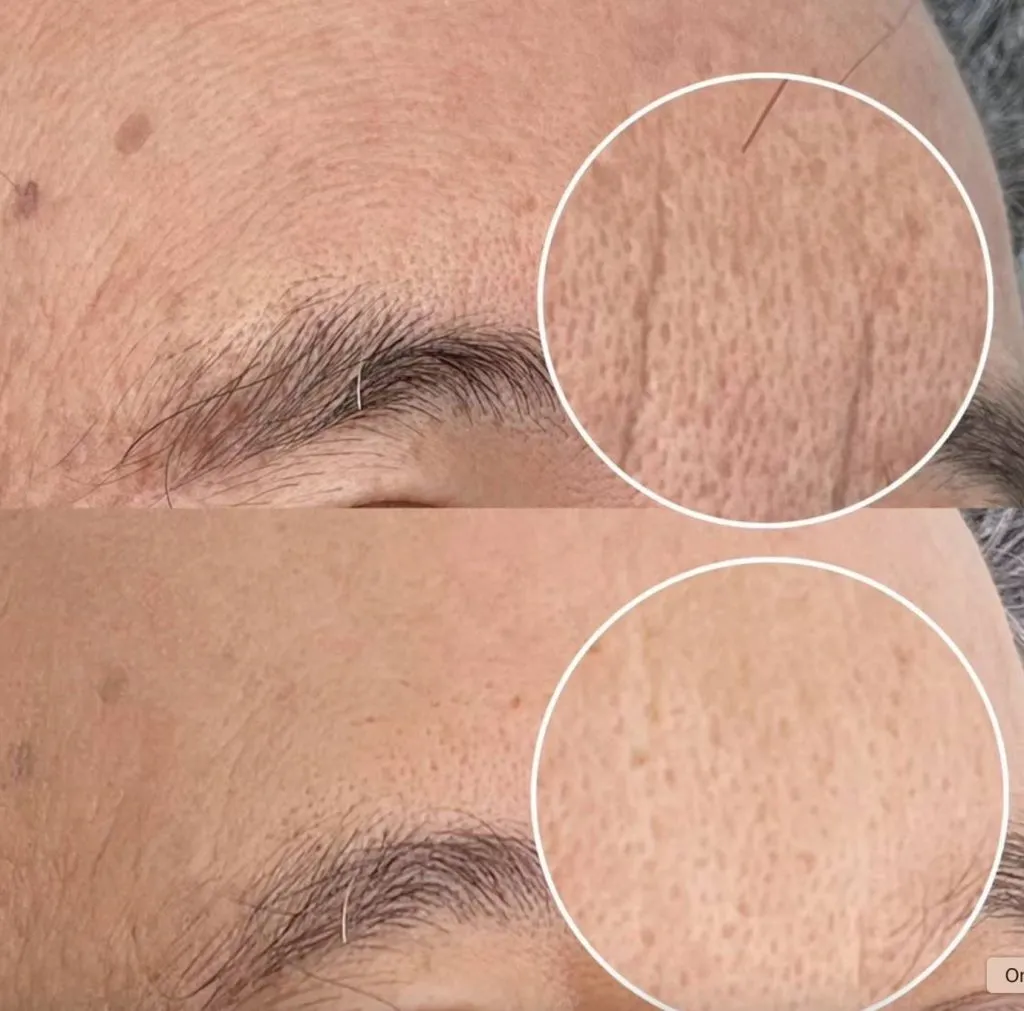
When a line remains at rest, skin thinning and the established crease may need attention as well as movement.
Explore the static line exampleImages show individual before-and-after comparisons. Outcomes and recovery vary. An image alone cannot establish the treatment used, suitability or expected benefit for another person.
One area can influence another. Forehead planning can affect brow position, while treatment around the eyes should preserve a natural smile.
Brow position and compensatory forehead movement are important, especially if the brows already feel heavy.
See forehead-line examples →The strength of brow movement and the depth of the resting crease are assessed separately.
See frown-line examples →Eye shape, smile pattern, sun exposure and thin surrounding skin all influence these lines.
See crow’s-feet examples →Fine skin, movement, pigmentation, fluid tendency and hollowness can overlap in this delicate area.
Explore eye-area skin care →Upper-nose lines may appear with expression and are considered in relation to neighbouring movement.
Ask about facial movement →Movement, sun exposure, skin texture and deeper support can all contribute around the mouth.
Read about smile lines and folds →A pebbled chin during expression may relate to muscle activity as well as the shape of the underlying chin.
Explore chin assessment →Visible bands should be assessed alongside neck movement, skin laxity and the quality of the overlying skin.
Read about neck-band assessment →Not every pathway is appropriate for every patient, and combining treatments is useful only when each one has a clear purpose.
Dynamic lines are assessed with attention to expression, brow position, anatomy and function. Your clinician explains which options, if any, are appropriate after reviewing your medical history and goals.
How your consultation works →Daily sun protection, evidence-based skincare and selected treatments may help when fine lines are strongly influenced by dehydration, texture and photoageing.
Explore skin-quality concerns and the guide to facial ageing.
Etched lines, pores, roughness or sun damage may lead to discussion of lasers or other energy-based treatments. Recovery depends on the device and intensity.
Read about fractional eCO2 resurfacing, LaseMD, Morpheus8 RF microneedling and Fotona laser. These approaches differ in suitability and recovery.
When the visible line is driven by looseness or altered facial support, tightening or a broader facial-balance assessment may be more relevant than treating the crease alone.
Start with the skin-tightening overview, then compare Thermage FLX, Ultherapy PRIME or XERF with your clinician.
Crow's feet can involve smiling, thin skin and ultraviolet damage. Forehead lines can involve repeated lifting and brow position. Mouth lines can reflect movement, surface texture and support. A layered plan addresses separate causes in a sensible order rather than repeating the same treatment.
Suitability depends on your health, anatomy, medications, allergies, previous treatment, skin condition and goals. Pregnancy or breastfeeding, active infection, certain neurological or muscular conditions, bleeding risks and unrealistic expectations may change whether treatment is appropriate.
Risks and recovery differ between treatment pathways. Your consultation should cover common side effects, less common complications, alternatives and what to do if something unexpected occurs.
You can take time to consider your options. Treatment is only considered after an individual assessment, and your clinician may recommend a staged plan, further review or no procedure.
The purpose of consultation is to understand the concern and decide whether treatment is suitable, not to assume a procedure is required.
Your medical history, facial movement, resting lines, skin quality, previous treatments and overall proportions are reviewed.
You receive an explanation of appropriate options, expected progression, limitations, costs, risks, alternatives and recovery.
If you choose to proceed, consent and aftercare are documented. Some plans are staged so the response can be reviewed before adding another treatment.
Read the profiles of Dr Suzanna Luo, Dr Chun-Yen Huang and Dr Elena Luo, or meet the MA360 medical team. Tell us any doctor or language preference when enquiring; the team confirms availability for your chosen clinic.
Choose the clinic that suits your journey. Visit its location page for the doctors, opening hours, entrance details and directions before requesting an appointment.
A North Shore location near Chatswood Station and Westfield, welcoming patients from Chatswood and surrounding suburbs.
Explore the Chatswood clinicRequest a consultation · select Chatswood →Near Hurstville Station, welcoming patients from St George, the Sutherland Shire and those travelling from Wollongong and the Illawarra.
Explore the Hurstville clinicRequest a consultation · select Hurstville →Both clinics: Tuesday–Saturday, 9:00 am–5:30 pm · 1300 338 307. Confirm your appointment address and practitioner with our team. Hurstville MediSpa appointments use a separate Dora Street address.
Some pathways cause little visible interruption, while resurfacing or more intensive collagen treatments may involve swelling, redness, sensitivity, peeling or time away from usual activities. Your expected recovery should be clear before treatment day.
Practical answers for patients considering a facial line consultation in Chatswood or Hurstville.
Dynamic wrinkles appear mainly with facial expression. Static wrinkles remain visible when the face rests and are more likely to involve established creasing, skin quality or deeper structural change.
Common concerns include the forehead, frown area, crow's feet, upper nose, under-eyes, mouth, chin and selected neck lines. Each area has different anatomy and movement.
The consultation should define how much change feels appropriate to you and what is realistic for your anatomy. Preserving natural expression and proportion is an important part of planning.
Not always. An etched crease may soften without disappearing. Skin quality, sun damage, laxity and structural support may limit what one treatment can achieve.
There is no single timeline. If treatment is appropriate, the expected progression and review schedule depend on the selected pathway. Collagen remodelling, tightening and resurfacing changes may develop over time; your clinician will explain what is realistic for your plan.
There is no single duration for wrinkle treatment. Longevity varies with the procedure, area, skin condition, metabolism, sun exposure and ongoing ageing.
It varies. Some options cause mild temporary effects, while resurfacing can involve redness, swelling, sensitivity or peeling. Your likely recovery should be discussed before consent.
Depending on the cause, skincare, resurfacing, collagen-supporting or tightening options may be considered. They will not necessarily produce the same type of change as a movement-focused approach.
Yes, when texture, sun damage or laxity is contributing. Combination treatment should be staged thoughtfully and recommended only when each component addresses a separate concern.
Suitability depends on health history, medications, allergies, pregnancy or breastfeeding where relevant, active skin conditions, previous reactions and treatment goals.
Cost depends on the concern, the assessment and any suitable treatment plan. Ask our team to confirm the consultation fee for your appointment type. Any recommended treatment, its costs and alternatives are discussed before you decide.
Facial anatomy, movement and risk cannot be judged from a treatment name alone. Assessment allows the clinician to identify the likely cause, check suitability and explain realistic alternatives.
MA360 offers consultations at our Chatswood clinic on Albert Avenue and Hurstville clinic on Dora Street. Choose your preferred clinic on the enquiry form. The team confirms your appointment, practitioner and address.
You can enquire with your concern, such as forehead lines, frown lines, crow’s feet or lines visible at rest. Your clinician assesses the likely causes and discusses options. You are not required to choose a procedure in advance. See the consultation steps.
Tell us which lines or skin changes concern you and what you would like to understand. We will help arrange a consultation at your preferred MA360 clinic.
Select Chatswood or Hurstville on the form. Our team confirms your appointment; submitting an enquiry does not confirm a booking.