


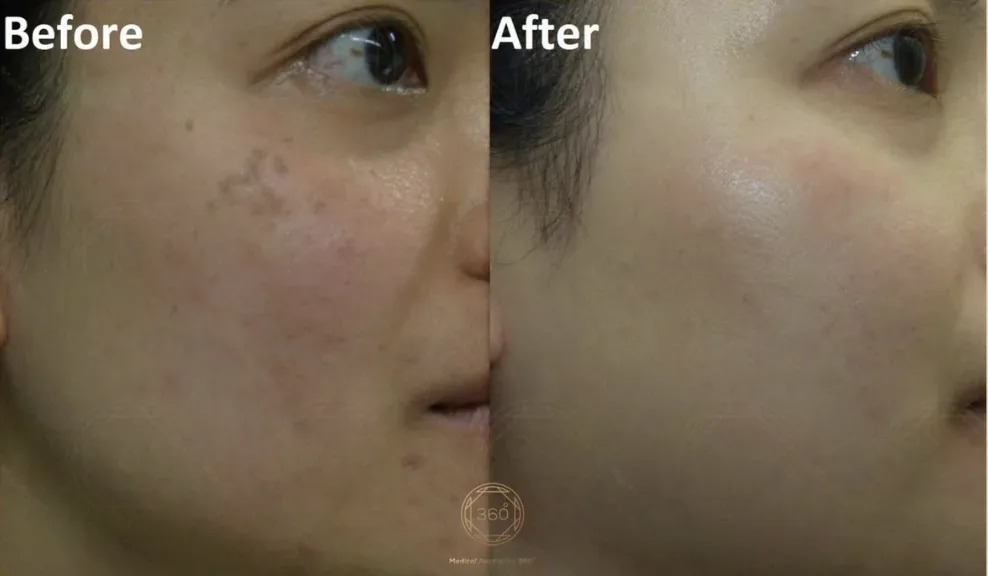
1. Why Wavelength and Pulse Width Matter in Pigment Treatment
Two core laser concepts that influence safety and results
• When patients search for pigmentation laser treatment in Sydney, they often compare machine names first, but the underlying laser physics is just as important.
• At Medical Aesthetics 360, doctors assess both wavelength and pulse width when deciding which laser approach may be more suitable.
• This matters because not all pigmentation sits at the same depth or behaves in the same way.
• A personalised plan is based on the concern being treated, the skin type, the risk profile and the overall treatment goal.
2. Laser Wavelength: What It Does and Why It Influences Treatment Choice
Depth and absorption help determine which wavelength may suit the target
• Laser wavelength is measured in nanometres and affects both absorption and how deeply energy can penetrate into the skin.
• Shorter wavelengths such as 532 nm are more commonly discussed for superficial targets, while 755 nm and 1064 nm are often considered for different depths and risk profiles.
• This is why freckles, lentigines, melasma and post-inflammatory pigmentation may not all be treated the same way.
• Depth, diagnosis and skin reactivity all influence which wavelength may be more appropriate.
3. Pulse Width: Why the Speed of Energy Delivery Also Matters
Pulse duration affects how selectively energy reaches pigment
• Pulse width refers to how long each pulse lasts and may be measured in nanoseconds or picoseconds.
• Laser treatment is not only about how much energy is delivered, but also how quickly that energy reaches the target.
• Pulse duration matters because it affects how selectively the target can be treated while helping to reduce unnecessary spread of heat.
• In pigment treatment, this supports safer planning for patients who may be more prone to post-inflammatory pigmentation.
4. Pico vs Nano: Why the Answer Is More Nuanced Than Marketing
Marketing claims do not replace diagnosis and parameter selection
• A common misunderstanding is that picosecond lasers are always better than nanosecond lasers, but this is an oversimplification.
• Both pulse domains can be clinically effective when matched appropriately to the indication, wavelength and treatment plan.
• Clinical outcomes also depend on diagnosis, pigment depth, spot size, fluence, treatment interval, aftercare and operator technique.
• The best laser is not simply the newest device, but the one that best matches the patient’s diagnosis and skin behaviour.
5. Why Doctor Assessment Matters at Medical Aesthetics 360
Why doctor-led assessment matters more than machine names alone
• Pigment treatment can be complex, especially when there is a risk of rebound pigmentation, mixed-depth pigment or melasma-prone skin.
• At Medical Aesthetics 360 in Chatswood, Hurstville and Sydney, consultations focus on individual assessment rather than generic machine-based recommendations.
• A doctor-led plan helps guide wavelength selection, pulse strategy, treatment spacing and aftercare more safely.
• The goal is to create a personalised pigment treatment pathway that supports clearer explanations, safer planning and more predictable long-term outcomes.
Disclaimer – Medical
This article is intended for general educational purposes only and does not replace an in-person consultation. All medical and cosmetic procedures carry risks, and treatment suitability varies from person to person.