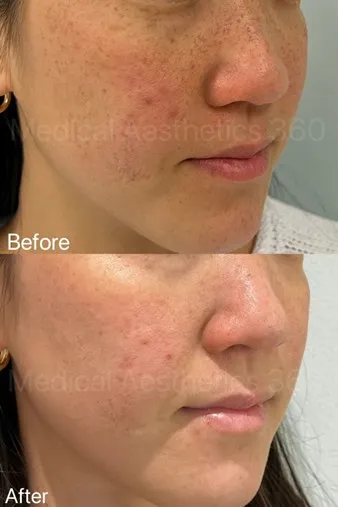
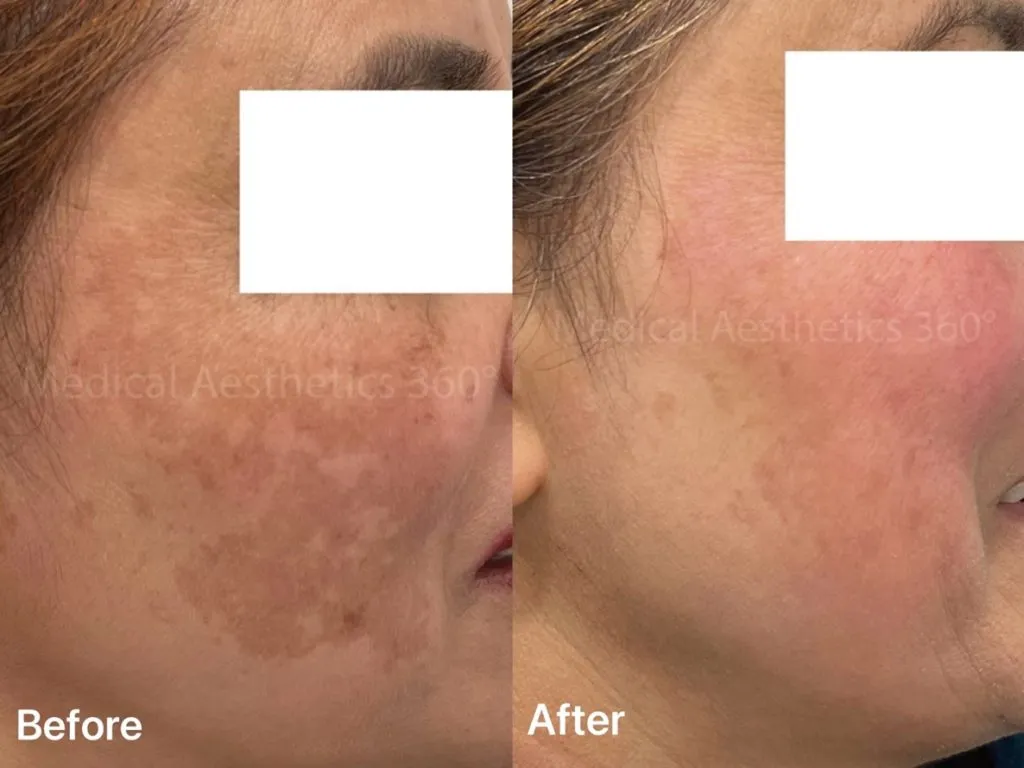
1. Why Pigmentation Treatment Is Not One-Size-Fits-All
• Pigmentation concerns can include freckles, sun spots, age spots, uneven tone and post-acne marks, but these do not all behave the same way.
• At Medical Aesthetics 360, laser planning is based on clinical assessment rather than a one-laser-fits-all approach.
• Key factors include pigment type, depth, stability, skin reactivity and the risk of post-inflammatory hyperpigmentation.
• This is why two patients with similar-looking pigment may receive different treatment recommendations in Chatswood, Hurstville or Sydney.
2. Stable vs Reactive Pigmentation: The First Decision
• One of the most important questions is whether the pigment is relatively stable or reactive.
• Stable pigment is often more predictable and may respond well when the correct device is matched to the correct depth.
• Reactive pigment, including melasma-prone presentations, usually requires a gentler and more conservative strategy.
• In these cases, controlling triggers and minimising inflammation can be just as important as the in-clinic treatment itself.
3. Epidermal vs Dermal Pigment: Why Depth Matters
al pigment sits closer to the surface and may respond more quickly in suitable cases.
• Dermal pigment sits deeper and often appears more grey, blue or shadowed, which usually requires more careful long-term planning.
• Depth influences which wavelength or light-based approach may be more suitable and how quickly improvement may occur.
•
A proper diagnosis helps avoid treating deeper pigment as if it were superficial, which can lead to disappointing outcomes or
4. PIH Risk: A Major Factor in Laser Selection
• Post-inflammatory hyperpigmentation can shape the entire treatment plan, especially in patients with a history of rebound pigment or inflammation.
• Some wavelengths carry a higher relative PIH risk, while others may be chosen more conservatively to support safer outcomes.
• This is one reason treatment recommendations are not based on machine name alone.
• At Medical Aesthetics 360 Sydney, device choice and settings are selected with a bias toward safer, more stable results over time.
5. The Real Logic Behind a Personalised Pigmentation Plan
• A doctor-led pigmentation plan usually considers the diagnosis, pigment stability, depth, PIH risk, acceptable downtime and long-term maintenance.
• Good pigment management may also include skin preparation, careful spacing between sessions and strong sun-protection habits.
• The aim is not simply to clear visible pigment quickly, but to support predictable improvement with less risk of rebound.
• At Medical Aesthetics 360 in Chatswood and Hurstville, pigmentation consultations focus on matching the treatment pathway to the patient’s skin and goals.
Disclaimer – Medical
This article is intended for general educational purposes only and does not replace an in-person consultation. All medical and cosmetic procedures carry risks, and treatment suitability varies from person to person.