


Double eyelid surgery in Sydney, designed around your anatomy
Double eyelid surgery—also called Asian double eyelid surgery, Asian eyelid surgery or Asian blepharoplasty—creates or refines an upper-eyelid crease. At MA360, the plan begins with your own eyelids and the degree of change you want, not a standard template.
Your doctor considers skin thickness, fullness, eyelid-opening strength, natural asymmetry and inner-corner anatomy. The aim is a proportionate fold that moves with your eyes, respects your ethnic features and still feels like you.
All surgery carries risks and requires individual assessment. Review recovery, possible complications and the required consultation process before deciding.
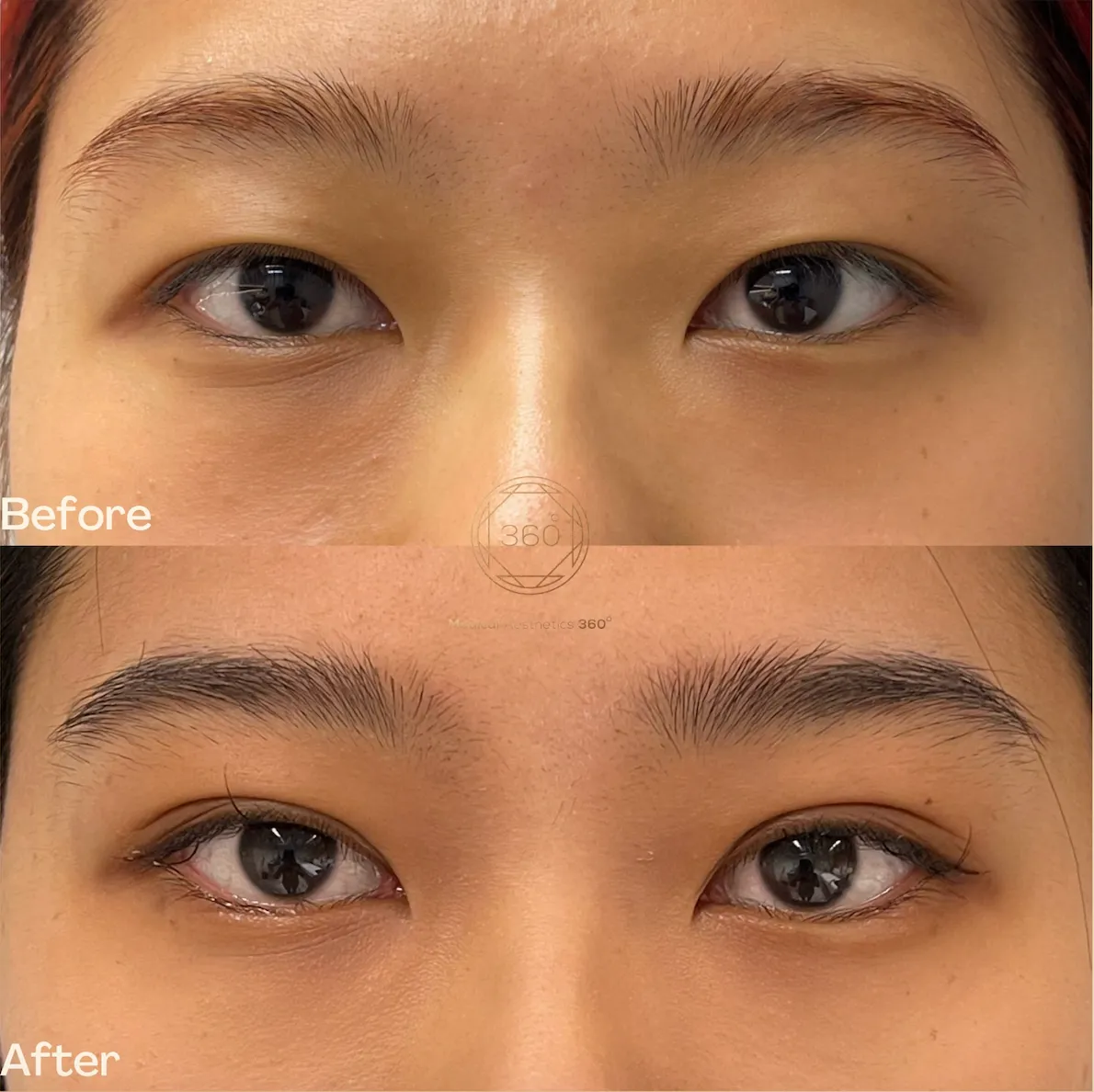
- Procedure
- Upper-eyelid crease creation or refinement
- Anaesthesia
- Often local anaesthetic; confirmed individually
- Early recovery
- Swelling and bruising vary with the technique
- Consultations
- Chatswood and Hurstville, Sydney
Different eyelids need different crease designs
Explore more MA360 eye and eyelid case studies. Each case shows one patient's anatomy, plan and result; it is not a promise of the outcome another patient will have.
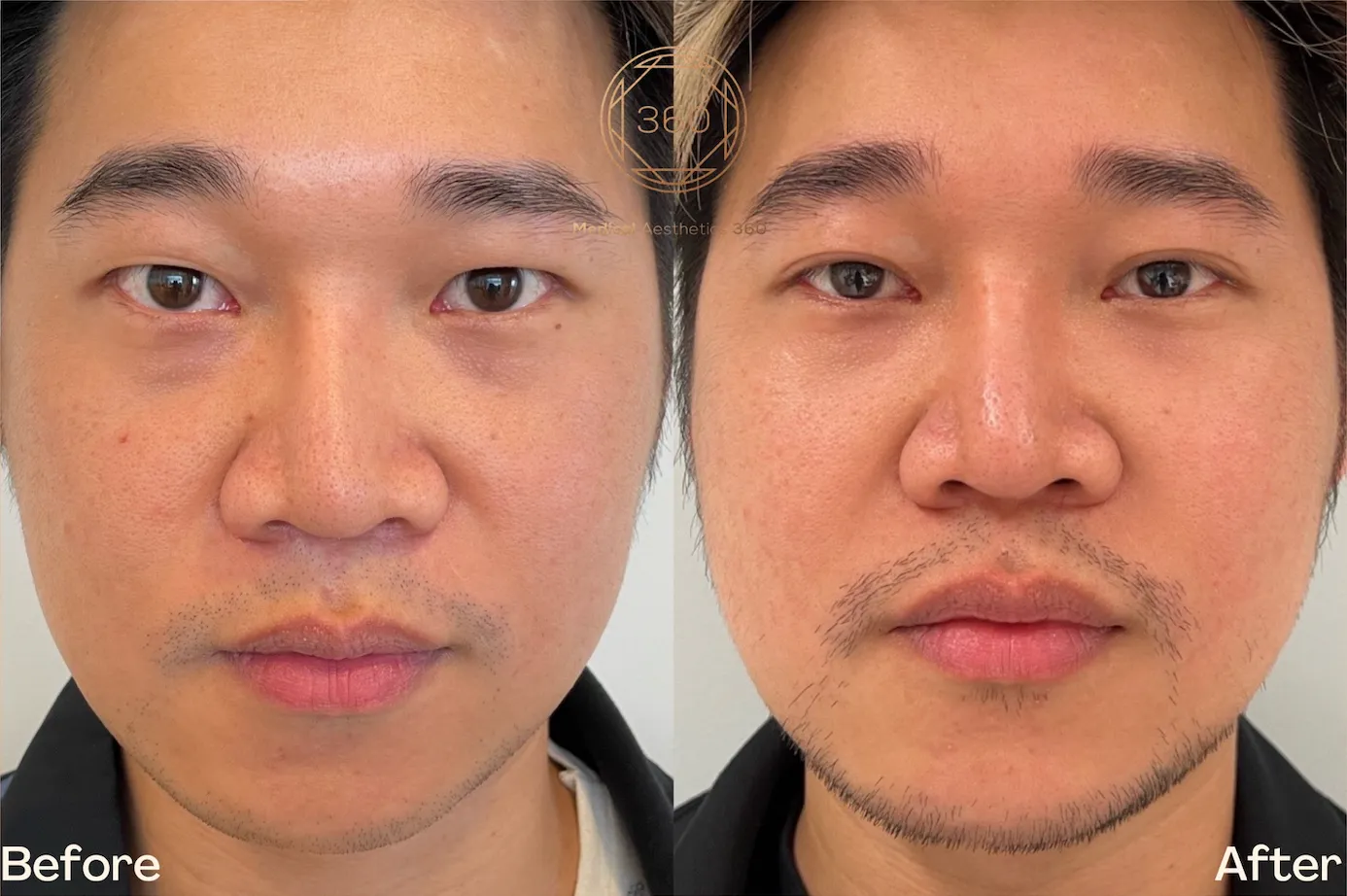
A more visible crease without an exaggerated fold
This patient's plan considered upper-eyelid definition in relation to his brow, eye shape and wider facial features.
Read the crease-definition case study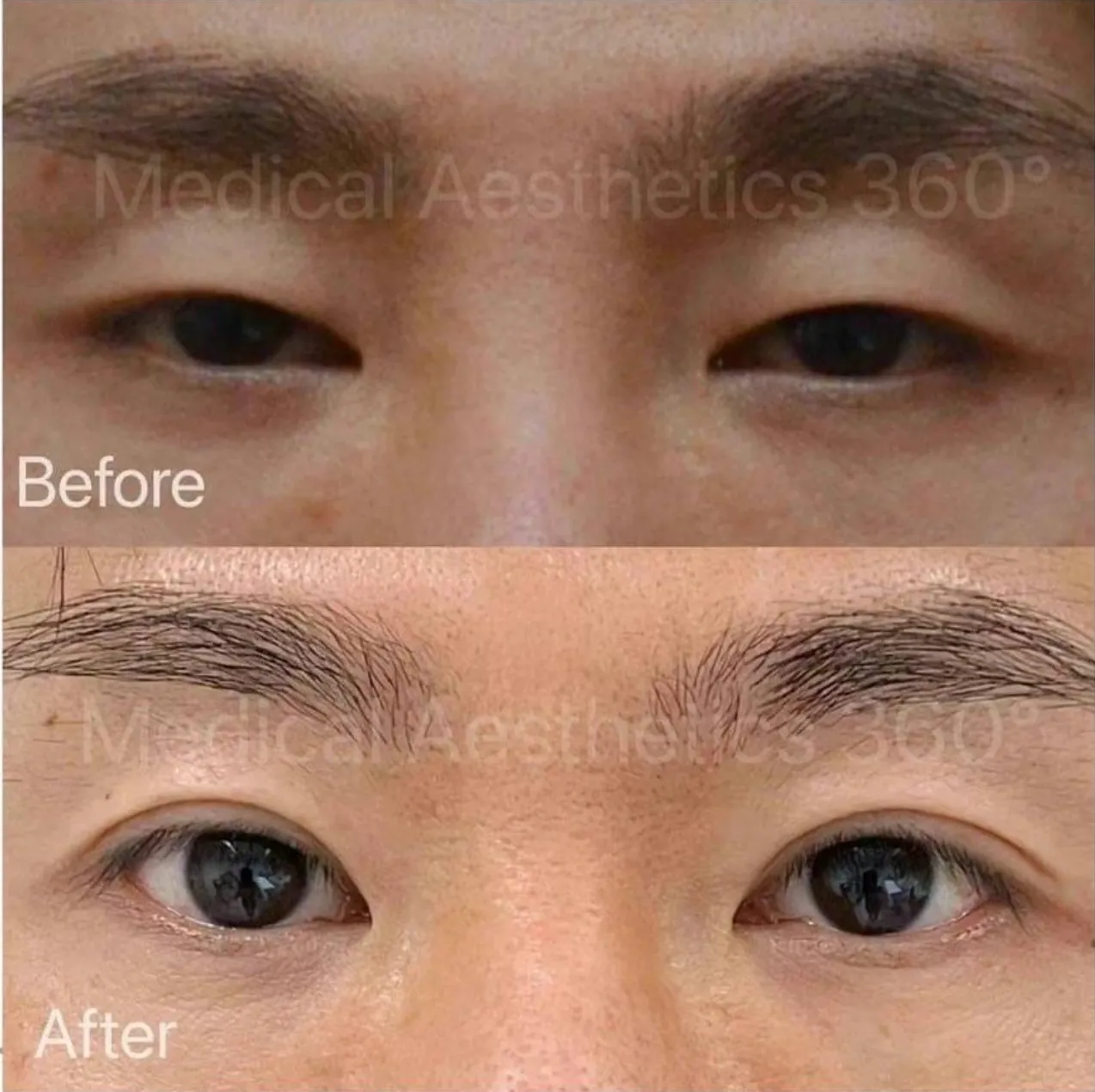
From a less-defined fold to a clearer eye contour
His consultation explored upper-lid heaviness and a conservative crease designed for his individual anatomy.
Read the upper-lid heaviness case studyWhat is double eyelid surgery (Asian blepharoplasty)?
Double eyelid surgery creates a connection between the upper-lid skin and deeper eyelid structures so a crease forms when the eye opens. Depending on the anatomy and method, the plan may also include conservative adjustment of skin or fat. The intended change is a visible, mobile fold—not a different eyeball or a standardised eye shape.
A monolid or single eyelid is normal anatomy, not a problem that must be corrected. Some adults consider crease surgery because their fold is absent, faint, unstable or different between the eyes. Others are actually concerned about excess skin, brow descent or true eyelid droop. Those issues need to be separated from crease creation; read how upper blepharoplasty for hooded or heavy eyelids differs.
You may ask about it when
- Your upper-eyelid crease is faint, inconsistent or absent
- The creases differ noticeably between your two eyes
- The fold changes through the day or is difficult to define with makeup
- You prefer clearer lid definition while retaining your ethnic identity
- You want to understand whether crease surgery or another option better fits the concern
It cannot promise
- Perfectly identical eyelids where natural anatomy differs
- An exact copy of another person's photograph
- A settled result before swelling and scar maturation are complete
- Protection from future ageing or tissue change
- Correction of ptosis, brow position or every cause of a heavy-looking eyelid
Incisional vs non-incisional double eyelid surgery
Searches for “Asian blepharoplasty” can describe more than one operation. An incisional method and a buried-suture or “non-incisional” method create the crease differently. Neither is automatically better: the useful question is which method, if any, your eyelid tissues can support.
Incisional method
A crease-line incision provides direct access for fixation and, where appropriate, conservative adjustment of skin or fat.
- May suit thicker, fuller or more complex eyelids
- Usually involves more early swelling and scar maturation
- Can offer stronger structural access when tissue needs adjustment
Suture / non-incisional method
Fine buried sutures create fixation through small access points without a long external crease-line incision.
- May suit selected thinner lids with little excess skin or fullness
- Often has a shorter early recovery than an incisional approach
- The fold can weaken and suture-related problems can occur
Combined or different planning
Existing scars, marked asymmetry, a strong epicanthal fold, brow descent or ptosis can change the plan.
- A crease-only procedure may not address the main concern
- Revision cases need assessment of previous fixation and scar tissue
- Function and safe eye closure take priority over crease height
Want more detail on the smaller-incision option? Compare suitability, fixation, recovery and limitations in MA360's guide to suture double eyelid surgery in Sydney. Technique availability and suitability are confirmed only after examination.
Why there is no universal double-eyelid design
Asian eyelids are diverse. A monolid, a low or partial crease and a more visible fold are all normal variations. The way a new crease forms depends on several tissue layers, so a design that suits one person may be unsuitable for another.
Skin
Thickness, elasticity and the amount of skin above the lash line affect how a crease forms and settles.
Fat and fullness
Preaponeurotic and superficial tissue can influence lid volume, fold depth and the risk of an over-hollowed contour.
Crease attachments
The relationship between skin and the levator aponeurosis helps determine whether a natural fold is present, faint or absent.
Eyelid opening
Levator function and true eyelid droop need to be separated from skin or crease concerns before surgery.
Inner-corner shape
The epicanthal fold and length of the eye opening influence whether a tapered, parallel or other crease design appears proportionate.
How a double eyelid crease is planned
A measurement on closed skin is only one part of the plan. Your doctor also considers the fold with your eyes open, while blinking and at rest, then weighs appearance against reliable movement and safe eye closure.
- Height and shape
- Individual rather than formulaic. Tapered, parallel, in-fold and out-fold are useful design descriptions, not one-size-fits-all prescriptions. The visible crease depends on skin, eye opening, inner-corner anatomy and your preference.
- Depth and fixation
- Stable, but not harsh. A fold that is too shallow may weaken; one that is too deep can look fixed. The technique and fixation points are selected for the eyelid tissues and intended movement.
- Skin and fullness
- Conservative handling matters. Where fullness contributes to the concern, selected tissue may be adjusted. Excessive removal can create hollowing, uneven contour or an aged appearance.
- Symmetry and function
- Both eyes are assessed open and closed. Natural asymmetry, eyebrow position, eyelid-opening strength and fold behaviour help determine whether a crease-only operation is suitable.
- Anaesthesia and time
- Often discussed under local anaesthetic. A procedure may take around 60 to 90 minutes, but the technique, complexity and individual plan can change this. Your treating doctor confirms the setting and timing.
A surgical instrument is not the treatment plan
A surgical instrument may be selected where clinically appropriate. The choice of instrument does not remove surgical risk or replace careful design, tissue handling, closure and aftercare.
Evidence supports balancing crease stability with movement
A systematic review published online in 2025 and in print in 2026 of incisional Asian blepharoplasty reported substantial variation in operative methods, reflecting differences between patients and techniques. The authors described the central challenge as balancing a stable crease with a dynamic fold that moves naturally. This supports individual planning rather than a fixed crease height or one preferred method for everyone. The evidence remains varied, so it cannot predict an individual's result. Read the systematic review on PubMed.
A good consultation should make the decision clearer
The appointment turns an aesthetic preference into a question of clinical appropriateness. It should establish whether the crease is the main concern, which method could be appropriate, and whether your eye surface, eyelid function, health and expectations make elective surgery reasonable.
Practitioner information: Dr Chun-Yen Huang is a General Practitioner (MBBS, BSc(Med) UNSW, FRACGP; AHPRA MED0001187421) whose published MA360 profile lists eyelid care among his clinical interests. When you enquire, the team must confirm the medical practitioner who would perform your surgery, that practitioner's current registration, the consultation location and the accredited procedure facility. You can also meet the wider MA360 medical team.
Your preferred crease
Discuss height, shape, depth and how visible you want the fold to appear with and without makeup.
Eye and health history
Dry-eye symptoms, contact lenses, vision procedures, thyroid disease, allergies, medicines and previous surgery all matter.
Functional examination
Eyelid opening, brow position, eye closure, tear-film symptoms, symmetry and skin or fat distribution should be assessed.
Trade-offs and consent
Your treating doctor should explain the proposed method, scars, recovery, complications, alternatives, total cost and revision considerations.
Australian cosmetic-surgery safeguards
Cosmetic surgery is elective and cannot be a same-day decision. Australian requirements include a referral from an Australian-registered GP or other non-cosmetic medical specialist, suitability and body-dysmorphic-disorder screening, and at least two pre-operative consultations. At least one consultation must be in person with the medical practitioner who will perform the surgery. A cooling-off period of at least seven days applies after two consultations and signed informed consent before surgery can be booked or a deposit paid. Read the Medical Board of Australia's cosmetic-surgery guidelines and GP-referral information.
Double eyelid surgery recovery: what to expect
The early crease is not the finished result. Swelling can make a new fold look higher, deeper or less even than it will after healing. Allow flexibility around work, study, photography and important events rather than expecting the eyelids to look settled at suture removal.
Procedure day
You return home with written aftercare, review arrangements and instructions about symptoms that need urgent attention. Arrange transport if advised.
First week
Swelling, bruising, tightness, watery eyes and light sensitivity are common. If an incision is used, sutures may be removed around one week.
Weeks two to four
Visible swelling often reduces and the crease starts to soften, although side-to-side differences can remain during healing.
Following months
Scar colour, fold depth and tissue movement continue to mature. Final review timing depends on the method and your progress.
Temporary effects can include
- Puffiness, bruising and tenderness
- Tightness or mild discomfort around the eyelids
- Watery or dry-feeling eyes
- Temporary blur or light sensitivity
- A crease that appears high, deep or uneven while swollen
General care principles
- Use cold compresses, wound care and prescribed medicines only as directed
- Keep the head elevated if advised
- Avoid rubbing the eyelids or disturbing an incision or access point
- Resume contact lenses, makeup, exercise and swimming only when cleared
- Use scar care, including silicone products, only if your doctor recommends it
For an independent Australian overview of eyelid surgery, preparation and recovery, see Healthdirect's blepharoplasty information. Your own written instructions take priority because recovery differs by technique and patient.
Double eyelid surgery risks
All surgery carries risk. Your individual likelihood and the significance of each issue depend on your anatomy, health, method and healing response.
- Bleeding, infection, delayed healing or visible scarring
- Crease asymmetry, loss, excessive or insufficient height, depth or multiple folds
- Suture irritation, cysts or palpable fixation points
- Dry-eye symptoms, difficulty closing the eyelids or corneal irritation
- Ptosis, eyelid retraction, contour irregularity or dissatisfaction
- Need for observation, treatment or revision surgery
Know when not to wait
Most early swelling and bruising is expected, but rapidly changing, severe or visual symptoms require prompt assessment.
Seek urgent or emergency care
Contact the treating team urgently for rapidly increasing one-sided swelling, severe or escalating pain, marked bleeding, fever, worsening redness, inability to close the eye, new double vision or symptoms that feel distinctly wrong. Sudden loss or reduction of vision, eye bulging, severe eye pain or neurological symptoms require immediate emergency assessment; call 000.
Double eyelid surgery consultations in Chatswood and Hurstville
If you are comparing Asian blepharoplasty in Sydney, choose the consultation location that works for you. Tell the team you are asking about double eyelid surgery so they can confirm the relevant doctor, clinic and appointment type.
Chatswood clinic
Convenient for Sydney's North Shore and close to Chatswood Station, Metro, Westfield and Chatswood Chase.
Suite 203, Level 238B Albert Avenue
Chatswood NSW 2067 Plan your Chatswood clinic visit →
Hurstville clinic
Located in central Hurstville for the St George area, close to Hurstville Station and local bus connections.
41–43 Dora StreetHurstville NSW 2220 Plan your Hurstville clinic visit →
Double eyelid surgery FAQs
These answers are general. Your consultation should provide advice specific to your eyelids, health, preferred crease and recovery needs.
What does double eyelid surgery involve?
The procedure creates or refines a connection that forms an upper-eyelid crease when the eye opens. Depending on the method and anatomy, the plan may use buried sutures, a crease-line incision, fixation and conservative adjustment of skin or fat.
Is double eyelid surgery the same as Asian blepharoplasty or upper blepharoplasty?
“Double eyelid surgery”, “Asian eyelid surgery” and “Asian blepharoplasty” are often used for crease creation or refinement. Upper blepharoplasty may instead focus on excess skin, heaviness or ageing change. The procedures can overlap, but the goal and tissue adjustment are not automatically the same.
What is the difference between incisional and non-incisional double eyelid surgery?
An incisional method uses a crease-line incision for direct fixation and possible tissue adjustment. A non-incisional or suture method uses small access points and buried sutures, with more limited access to skin and fat. The suture option may have a shorter early recovery in suitable anatomy, but the crease can loosen. Compare MA360's suture double eyelid surgery guide.
How long does the procedure take?
A double eyelid procedure may take around 60 to 90 minutes, but timing varies with the method, whether both lids need the same work and the complexity of the anatomy. Your treating doctor confirms the likely duration and procedure setting.
Is double eyelid surgery painful?
Local anaesthetic is commonly used. You may notice pressure or movement during the procedure and tightness, tenderness or puffiness afterwards. Anaesthesia, pain expectations and relief options should be discussed before surgery. Severe or escalating pain after surgery requires urgent advice.
How long is double eyelid surgery recovery?
Visible swelling and bruising are common during the first one to two weeks, although a suture method may settle sooner than an incisional method in selected patients. The crease can continue to soften and scars mature over several months. Allow more flexibility if your work is camera-facing or you bruise easily.
Will double eyelid surgery leave a visible scar?
An incisional method places a scar in the planned crease; it usually changes as it matures but cannot be promised invisible. A suture method avoids a long crease-line incision but still uses small skin access points. Scar visibility varies with technique, skin and healing.
How long do double eyelid surgery results last?
An incisional crease can be long-lasting, and a suture crease can also last well in suitable anatomy. Neither should be sold as a guaranteed lifetime result. Attachments can weaken, sutures can loosen, and skin, fat and brow position continue to change with age.
Can surgery make both eyelids perfectly symmetrical?
No. Faces, brows and eyelid-opening strength are naturally asymmetric. Surgery may improve a noticeable difference, but small variations can remain, and swelling can temporarily make the difference look greater.
What if ptosis or eyelid droop is part of the concern?
Ptosis relates to eyelid-opening function and is different from a faint crease or loose skin. It requires specific examination because crease surgery alone may not correct it. Brow descent, dry eye and eye-health conditions may also change the recommendation.
How much does double eyelid surgery cost in Sydney?
Total cost depends on the method, anatomy, complexity, anaesthesia, facility requirements and whether another eyelid issue needs treatment. After examination, ask for a written, itemised quote that explains practitioner, facility and anaesthesia fees, follow-up care, the revision policy and any possible additional costs. Contact MA360 to confirm the current consultation fee before booking.
Do I need a referral, two consultations and a cooling-off period?
Yes. Australian cosmetic-surgery requirements include a referral from an Australian-registered GP or other non-cosmetic medical specialist and at least two pre-operative consultations. At least one consultation must be in person with the medical practitioner who will perform the surgery. After two consultations and signed informed consent, a cooling-off period of at least seven days applies before surgery can be booked or a deposit paid. The clinic should explain the current requirements and process.
Can I book a double eyelid consultation in Chatswood or Hurstville?
Yes, you can request an eyelid consultation at MA360 Chatswood or Hurstville. Doctor and procedure availability can differ, so select your preferred clinic on the enquiry form and state that you want to discuss double eyelid surgery.
Find out which crease design—and which method—fits your eyelids
Bring photographs of looks you like and questions about recovery, scars, cost or symmetry. A consultation is for assessment and informed choice; it does not commit you to surgery.
Sources and medical review
This page combines general clinical information with Australian patient-safety requirements. Key sources include:
Continue your eyelid research
Use these related pages to compare methods, distinguish other eyelid concerns, review individual cases and plan a Sydney clinic visit.
↑ Back to the topThis page provides general information and does not replace individual medical or eye-care advice. Cosmetic surgery is elective and carries risks. Suitability, alternatives, total costs, expected recovery and possible complications must be discussed during consultation. Individual experiences and outcomes vary; no result can be guaranteed.