


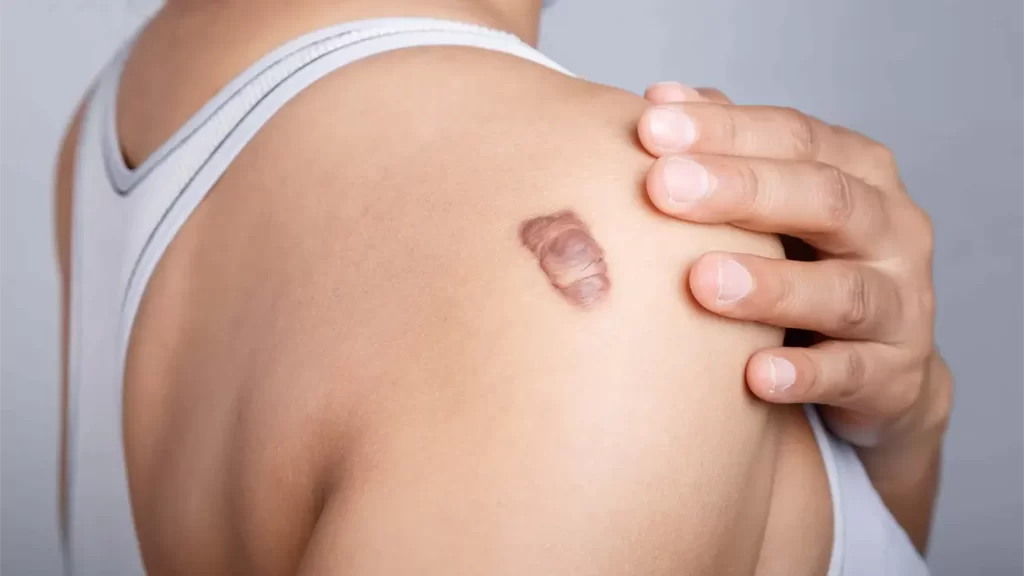
1. What a Keloid Scar Is and Why It Behaves Differently
Raised scars need a different approach from ordinary scar tissue
• A keloid scar is a raised, firm overgrowth of scar tissue that extends beyond the original wound boundary.
• Unlike a normal scar, a keloid can continue producing excess collagen and may enlarge over time.
• Common features can include thickened tissue, a smooth or shiny surface, redness or darker pigmentation, itching and tenderness.
• At Medical Aesthetics 360, keloid assessment in Chatswood and Hurstville focuses on why the scar is behaving this way and how recurrence risk can be reduced.
2. Why Keloids Form and Who Is More Prone to Them
Genetics, skin behaviour and wound tension can all influence risk
• Keloids develop because of an overactive wound-healing response in which collagen production does not switch off normally.
• Important risk factors can include family history, younger age, darker skin phototypes, delayed healing, infection and acne-related inflammation.
• Some people are also more prone to keloids in areas exposed to repeated movement or mechanical stress.
• Understanding these risk factors helps guide safer treatment planning and realistic expectations.
3. High-Risk Areas for Keloid Formation
Some body areas are far more prone to keloid recurrence
• High-tension areas such as the central chest, upper back, shoulders, upper arms, jawline and earlobes are more prone to keloid formation.
• These regions experience repeated mechanical stress, which may stimulate ongoing collagen production during healing.
• Acne on the jawline, chest and back can trigger inflammatory scars that later evolve into keloids in predisposed individuals.
• By contrast, some areas such as the upper eyelids, palms and soles are generally lower risk.
4. Modern Keloid Treatment Options at Medical Aesthetics 360
Modern management often involves staged combination treatment
• Keloid treatment is usually approached in a staged way because monotherapy is rarely sufficient for higher-risk scars.
• Intralesional corticosteroid injections may help suppress excess collagen, flatten the scar and reduce itch or tenderness.
• Laser-based options such as Nd:YAG 1064 nm and BBL may be considered to support redness reduction, remodelling and overall scar appearance in selected cases.
• Surgical excision may be appropriate for some larger or resistant scars, but recurrence prevention planning remains essential.
5. Why Early Assessment and Personalised Planning Matter
Early review helps shape safer long-term scar control
• Early review can help reduce further thickening, improve comfort and lower long-term recurrence risk.
• A proper scar assessment considers scar age, growth behaviour, anatomical tension, previous treatments, skin type and recurrence profile.
• At Medical Aesthetics 360 Sydney, keloid consultations in Chatswood and Hurstville are tailored to the location and behaviour of the scar rather than using a one-size-fits-all formula.
Disclaimer – Medical
This article is intended for general educational purposes only and does not replace an in-person consultation. All medical and cosmetic procedures carry risks, and treatment suitability varies from person to person.