


Case Study
Forehead Lines in Your 30s: Why Proper Assessment Matters for Natural-Looking Upper-Face Refreshment
Story
Not all forehead lines are the same, and that was one of the most important parts of her consultation.
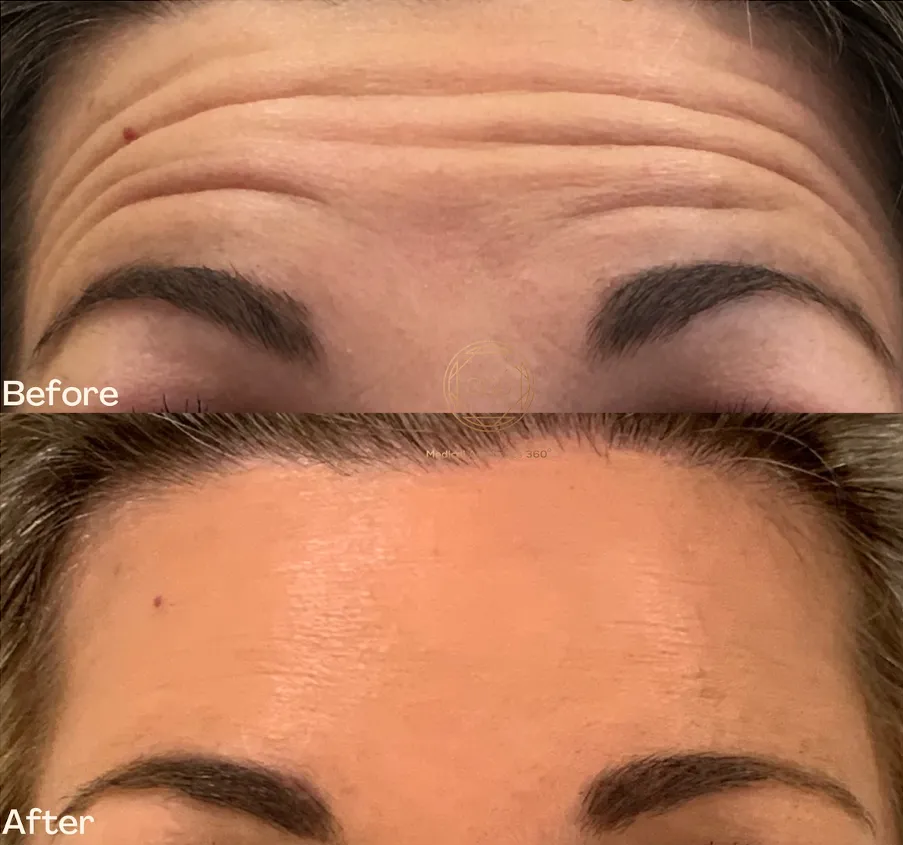
This patient, a lady in her 30s, came to Medical Aesthetics 360 because her forehead lines were becoming more noticeable and harder to ignore. What concerned her was that the lines were thicker, deeper, and stretched broadly across the forehead, rather than appearing as a few lighter, segmented creases. She wanted a smoother, fresher, more youthful appearance, but still wanted to look natural and expressive.
During consultation, our doctors explained that forehead lines can vary in pattern, depth, and cause. Some are fine and superficial, while others are deeper and more etched. In her case, the lines were more prominent and extended across the forehead in a continuous pattern, which can require a more thoughtful discussion than a forehead with only small, localised segments of movement.
Her assessment also focused on function, not just appearance. The frontalis muscle helps elevate the brows, and in some patients it may also play a compensatory role where there is pre-existing brow heaviness or eyelid drooping. That means the upper face needs to be assessed carefully as a whole, rather than treating lines in isolation.
She appreciated that the consultation was not rushed and did not reduce the concern to a simple “line treatment” discussion. Instead, it looked at the relationship between the forehead, brow position, eyelid appearance, and natural facial movement. This was especially important because treatment planning in this area needs to balance cosmetic goals with the normal function of the upper face.
For her, the aim was not to erase every sign of expression. It was to soften the heavy-looking forehead lines and achieve a smoother, brighter, more rested appearance in a way that still suited her features.
Visible Results
At review, the forehead appeared smoother and more relaxed, with the heavier lines looking softer and less visually dominant. Because the concern had been assessed in the context of her overall upper-face anatomy, the result remained balanced and natural-looking.
The change was not about looking frozen or overcorrected. Instead, the upper face looked fresher, calmer, and more polished, while still allowing her expression to remain believable and in keeping with her features.
This case highlights an important point in forehead wrinkle reduction and anti-ageing treatment: line pattern, brow position, eyelid characteristics, and muscle function all matter. A personalised assessment helps guide a treatment plan that respects both aesthetics and facial function. AHPRA’s advertising guidance also requires cosmetic advertising not to create unreasonable expectations of benefit or minimise risk, which is why realistic assessment and individual suitability remain central.
Doctors
Disclaimer
Results vary for each individual. The information and photos presented are for educational purposes only and do not constitute medical advice. All procedures carry risks and require an in-person consultation with a qualified medical practitioner. Some procedures are performed by trained therapists under the clinical supervision of Dr Chun Yen Huang or Dr Suzanna Luo . Medical Aesthetics 360° complies with AHPRA advertising guidelines and does not advertise prescription-only medicines or their active ingredients.