Medical Aesthetics 360° · Cherry angioma removal · Sydney

Small red spots.Clear, considered options.

Cherry angiomas are common and usually harmless. When you want them removed, we match the method to the lesion—not the other way around.

Suitability is assessed during consultation. Results and recovery vary between individuals.

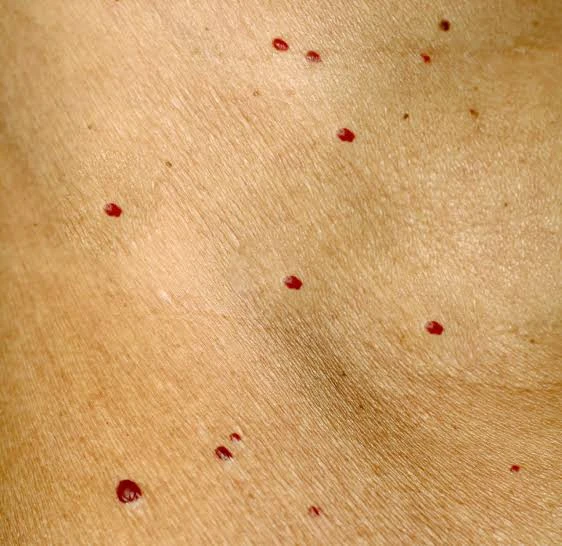
Multiple small red cherry angiomas on skin01
Typical cherry angiomas can be flat or gently raised and may range from pinpoints to several millimetres.
Doctor-led assessmentFour in-clinic modalitiesChatswood & Hurstville

Recognise first. Remove second.

A red spot still deserves a proper look.

A cherry angioma is a benign collection of small blood vessels. It commonly appears as a smooth red, cherry-coloured, purple or darker papule on the trunk, arms, shoulders or scalp.

Most need no treatment. Removal may be considered when a spot catches, bleeds after friction or is cosmetically unwanted. Before treatment, we consider whether the lesion has the expected appearance and whether dermoscopy or another diagnostic step is appropriate.

Pause before cosmetic treatment

A lesion that is rapidly changing, irregular, unusually dark, repeatedly bleeding or different from your other spots should be medically assessed first.

What if mine has changed?

Evidence-led, morphology-led

The best device is the one that fits the spot.

Published evidence supports several effective light and non-light treatments, but direct comparisons remain limited and do not show one universal winner. We apply that evidence alongside established laser–tissue principles, selecting according to depth, colour, profile, location, lesion number and skin type.

Small + flat + bright red

Consider a selective vascular approach such as IPL.

Thicker or deeper

Consider the deeper reach of 1064 nm Nd:YAG.

Superficial + raised

Consider precise Erbium:YAG surface removal.

Tiny + discrete + raised

Consider pinpoint medical radiofrequency.

These are clinical selection principles, not a self-diagnosis tool. A consultation may lead to a different or combined approach.

Four considered approaches

Different energy. Different role.

MA360 can choose from vascular light, deeper vascular laser, precise superficial ablation and pinpoint radiofrequency rather than forcing every cherry angioma into a single protocol.

Selective vascular approach

IPL / vascular light

May suit

Selected small, flat, bright-red lesions and areas with several superficial spots.

How it is used

Filtered light is selected to target haemoglobin in the visible vessel while limiting unnecessary surface injury.

Settings and suitability depend on skin tone, lesion colour and depth.
Deeper vascular reach

1064 nm Nd:YAG

May suit

Selected thicker, darker or deeper vascular lesions where a longer wavelength may be useful.

How it is used

The 1064 nm wavelength can deliver energy deeper than many surface-focused vascular devices.

Careful parameters and cooling are important; not every tiny red spot needs this depth.

Precise superficial removal

Erbium:YAG

May suit

Selected raised or superficial lesions where controlled surface ablation is preferred.

How it is used

Erbium:YAG is strongly absorbed by water, allowing precise removal of superficial tissue in fine layers.

This is a morphology-led option rather than a universal vascular treatment.

Pinpoint coagulation

Medical radiofrequency

May suit

Small, discrete, raised angiomas that can be treated one at a time with a fine electrode.

How it is used

Focused thermal energy coagulates the lesion at the treatment point.

This is lesion-removal RF, not a broad skin-tightening treatment.
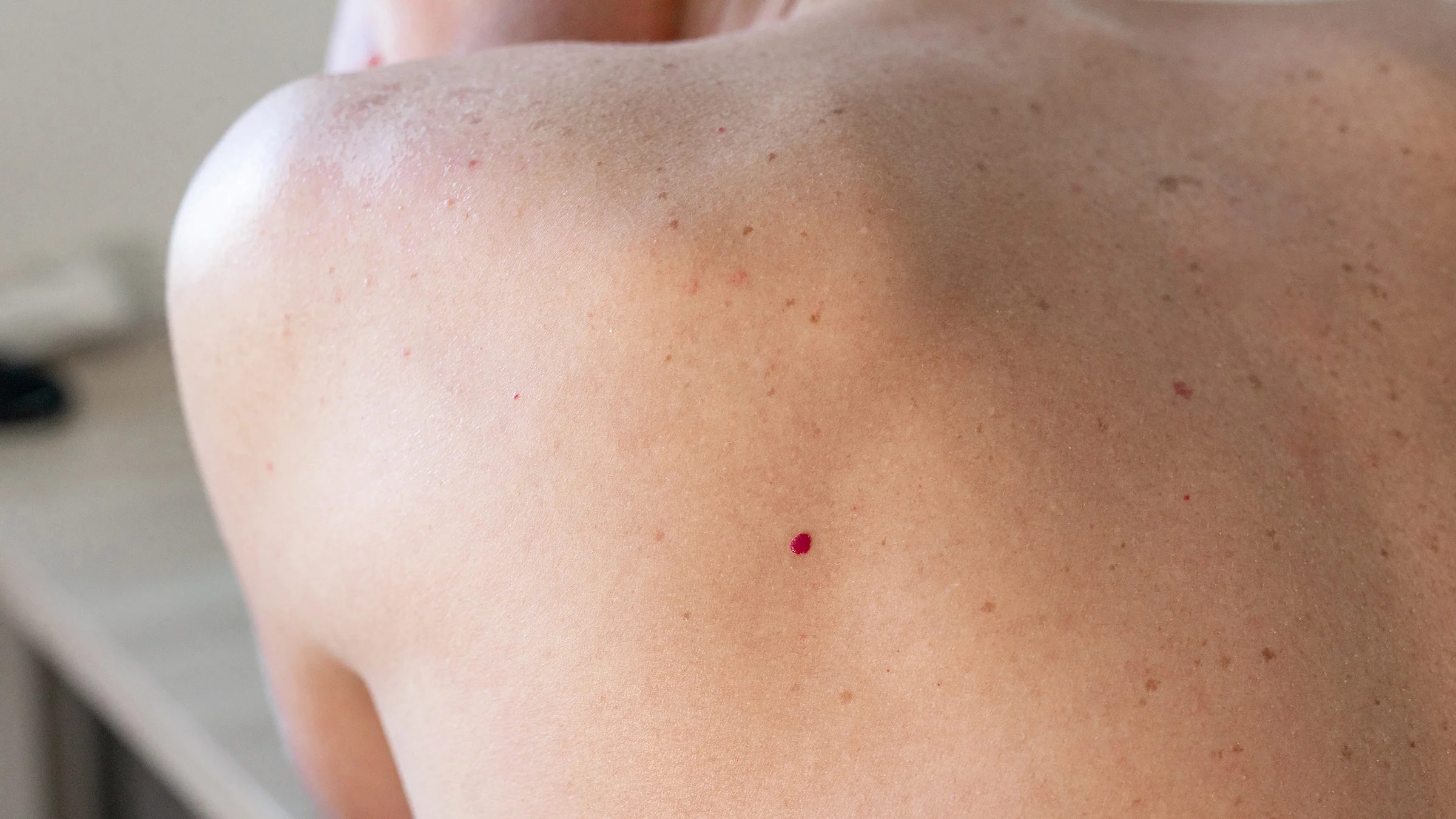
Close-up view of a cherry angioma on the upper back
One visible lesion can sit among smaller red or pigmented spots. The whole treatment field is assessed, not just the spot that first drew your attention.

Laying out the evidence

Other established removal options.

Cherry angiomas have been treated successfully in different ways. A broader list helps explain why recommendation depends on the lesion, available technology and the clinician's judgement.

Evidence note

A systematic review found laser, light and non-light methods can all be effective, while the number of high-quality comparisons remains limited and no therapy was proven superior for every patient. It includes Nd:YAG, IPL and radiofrequency evidence; Erbium:YAG is presented here as a precise superficial ablative option, not as a modality directly compared in that review.

Read the PubMed systematic review ↗

Pulsed dye laser (PDL)

A well-established vascular laser option, especially for superficial red vessels.

KTP / 532 nm laser

Targets visible red vessels; may suit selected superficial lesions.

Electrodesiccation

Uses controlled electrical energy to dry and remove the angioma.

Cryotherapy

Freezes the lesion; simple, although pigment change can be a consideration.

Curettage or shave removal

A physical removal option when the lesion is raised or diagnosis needs tissue assessment.

Sclerotherapy

Reported in the literature, but used less commonly for ordinary small cherry angiomas.

Argon and other vascular lasers

Historical or less commonly selected light-based alternatives.

Our medical preference

Use the least aggressive method that can reasonably reach the treatment target, then review the response before doing more. “More powerful” does not automatically mean “more suitable.”

A considered treatment journey

From identification to aftercare.

Treatment is usually focused and brief. The thinking before and after the device is what keeps it personalised.

  1. 01

    Assess

    Review the lesion's history, appearance, depth, location and your skin type.

  2. 02

    Select

    Choose a vascular, surface or pinpoint method and discuss realistic benefits and risks.

  3. 03

    Treat

    Clean the area, use comfort measures when needed, and treat to a controlled endpoint.

  4. 04

    Protect

    Follow wound care, avoid picking and protect healing skin from unnecessary sun exposure.

  5. 05

    Review

    Allow the area to settle before deciding whether any further treatment is useful.

Immediately after

Redness, warmth or a grey-purple change can occur, depending on the method.

Over the next days

A tiny crust or darkened spot may form. Leave it to release naturally.

As it settles

Pinkness or pigment variation can persist temporarily; final response is not judged on day one.

Useful before you decide

Cherry angioma removal, answered.

If your lesion has not been diagnosed, assessment is part of the conversation—not an obstacle to treatment.

Are cherry angiomas dangerous?

Typical cherry angiomas are benign blood-vessel growths. The important first step is confirming that a red, purple or dark spot really has the expected clinical features before cosmetic removal.

Can one treatment remove a cherry angioma?

Some small lesions respond to one carefully selected session, while thicker lesions or a larger treatment area may need review or further treatment. A treated spot may clear while new cherry angiomas develop elsewhere over time.

Can several be treated in one visit?

Often, yes. The practical number depends on lesion size, location, treatment choice, skin response and the amount of aftercare that is reasonable for you.

Will removal leave a mark?

Temporary redness, swelling, darkening or a small crust can occur. Pigment change and scarring are possible with any destructive treatment, although careful selection and conservative technique are used to reduce risk.

Should I try to remove one at home?

No. Home cutting, burning or acid products can cause bleeding, infection, scarring and delayed diagnosis of a lesion that is not a cherry angioma.

What if the spot has changed or keeps bleeding?

Arrange a medical skin assessment before cosmetic treatment if a spot is new and rapidly changing, irregular, unusually dark, repeatedly bleeding or simply does not look like your other spots.

Your next step

Let's choose what fits the lesion—and your skin.

Book a doctor-led consultation at MA360 in Chatswood or Hurstville to confirm the diagnosis and discuss suitable removal options.