Start with the diagnosis
Melasma vs Sun Damage: What's the Difference?
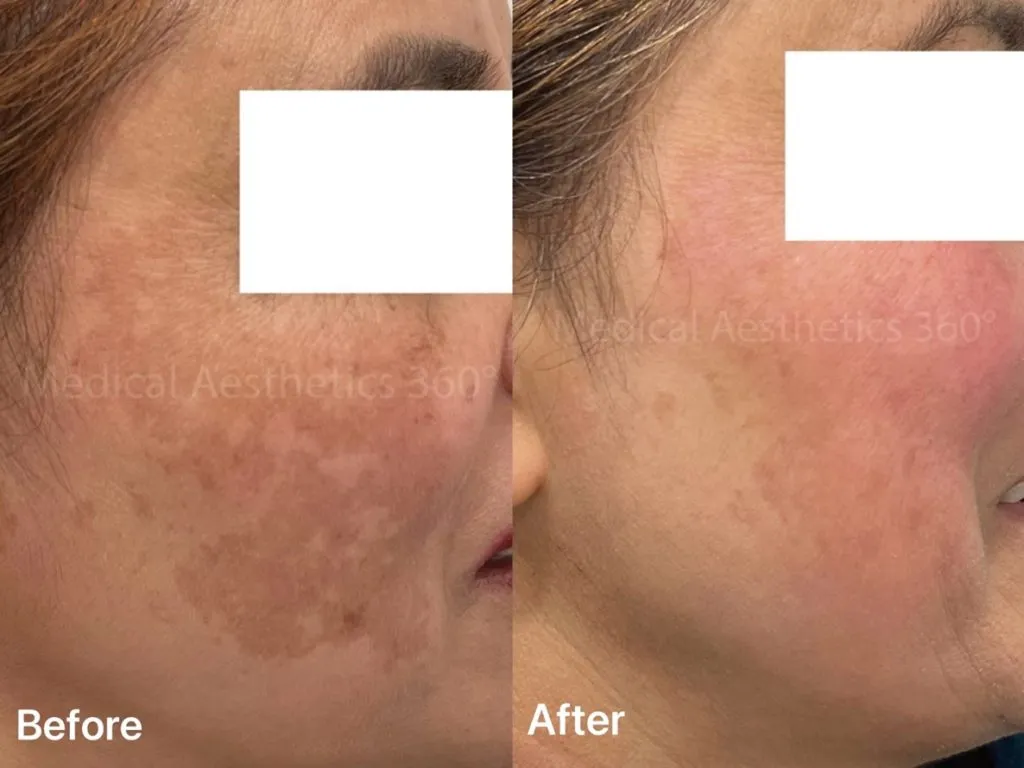
Melasma commonly presents as broader, often symmetrical brown or grey-brown patches across the cheeks, forehead, upper lip or jawline. It is a chronic, relapsing pigment disorder influenced by light exposure, hormones, heat, inflammation and individual susceptibility.
Sun damage is a broader term. When people say “sun spots”, they often mean solar lentigines: more defined, localised patches caused by cumulative ultraviolet exposure. Freckles and general uneven pigmentation may also sit within the sun-damage picture, but they do not behave exactly like melasma.
Melasma often has softer, cloud-like borders and a more symmetrical distribution. Sun spots are commonly more discrete. These clues are useful, but they are not a substitute for assessment—especially when several pigment patterns occupy the same part of the face.