


Evidence-based acne scar treatment Sydney
Morpheus8 vs Erbium YAG vs CO2 Laser for Acne Scars: Which Is Best?
The best acne scar treatment is not simply the strongest device. It depends on scar type, skin tone, downtime tolerance, active acne status, pigment risk and whether the goal is surface resurfacing, deeper collagen remodelling, or both.
Quick answer
CO2 laser is often considered when acne scars are deeper, more established and textural, especially boxcar scars, but it usually involves more downtime and pigment-risk planning.
Erbium YAG laser may suit selected superficial to moderate texture concerns where precise resurfacing and a shorter recovery profile are preferred.
Morpheus8 may suit mixed acne scarring, rolling scars and skin quality concerns where deeper collagen support is useful without full ablative resurfacing.
Device comparison
Acne scar treatment comparison: Morpheus8, Erbium YAG and CO2 laser
Atrophic acne scars are structural changes in the skin. That is why treatment planning usually needs a staged approach rather than a single universal procedure.
| Feature | Morpheus8 Sydney / RF microneedling | Fractional Erbium YAG laser | Fractional CO2 laser / eCO2 |
|---|---|---|---|
| Main mechanism | Insulated or non-insulated microneedles deliver radiofrequency heat into the dermis to support collagen remodelling. | 2940 nm Er:YAG energy is highly absorbed by water, allowing precise fractional ablation of superficial skin layers. | 10,600 nm CO2 energy creates fractional ablative columns with stronger thermal coagulation and remodelling. |
| Best-fit scar patterns | Rolling scars, mixed texture, enlarged pores, mild laxity and scars that need dermal support. | Fine textural acne scarring, superficial boxcar scars, rough surface irregularity and selected pigment-prone planning. | More established boxcar scars, deeper texture, mixed atrophic scars and stronger resurfacing goals. |
| Downtime profile | Often redness, swelling, dryness or grid marks for several days; varies with settings and passes. | Usually redness, peeling and sensitivity; downtime depends on ablation depth and coverage. | Usually the longest recovery of the three, with redness, swelling, crusting and strict aftercare. |
| Strength | Can treat below the surface without removing as much epidermis; useful in combination planning. | Precise surface control with less residual heat than CO2 in many settings. | Strong resurfacing and collagen stimulation for selected deeper scars. |
| Limitation | May not resurface sharply edged scars as directly as ablative lasers. | May be less powerful than CO2 for deeper, more fibrotic scarring. | Higher downtime and higher need for pigment, infection and recovery risk planning. |
| MA360 technology page | Morpheus8 Sydney / RF microneedling | Fotona Laser / Erbium YAG | eCO2 Laser |
Pros and cons
Which acne scar treatment is best for different priorities?
Morpheus8
Best considered when acne scars are mixed with rolling texture, pores, firmness concerns or a need for dermal remodelling rather than surface-only resurfacing.
- Pros: collagen-focused, useful for rolling scars, often lower surface recovery than ablative laser.
- Cons: operator-dependent; excessive depth or heat can increase risk; usually not the strongest option for sharply edged scars.
Erbium YAG laser
Best considered for controlled resurfacing where the main issue is surface texture, shallow pitting or refined polishing of acne-scarred skin.
- Pros: precise ablation, often less thermal burden than CO2, useful for surface refinement.
- Cons: may need multiple sessions; may not remodel deeper scars as strongly as CO2 or combined treatment.
CO2 laser / eCO2
Best considered when scars are more established, visibly indented and textural, and the patient can manage a more intensive recovery period.
- Pros: powerful resurfacing, strong collagen stimulation, suited to selected deeper boxcar scars.
- Cons: more downtime; higher pigment-risk planning; aftercare and sun avoidance are critical.
Scar matching
Match the treatment to the scar, not the device trend
Patients often describe acne scarring as one concern, but doctors usually see several different patterns: ice pick scars, boxcar scars, rolling scars, post-acne redness, post-inflammatory pigmentation, enlarged pores and surface roughness.
That is why MA360’s existing acne scarring treatment pathway focuses on assessment first, then staged treatment selection.
Practical matching guide
- Ice pick scars: often need targeted scar planning; resurfacing alone may soften the surface but may not fully reach narrow deep tracts.
- Boxcar scars: fractional CO2 or Erbium resurfacing may be considered depending on depth, edge definition and skin type.
- Rolling scars: collagen-supporting treatment such as RF microneedling may be useful, especially where tethering or dermal volume change contributes.
- Post-acne pigment or redness: may require Laser Pigmentation Removal, Sciton BBL or redness-focused planning rather than scar resurfacing alone.
- Pores and texture: may overlap with acne scarring and can be reviewed within a broader acne scar treatment assessment.
Treatment examples
MA360 acne scar treatment examples with photos
These examples show how different scar patterns can lead to different technology choices. Individual results vary.
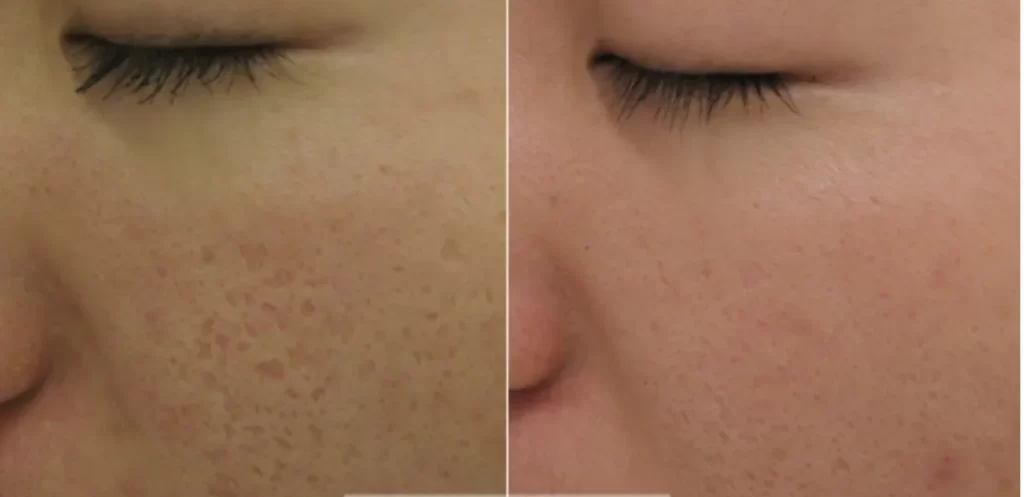
Boxcar and ice pick acne scars
A 28-year-old patient with boxcar and ice pick scars across the cheeks. Treatment focused on resurfacing and texture refinement.
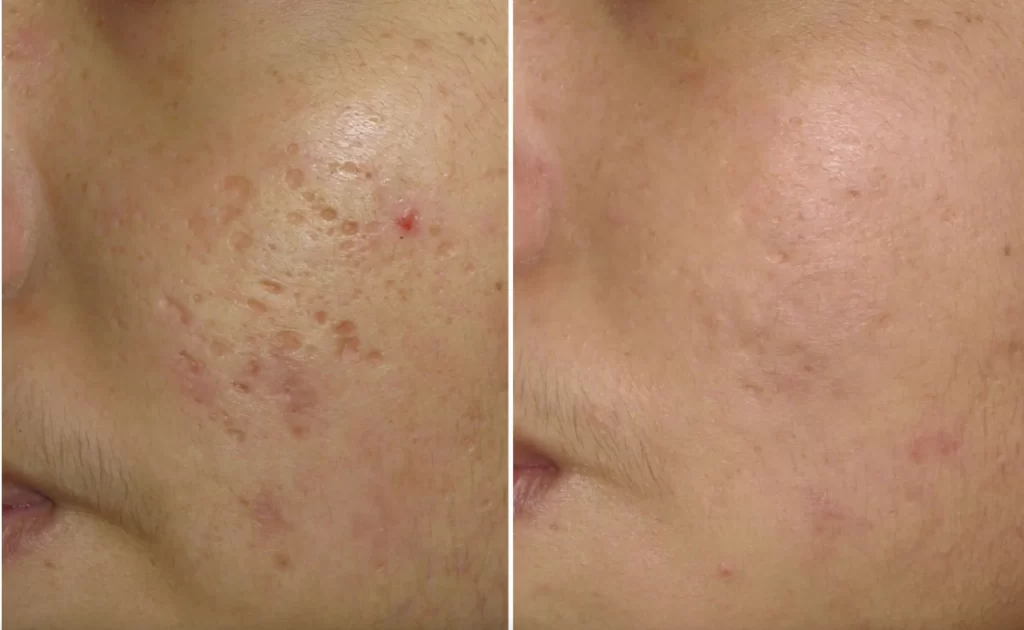
Mixed acne scarring
A 35-year-old patient with mixed cheek and temple scarring, including boxcar, rolling and scattered ice pick scars.
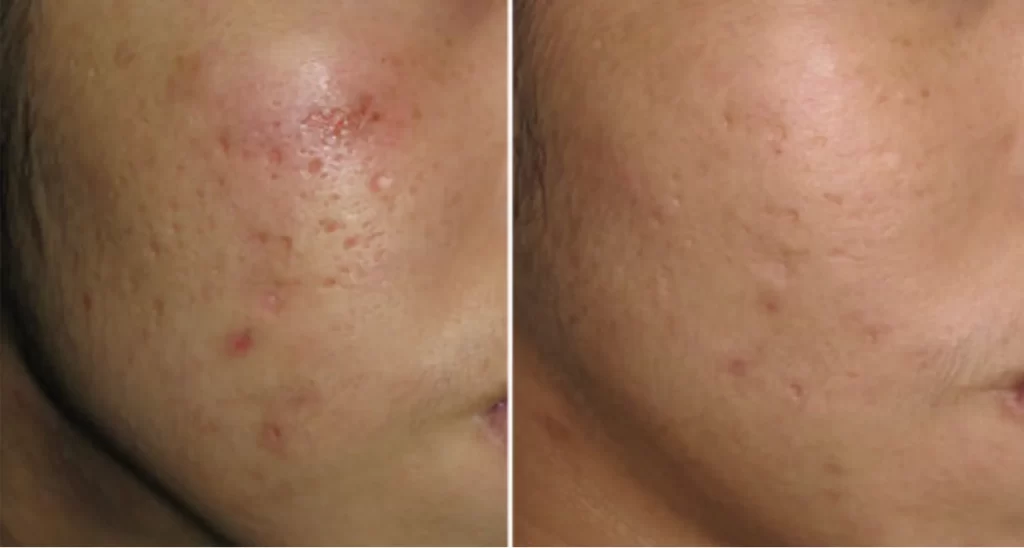
Mixed textural scars
A 32-year-old patient with shallow boxcar scars, finer pitted scars and rough surface texture selected for fractional Erbium resurfacing.
Evidence-based treatment
What the evidence supports
Acne scar treatment has the strongest logic when the treatment target is clear: resurfacing for surface irregularity, collagen remodelling for dermal atrophy, and pigment or vascular treatment when the main concern is colour rather than contour.
No single device is best for every acne scar pattern. Scar depth, scar type and skin biology all influence treatment suitability.
Results and Resources
Continue through the updated MA360 menu
This page sits under Resources → Treatment Comparisons. The links below follow the current MA360 menu structure so patients and search engines can move clearly between the main acne-scar treatment page, relevant technologies, clinical results and clinic locations.
FAQs
Frequently asked questions
Is CO2 laser better than Morpheus8 for acne scars?
CO2 laser may be more powerful for selected deeper textural scars because it resurfaces the skin and stimulates remodelling. Morpheus8 may be preferred when rolling scars, collagen support, skin quality or lower surface downtime are priorities. The better option depends on scar type and skin assessment.
Is Erbium YAG safer than CO2 laser?
Erbium YAG is often described as more precise with less residual heat than CO2 in many resurfacing settings, which can make it useful for selected patients. Safety still depends on skin tone, settings, aftercare, medical history and practitioner judgement.
Can acne scars be removed completely?
Most acne scar treatment aims for visible improvement rather than complete removal. Texture can often look smoother and more even, but scars may not disappear entirely.
Can these treatments be combined?
Yes. Some patients benefit from staged combination planning, for example resurfacing for sharper boxcar texture and RF microneedling for broader rolling or dermal scarring. Treatment order and spacing should be individualised.
What if the concern is dark marks rather than pitted scars?
Dark post-acne marks are usually pigment rather than true atrophic scarring. Pigment-focused treatment, light-based treatment and skincare may be more relevant than resurfacing alone.