


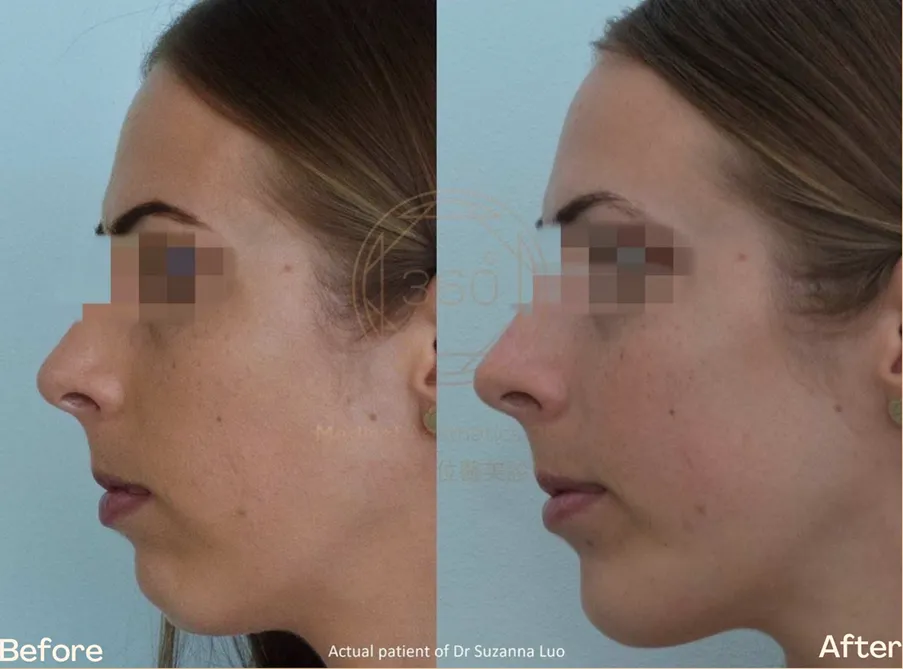
Defined chin and profile balance
This example explores how measured chin projection can influence the relationship between the chin, lips and nose.
View this chin case studyMedical Aesthetics 360 | Chatswood and Hurstville
A chin that feels short, recessed or less defined can change the way the whole profile reads. Careful assessment looks beyond the chin alone, considering its relationship with the lips, nose, jawline and lower face.
At Medical Aesthetics 360, consultations focus on proportion, realistic options and whether a non-surgical approach can address your concern. The aim is a considered plan that suits your features, not a standardised shape.
Request a chin profile consultation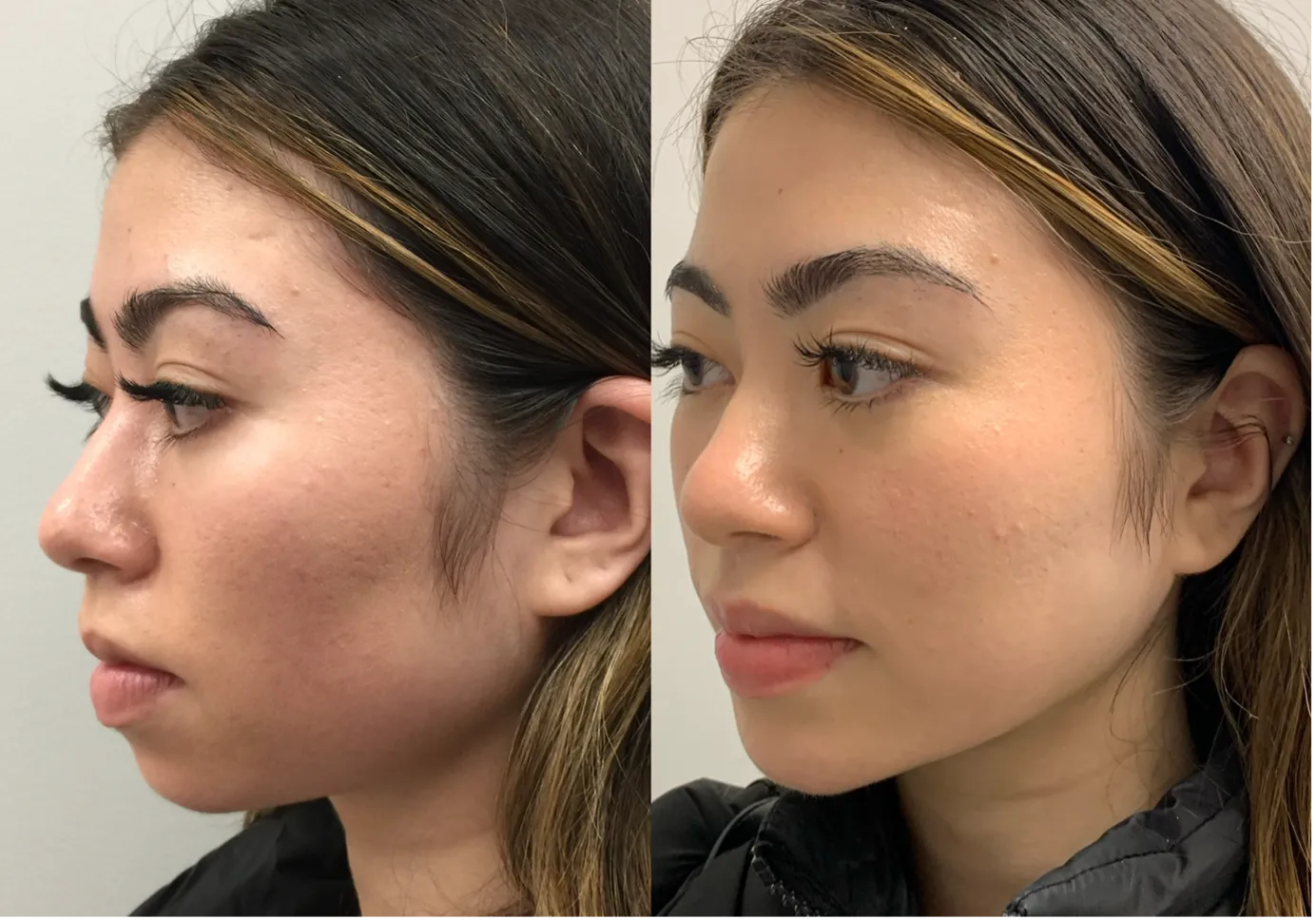
Chin and lower-face case studies
These are individual patient examples, not a promise of outcome. Anatomy, treatment plans, photography and healing vary from person to person.
This example explores how measured chin projection can influence the relationship between the chin, lips and nose.
View this chin case study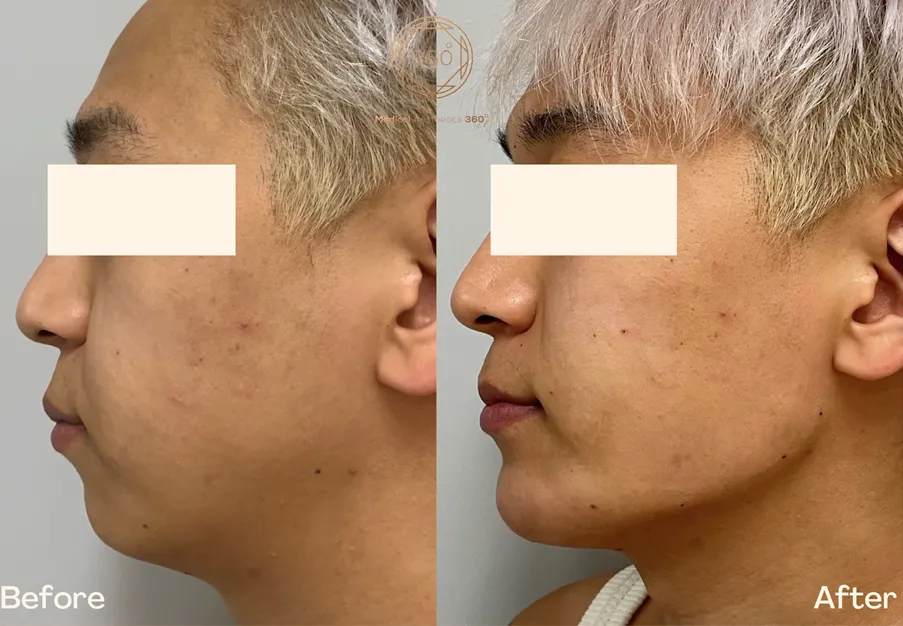
Here, the chin is considered as part of a broader lower-face plan rather than as an isolated feature.
View this lower-face case study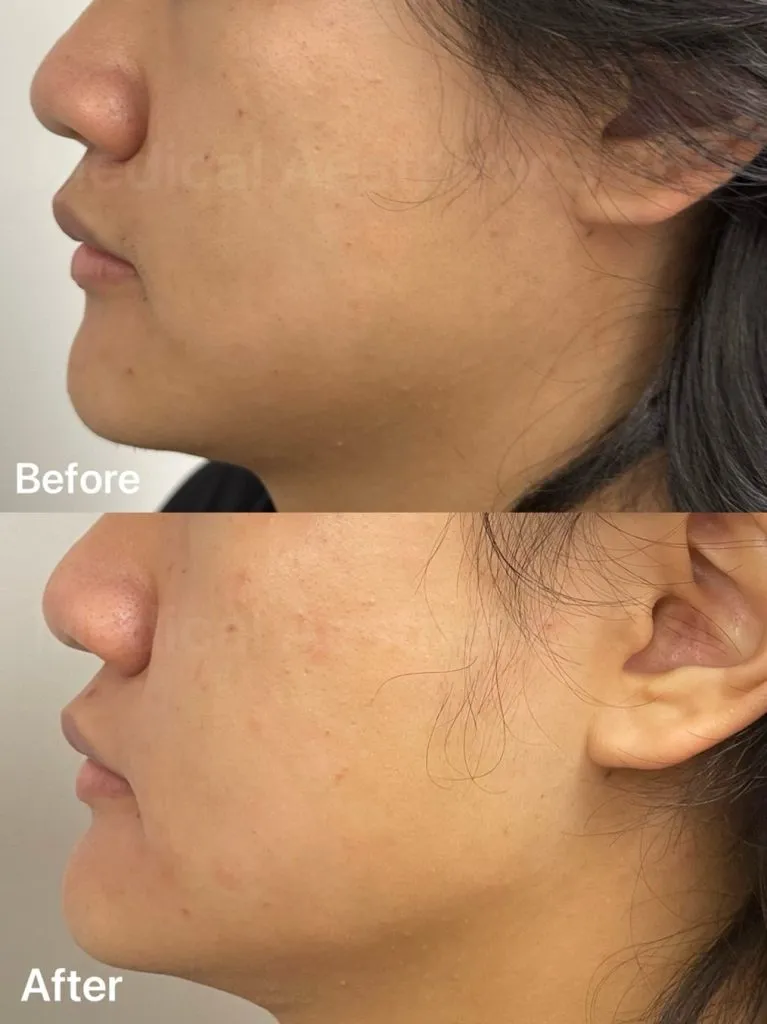
This case shows why chin position, jawline contour and the area beneath the chin are often assessed together.
View this jawline case studyUnderstanding facial balance
Chin position helps define the lower third of the face. A chin that sits further back may make the nose appear more prominent in profile, while a short or narrow chin can soften the transition into the jawline. From the front, width, symmetry and vertical length matter just as much as forward projection.
That is why good planning is not simply about making the chin larger. It is about identifying the specific proportion that feels out of balance and deciding whether changing it would improve the face as a whole.
Forward position is considered against the lips, nose and natural profile. More projection is not automatically more balanced.
Vertical length, central definition and the transition into the jawline can affect whether the chin reads as soft, tapered or structured.
The front view may reveal width or asymmetry that is not obvious in profile. Both sides are assessed before planning.
Marked retrusion or bite concerns may need dental, orthodontic or surgical assessment rather than a cosmetic treatment plan.
Evidence in context
A 2026 systematic review examined 56 studies involving 4,844 patients. Surgical and non-surgical approaches both reported favourable outcomes and high satisfaction, but they differed in durability, recovery and risk. The authors found no clearly superior technique and noted that much of the available evidence was limited by retrospective study designs and inconsistent reporting.
Non-surgical studies most often reported temporary swelling, bruising and discomfort, although rare serious vascular complications are possible. Surgery offers structural change but carries surgical risks, including infection, implant or hardware problems and altered sensation. Read the systematic review on PubMed.
Your consultation
The consultation starts with what you notice and what you would prefer to change. Your practitioner then reviews your medical history, previous facial treatments, facial proportions, skin and soft-tissue support, and the position of the chin from several angles.
The term non-surgical chin augmentation can cover different clinical approaches. The most appropriate option, expected duration, cost and individual risks can only be discussed after assessment.
From assessment to review
A temporary non-surgical option will not correct every cause of a recessed or unbalanced profile. Significant jaw retrusion, bite concerns or a preference for permanent structural change may be better assessed by a dentist, orthodontist or facial surgeon.
Sometimes the chin is not the main issue. Under-chin fullness, skin laxity, jawline shape or the relationship with the nose may have a greater effect on the profile. A balanced consultation should be able to explain when treating the chin alone is unlikely to meet your goal.
Recovery and aftercare
Recovery depends on the option chosen and your individual response. Temporary swelling, bruising, redness, tenderness or firmness can occur after a non-surgical procedure. Early swelling may also make the chin look different before it settles.
Your practitioner will explain what is expected, what to avoid and how to contact the clinic if something does not feel right. Allowing flexibility around important events is sensible, even when the anticipated recovery is short.
Possible problems include infection, nodules, asymmetry, prolonged swelling or a contour you do not like. Rare vascular complications can reduce blood flow to the skin and may cause tissue damage. Visual symptoms are a medical emergency.
Treatment planning
There is no single fee that applies to every patient. Cost depends on the option considered, the degree of change planned, clinical complexity and whether treatment is appropriate at all.
A written estimate is provided after consultation so the decision is based on clinical suitability rather than on choosing a product or quantity in advance.
Timing and duration vary with the chosen approach, anatomy and individual response. Early change may not represent the settled outcome because swelling can temporarily alter shape. Your practitioner should explain the likely timeline, review plan and what can reasonably be achieved before you decide.
Medical Aesthetics 360 Sydney
Questions patients ask