


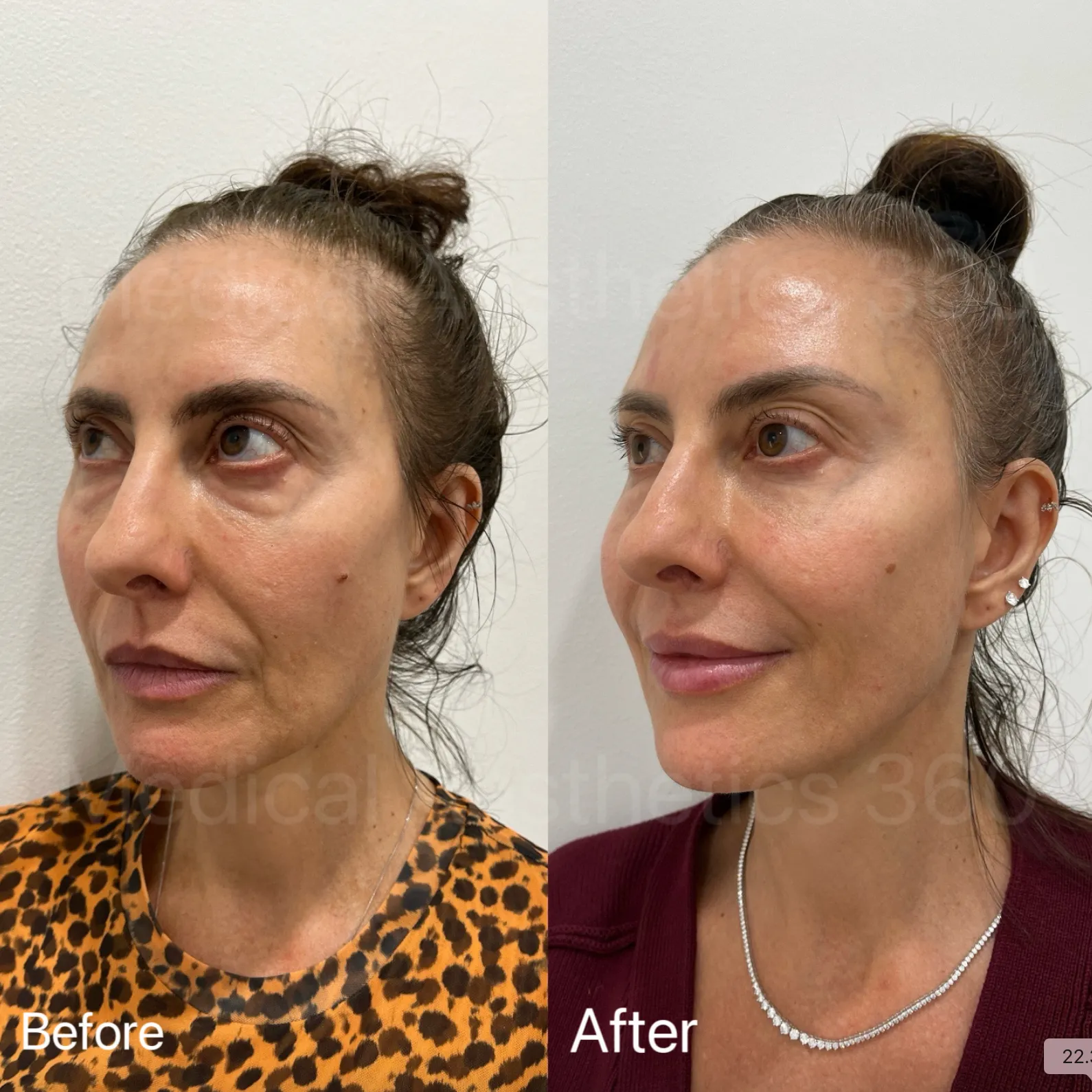
Annual facial rejuvenation
A personalised plan addressing facial balance rather than treating one feature in isolation.
Read the annual facial rejuvenation case studyCheeks can look flatter, lower or less defined when facial support changes with time. A good assessment does more than ask where volume has been lost: it considers bone structure, fat compartments, skin laxity, surface quality and how the cheeks relate to the under-eye and lower face.
At Medical Aesthetics 360° in Chatswood and Hurstville, treatment planning is individual. For some people, conservative cheek volumising may improve proportion and support. For others, skin tightening, texture treatment or no treatment may be the more appropriate answer.
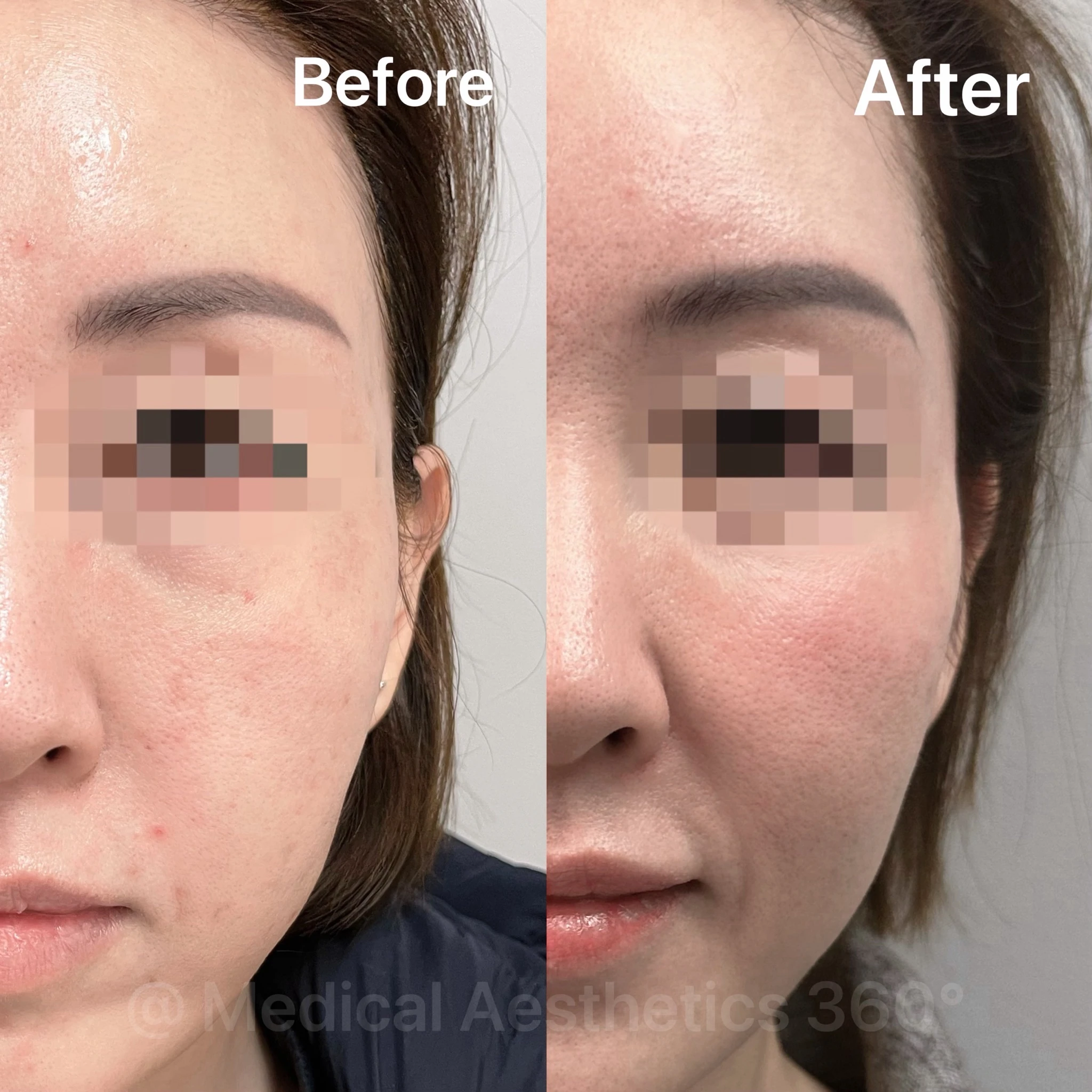
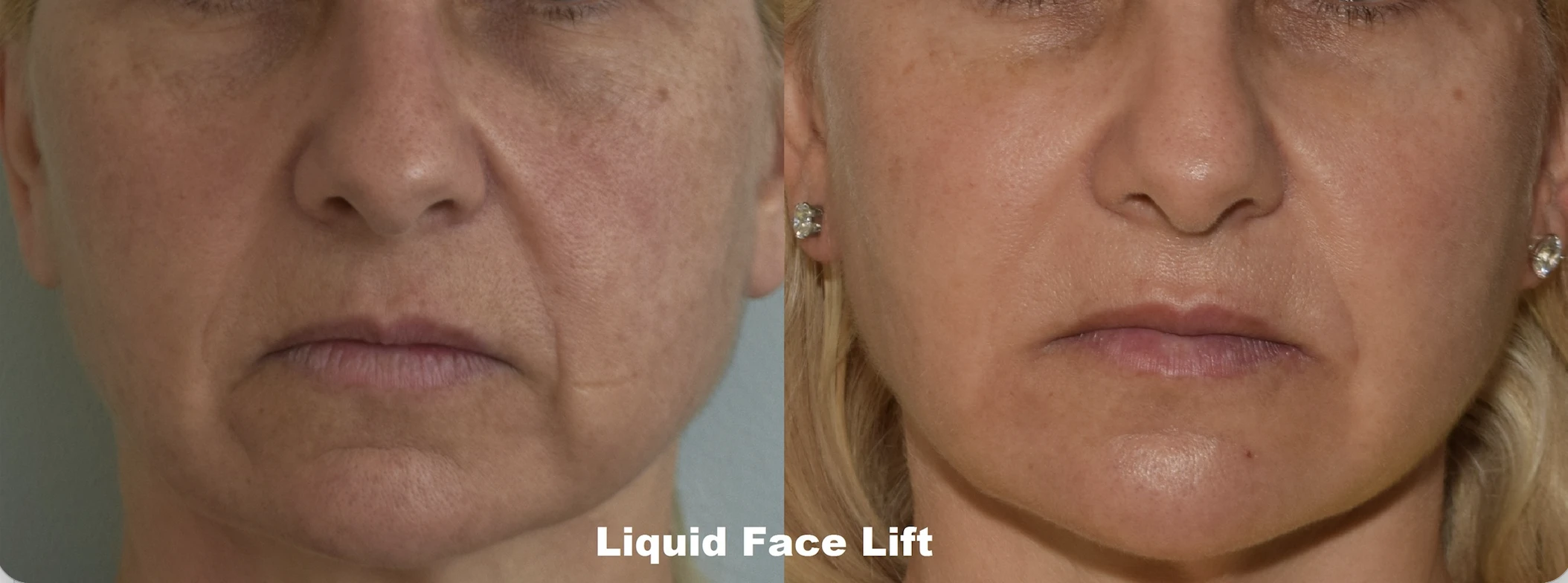
These cases show why cheek treatment is best viewed in the context of the whole face. A case may include more than one treatment and does not predict another person's result.
A personalised plan addressing facial balance rather than treating one feature in isolation.
Read the annual facial rejuvenation case study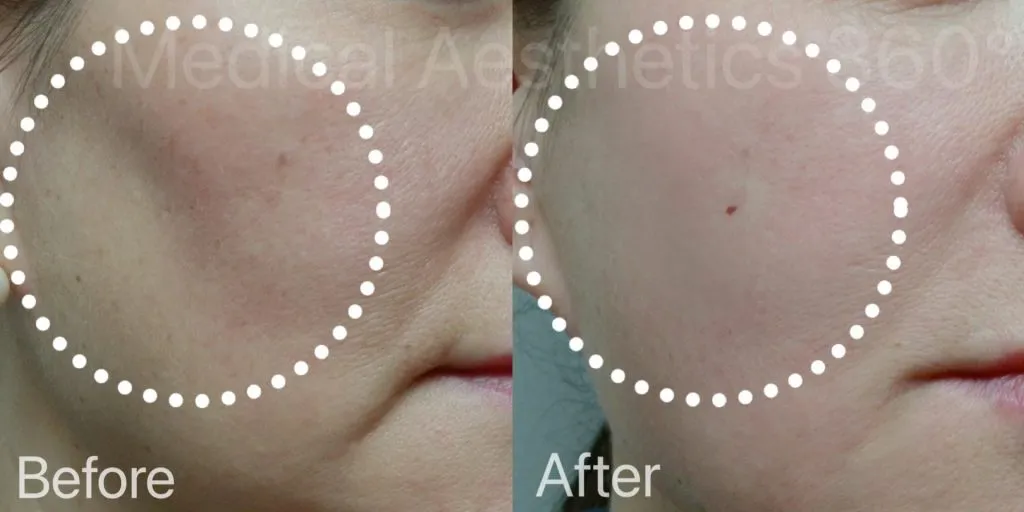
A case focused on restoring selected areas of support while preserving the patient's natural features.
Read the mid-face volume restoration case studyIndividual results vary. Images are published with consent and should be considered examples only. Your anatomy, treatment history, product choice, technique and healing response can all affect the outcome.
A cheek that looks “flat” in a photograph does not always need more volume. Several layers can change together, and each calls for a different conversation.
Age-related skeletal remodelling can alter projection and the foundation supporting the soft tissue.
Facial fat can deflate, descend or redistribute, changing the smooth transition from lower eyelid to cheek.
Collagen loss and tissue laxity may create descent or heaviness that adding volume alone will not correct.
Sun damage, pores, scarring and dehydration affect the surface, even when the underlying cheek has adequate support.
The useful question is not “How much volume?” It is “Which layer is creating the change I notice?” That distinction can prevent unnecessary fullness and guide a more proportionate plan.
The options below are not interchangeable. They may be considered alone or in stages after examination.
People often use “cheek filler” as a catch-all term. In practice, a volumising treatment has a specific role and clear limits.
A 2024 systematic review and network meta-analysis compared hyaluronic acid fillers used for cheek augmentation. Across the included trials, the researchers found no statistically significant difference in aesthetic improvement between the studied products at one, three and six months.
The review also highlights the limits of the evidence: only six randomised trials were available, and the authors called for better long-term research on durability and safety. Product choice matters, but it is only one part of care; anatomy, placement, amount, sterility, emergency preparedness and follow-up also influence safety and outcome.
Cheek treatment should not be planned from a single front-facing photograph. The face is assessed in motion and from several angles, with attention to what has already been treated.
Your goals, medical history, medications, previous procedures and current concerns are reviewed alongside facial anatomy.
The clinician distinguishes structural deficit from laxity, texture, fluid retention and changes elsewhere in the face.
Benefits, limits, alternatives, cost and relevant risks are discussed. Treatment may be declined when it is unlikely to help.
When appropriate, a conservative or staged plan allows swelling to settle before deciding whether any further treatment is useful.
The cheek affects the apparent width, projection and weight of the mid-face. More product is not necessarily more effective. Excess or poorly positioned volume can make the face look puffy, heavy or less like the person being treated.
A staged approach can be especially useful when there is existing filler, notable asymmetry or uncertainty about how much change will look balanced.
Recovery is often manageable, but injectable treatment is not risk-free. Your clinician should explain the risks relevant to the proposed product, technique and your medical history before you decide.
Swelling, bruising, tenderness, redness, firmness, small lumps, asymmetry and sensitivity can occur. Early appearance is not the final result because swelling takes time to settle.
Infection, persistent nodules, inflammatory reactions, migration, prolonged swelling or an unsatisfactory contour may require assessment and further management.
Material can enter or compress a blood vessel. Vascular occlusion may damage skin and, very rarely, affect vision or cause neurological injury. Prompt recognition and treatment are critical.
Seek urgent help after treatment for severe or increasing pain, pale or mottled skin, dusky colour, skin that feels unusually cool, visual disturbance, a sudden severe headache, weakness or difficulty speaking. Do not wait for a routine review if these symptoms occur.
Tell the clinician what was used, where it was placed, when it was treated and whether you experienced swelling or other complications. If the product is unknown or the anatomy is unclear, further assessment may be needed before adding anything new.
Hyaluronic acid filler can often be reduced with hyaluronidase, but dissolving is another medical procedure with its own limitations and risks. It may require more than one session, and not every injectable volumising or collagen-stimulating product is dissolvable.
A suitable patient generally has a specific concern that matches the role of treatment, understands its limits and prefers a proportionate change. Suitability can only be determined after a medical assessment.
Cheek shape varies naturally. A narrow, soft or less projected cheek is not automatically a defect. Cosmetic treatment for patients under 18 is not offered as a routine solution, and any request for facial reshaping deserves careful consideration of maturity, motivation and wellbeing.
A contour change may be visible immediately, but swelling can temporarily exaggerate or obscure the result. Assessment is more meaningful once the tissue has settled.
Duration varies with the product, amount, placement, metabolism, facial movement and treatment history. No exact longevity can be guaranteed for an individual.
Cost depends on the agreed plan, product category, amount, complexity and whether treatment is staged. A quote should follow assessment rather than a fixed volume assumption.
Clear answers to common questions about cheek filler, mid-face support and related treatment options in Sydney.
Medical Aesthetics 360° provides cheek volumising assessments at Chatswood and Hurstville in Sydney. This page offers general information and cannot determine whether a particular treatment is suitable for you.
Back to top ↑