


Flat forehead contour
A straighter profile or abrupt brow transition may be part of natural anatomy rather than ageing.
A flat forehead, hollow temples or a sharp upper-face transition can change the way light moves across the face. The right consultation looks beyond one hollow area and considers forehead shape, temple support, brow position and overall proportion together.
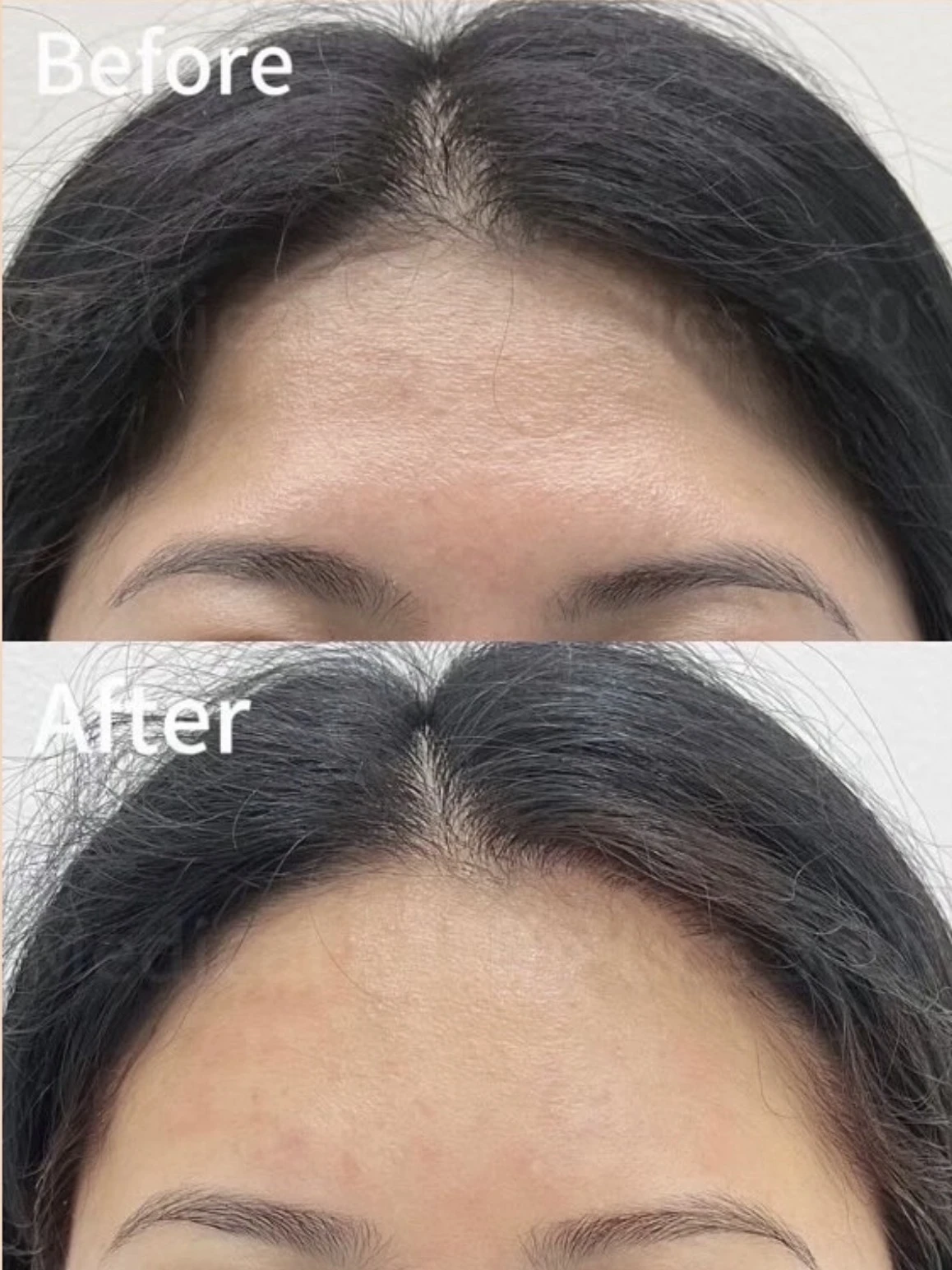
At Medical Aesthetics 360, the aim is not to add volume by default. It is to determine whether subtle contour support is appropriate, whether another treatment better matches the concern, or whether leaving the area untreated is the safer choice.
Call 1300 338 307The forehead and temples connect visually, but they are not identical treatment zones. Forehead shape reflects bone, muscle, fat compartments, skin thickness and the position of the brow. Temple hollowing can reflect age-related fat and bone change, genetics, weight change or the natural visibility of the temporal crest.
Assessment from the front, profile and three-quarter view helps identify where a transition looks abrupt and whether correcting it would improve harmony. The hairline, brow, cheekbone, lateral orbit and mid-face all influence the final decision.
Not every hollow needs volume. In some faces, adding fullness can make the forehead look heavy, alter expression or create a result that feels disconnected from the rest of the face.
Patients often describe a tired or shadowed appearance rather than a specific anatomical change. Naming the actual concern helps avoid treating the wrong layer.
A straighter profile or abrupt brow transition may be part of natural anatomy rather than ageing.
Shadowing beside the forehead can make the bony rim and temporal crest more visible.
Changes in fat, bone and skin can reduce support across the upper face over time.
Most faces are asymmetric; the question is whether treatment can improve balance without chasing perfection.
The intended result is a smoother transition that still looks like the patient. It is not a guaranteed lift, wrinkle cure or permanent correction.
A softer forehead profile and less abrupt transition from the brow toward the hairline may be possible in suitable anatomy.
Reducing selected hollowing may soften shadowing and create a gentler transition toward the cheekbone and lateral brow.
Subtle upper-face support may help the forehead, temples and mid-face read as one more continuous silhouette.
Forehead flatness, skin laxity, dynamic lines and temple volume loss are different problems. A careful assessment may find that a volumising procedure is not the right fit.
Assessment may focus on the forehead, temples or both when a true volume deficit or flat contour is affecting upper-face proportion. A staged approach can be more predictable than trying to create the final result in one appointment.
Crepey texture, reduced elasticity or brow-area laxity may respond better to a skin-quality or tightening pathway. Adding fullness cannot reliably tighten loose skin.
Expression lines and brow position require an assessment of muscle movement. A contour procedure does not replace a movement-focused consultation and should not be used to chase every line.
Lumps, asymmetry, migration or overcorrection require the previous product, timing, depth and tissue condition to be understood before any correction is discussed.
Published literature on forehead and temple augmentation includes anatomy papers, technique reports, retrospective studies and small prospective cohorts. Results can look encouraging, but the evidence is technique-specific and cannot predict an individual outcome.
A 2026 systematic review and meta-analysis pooled seven studies of one temple treatment plane and reported high apparent efficacy. Its findings relate to particular methods and do not establish one universally safest or best approach.
Evidence supports careful anatomical planning and informed consent, not a risk-free promise.
Read the PubMed systematic review of visual complicationsA well-planned pathway gives you time to understand the recommendation, alternatives, likely recovery and material risks before deciding whether to proceed.
Medical history, medicines, previous procedures, facial proportions, skin condition and the exact contour concern are reviewed.
The forehead, temples, brow and mid-face are considered together. Options, alternatives, limitations, fees and risks are explained.
If you decide to proceed, the clinician follows an anatomy-led plan and provides clear instructions about expected and urgent symptoms.
Swelling is allowed to settle before symmetry and contour are reassessed. Further treatment is not automatic.
Many people resume normal activity quickly, but swelling and bruising can be visible. An exact social-downtime promise is not realistic because the area, technique and individual healing response differ.
Tenderness, redness, swelling, pressure marks or mild asymmetry may occur. Follow the treating clinician's instructions rather than massaging the area unless specifically advised.
Bruising and swelling usually evolve before settling. Contact the clinic if symptoms are unexpected, one-sided, worsening or associated with colour change.
The contour is assessed after early swelling has resolved. A staged refinement may be discussed, but more treatment is not always necessary.
Common short-term effects can include tenderness, redness, swelling, bruising, temporary asymmetry and palpable irregularity. Other complications can include infection, persistent lumps or nodules, delayed inflammation and an unsatisfactory contour.
Rare vascular complications are medical emergencies. They can interrupt blood supply to skin or communicate with vessels serving the eye and brain. This is why clinician training, anatomical knowledge, access to an emergency protocol and prompt recognition matter.
MA360 consultations consider forehead contour, temple support, brow transition, skin quality and the wider face before a recommendation is made. The practical advantage of offering several treatment pathways is the ability to choose a different option when volume is not the main problem.
Patients can be assessed at Chatswood or Hurstville, with written information about the proposed pathway, expected recovery, material risks and fees before deciding whether to proceed.
These pages explain neighbouring concerns, alternative pathways, previous-treatment correction and the MA360 team. Each destination is listed once.
This page provides general information about consultations for forehead and temple contour concerns. It does not advertise or recommend a prescription medicine and does not replace an individual medical assessment. Suitability, recovery and outcomes vary, and all procedures carry risks.