Home » Treatment » Gummy Smile

Gummy Smile

Gummy Smile Treatment Sydney | Chatswood & Hurstville
Medical Aesthetics 360° · Sydney

Gummy smile treatment in Sydney starts with the cause

A smile that shows a generous amount of upper gum is a normal variation. If it bothers you, the useful first step is to understand why it happens. Upper-lip movement, tooth and gum proportions, bite and jaw position can each create a similar appearance, but they do not share the same treatment.

Medical Aesthetics 360° offers consultations for gummy smile concerns in Chatswood and Hurstville. The aim is a balanced discussion of what may help, what will not, and when a dental, orthodontic or surgical opinion is the better next step.

Arrange a gummy smile consultation

A natural smile is the priority. Any plan should preserve expression and lip function rather than pursue a fixed measurement or a completely gum-free smile.

Patient examples

Related gummy smile case studies

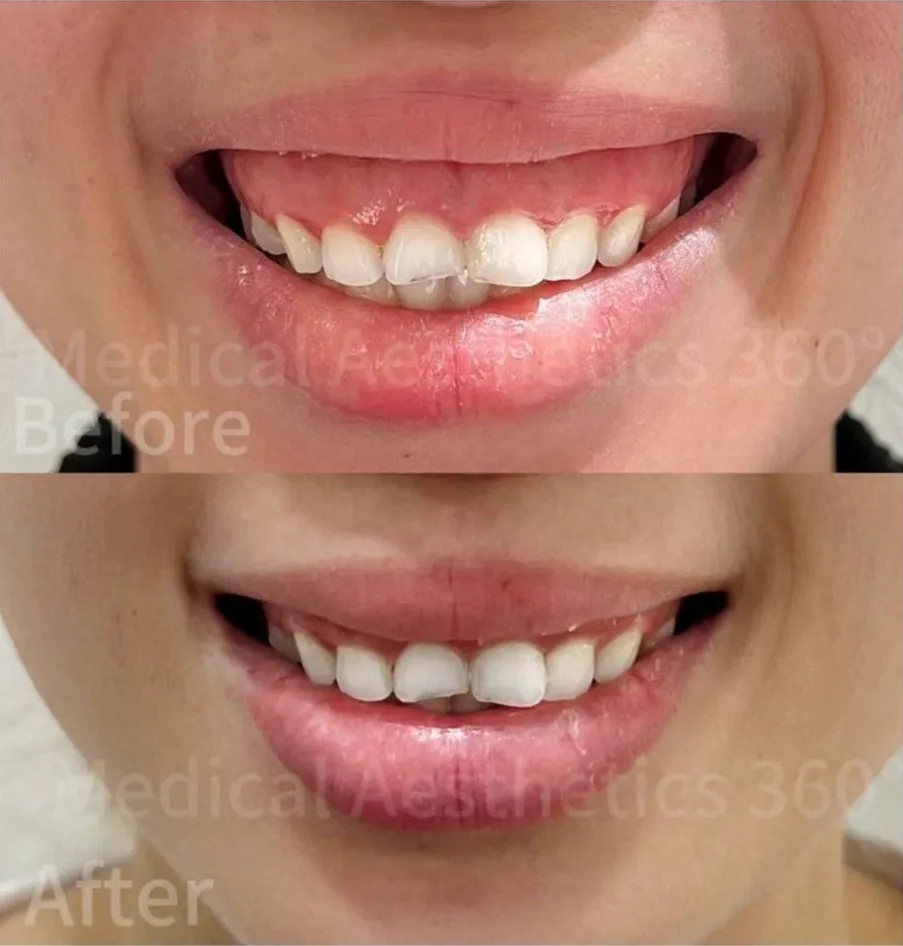
Before and after gummy smile case example at Medical Aesthetics 360

A natural solution for a gummy smile

A patient example showing a change in upper gum display while smiling. The full image is presented without cropping.

Read the complete case study
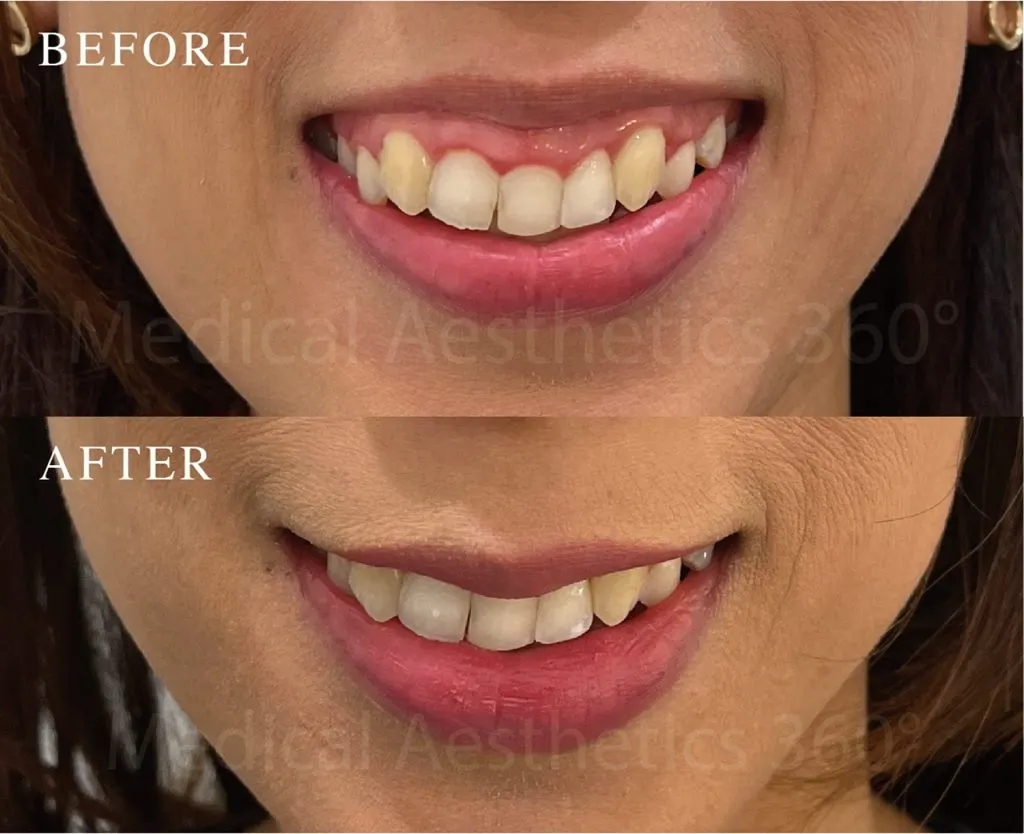
Before and after example of a more balanced smile with natural lip movement

A more balanced smile

A second clinical example illustrating how individual anatomy and smile movement influence the visible result.

Read the complete case study

Individual results vary. Images are examples only and do not establish that the same approach is suitable for another person. Assessment, treatment history and natural smile pattern can all affect the outcome.

Understanding the concern

What is a gummy smile?

“Gummy smile” is the everyday term for upper gum that becomes more visible when smiling. Clinical papers may call it excessive gingival display, but there is no universal amount that every person needs to correct. Aesthetic preference varies with culture, facial proportions, tooth shape and the character of the smile itself.

For some people, gum display is a small detail they have always accepted. For others, it affects how freely they smile in photographs or conversation. Neither response is wrong. Treatment is elective, and deciding to leave a healthy smile unchanged is a valid option.

Why it happens

Five patterns can create more visible gum

Several factors often overlap. Looking at the full smile at rest and in motion is more informative than judging a single photograph.

01

Upper-lip movement

The muscles that lift the upper lip may move it higher during a full smile, exposing more gum even when the teeth and jaw are proportionate.

02

Lip length

A naturally shorter upper lip can reveal more tooth and gum at rest or when smiling. Lip length and mobility are assessed separately.

03

Gum and tooth proportion

Teeth may appear short when gum covers more of the crown, or the gums may be enlarged or inflamed. This is primarily a dental question.

04

Tooth and bite position

Over-erupted upper teeth, tooth wear or bite relationships can alter how much gum shows and may require orthodontic or restorative assessment.

05

Jaw proportion

A longer upper-jaw pattern can increase gum display. More pronounced skeletal causes are not corrected by treating lip movement alone.

The same-looking smile can have a different cause. That is why a quick treatment promise based only on gum visibility can be misleading. The correct pathway begins with anatomy and function.

Cause-led planning

Which treatment pathway may be appropriate?

This comparison is a guide to referral and discussion, not a diagnosis. Some options sit outside the services provided by MA360 and require a dental or surgical specialist.

Pattern
Assessment focus
Possible pathway
High upper-lip movement
Dynamic smile and lip function
A clinician may discuss a temporary medical option after a private suitability assessment, including alternatives, limitations and relevant risks.
Short-looking teeth or excess gum
Gum health and crown proportions
A dentist or periodontist may assess gum health, altered tooth eruption and whether periodontal treatment is appropriate.
Tooth or bite contribution
Incisor position, wear and occlusion
An orthodontic or restorative dental opinion may be more useful than a lip-focused cosmetic treatment.
Upper-jaw contribution
Facial proportion and skeletal pattern
Assessment by an orthodontist or oral and maxillofacial specialist may be appropriate, particularly when the pattern is pronounced.
Mixed cause
More than one anatomical layer
A coordinated or staged plan can address the dominant factor first and avoid asking one treatment to solve every part of the smile.
Different causes Lip mobility and tooth-gum relationships are distinct clinical patterns.
Different solutions The treatment should address the structure creating the gum display.
Evidence has limits Some newer techniques still rely on small studies or case reports.
Evidence in context

Research supports diagnosis before treatment

A 2023 review in the Journal of Dentistry describes altered tooth eruption and a hypermobile upper lip as important soft-tissue causes of gummy smile. It also notes that the established procedures for those two patterns are different, reinforcing why treatment should follow diagnosis rather than a standard template.

The review found that evidence for several newer approaches remains limited and that exact indications are not always well defined. A balanced consultation should therefore cover uncertainty as well as potential benefit.

Read the gummy smile diagnosis and treatment review on PubMed

Realistic goals

The aim is balance, not a frozen smile

For an appropriate patient, treatment planning may soften upper gum display. The goal is to retain an expressive smile and comfortable lip function.

A useful treatment goal may be

  • A subtle reduction in gum visibility during a full smile.
  • Better balance between upper lip, teeth and gum.
  • Preservation of normal expression and speech.
  • A result that still looks like your own smile.
  • A temporary or staged approach when the response is uncertain.

One treatment cannot

  • Correct tooth, gum or jaw causes that it does not address.
  • Guarantee perfect symmetry or a completely gum-free smile.
  • Produce identical results to a photograph of another patient.
  • Replace dental care when gums are inflamed or unhealthy.
  • Promise an exact onset, duration or degree of change for everyone.
What to expect

Your gummy smile consultation

The treatment itself may be short when a non-surgical pathway is suitable, but the assessment should not be rushed.

Discuss the concern

You can explain what you notice, when it bothers you and the degree of change you would consider worthwhile.

Observe the smile

The clinician reviews the lips at rest and in motion, tooth and gum display, facial proportions and natural asymmetry.

Review suitability

Medical history, medications, previous treatment, contraindications, alternatives, risks and expected recovery are discussed.

Decide without pressure

You may proceed, take time to consider the information, or be directed to dental or specialist assessment when that better matches the cause.

Safety and recovery

What should be discussed before treatment?

All medical and surgical cosmetic procedures carry risk. The risks depend on the option proposed, your health and the anatomy being treated.

Common temporary effects

Depending on the treatment, temporary redness, tenderness, swelling, small marks or bruising may occur. There may be little planned downtime, but “no downtime” cannot be guaranteed.

Smile-related changes

Possible effects can include asymmetry, altered upper-lip movement, an unfamiliar smile, lip weakness or temporary changes when speaking, eating or drinking.

Uncommon or serious problems

Infection, significant allergic reaction or unexpected muscle weakness can require medical review. The consent discussion should explain warning signs specific to the proposed treatment.

Seek urgent medical attention for difficulty breathing or swallowing, rapidly increasing facial swelling, widespread hives, faintness or new severe weakness after treatment.

Tell the clinician about

  • Pregnancy, breastfeeding or plans to conceive
  • Neuromuscular conditions or swallowing difficulties
  • Current medicines, supplements and allergies
  • Dental infection, gum inflammation or recent dental work
  • Previous cosmetic treatment around the mouth or upper lip

Treatment may be deferred

An active infection, inflamed skin, certain medical conditions or medicines may make treatment unsuitable or change its timing. Elective cosmetic treatment is generally postponed during pregnancy and breastfeeding where safety evidence is limited.

Patients under 18 require additional safeguards, and cosmetic advertising should not be directed to them.

Practical information

Timing, longevity and cost

When will I notice a change?

Timing depends entirely on the option selected. Some changes develop gradually rather than immediately. Your clinician should explain when to assess the result and when a review is useful.

How long can it last?

Temporary and surgical pathways have very different timelines. Individual anatomy, treatment choice and healing response all matter, so duration cannot be guaranteed from a general webpage.

How is the cost set?

Fees depend on the assessment and the agreed pathway. A quote should follow consultation because a gum, tooth, lip or jaw concern may require a different practitioner and treatment plan.

Patient questions

Gummy smile treatment FAQs

Clear answers to common questions about excessive gum display, assessment and treatment planning in Sydney.

Is a gummy smile a medical problem?
Usually it is an aesthetic concern rather than an illness. Gum display is a normal facial variation and treatment is optional. Bleeding, painful, swollen or rapidly changing gums should be assessed by a dentist because that may indicate a health issue rather than a purely cosmetic concern.
What causes too much gum to show when I smile?
Common contributors include a highly mobile or shorter upper lip, gum covering more of the tooth crown, gum enlargement, tooth or bite position and upper-jaw proportion. More than one factor can be present, which is why examination at rest and during a full smile matters.
How is a gummy smile assessed?
Assessment may include upper-lip length and movement, gum and tooth display, smile symmetry, facial proportions, dental health, bite, medical history and previous treatment. Dental or specialist referral may be recommended when the concern is not primarily related to lip movement.
Can a non-surgical option help?
A temporary medical option may be discussed privately when upper-lip movement is a significant contributor and the patient is suitable. It will not correct excess gum tissue, tooth position or an upper-jaw cause. The specific option, expected effect and risks require an individual consultation.
Will my smile still look natural?
Preserving natural expression should be central to planning. A conservative goal is usually a softer reduction in gum display rather than eliminating normal lip movement. Even with careful planning, asymmetry or an unfamiliar smile is possible and should be included in the consent discussion.
When will I see the result?
This depends on what treatment is selected. Some options develop over days or weeks, while dental, orthodontic and surgical pathways follow different timelines. The appropriate review point should be explained as part of your individual plan.
How long do gummy smile results last?
There is no single duration. Some approaches are temporary, while dental or surgical changes may be longer lasting but have different indications and recovery. Your anatomy and response can also change the result, so a fixed promise is not reliable.
Is there any downtime?
A suitable non-surgical treatment may involve little interruption to routine activities, although temporary marks, redness, tenderness or bruising can occur. Dental and surgical options have different recovery requirements. Plan around important events until you understand the proposed pathway.
What are the risks?
Risks vary by treatment. Around the upper lip they can include asymmetry, altered movement, weakness and temporary difficulty with speech, eating or drinking, in addition to local tenderness or bruising. Infection, allergy and other serious complications are less common. Your clinician should explain the risks of the specific option being considered.
What if my teeth look short?
Short-looking teeth may reflect the way gum sits over the crown, tooth wear or natural tooth proportions. A dentist or periodontist is best placed to assess this. Treating upper-lip movement alone may leave the main cause unchanged.
Can I have treatment during pregnancy or breastfeeding?
Elective cosmetic treatment is generally deferred during pregnancy and breastfeeding when safety evidence is limited. Discuss your circumstances with the treating clinician and your usual healthcare professional.
How much does gummy smile treatment cost in Sydney?
Cost depends on the cause and the practitioner or treatment pathway required. After assessment, you should receive a clear explanation of the proposed service, alternatives, likely number of visits and fees before deciding whether to proceed.