


Its two radiofrequencies can be used in shallow, middle or deep modes to distribute heat across a broader volume of tissue. Published XERF-specific clinical evidence is still developing.
Skin tightening comparison | Sydney
XERF vs Ultherapy PRIME vs Sofwave in Sydney
Which option suits your face, jawline or neck? The answer depends less on the newest device name and more on where your laxity sits, how your skin feels and what kind of change would look natural on you.
Medical Aesthetics 360 compares all three technologies through medically guided assessment in Chatswood and Hurstville.
Book a skin tightening consultation
Chatswood and Hurstville | 1300 338 307
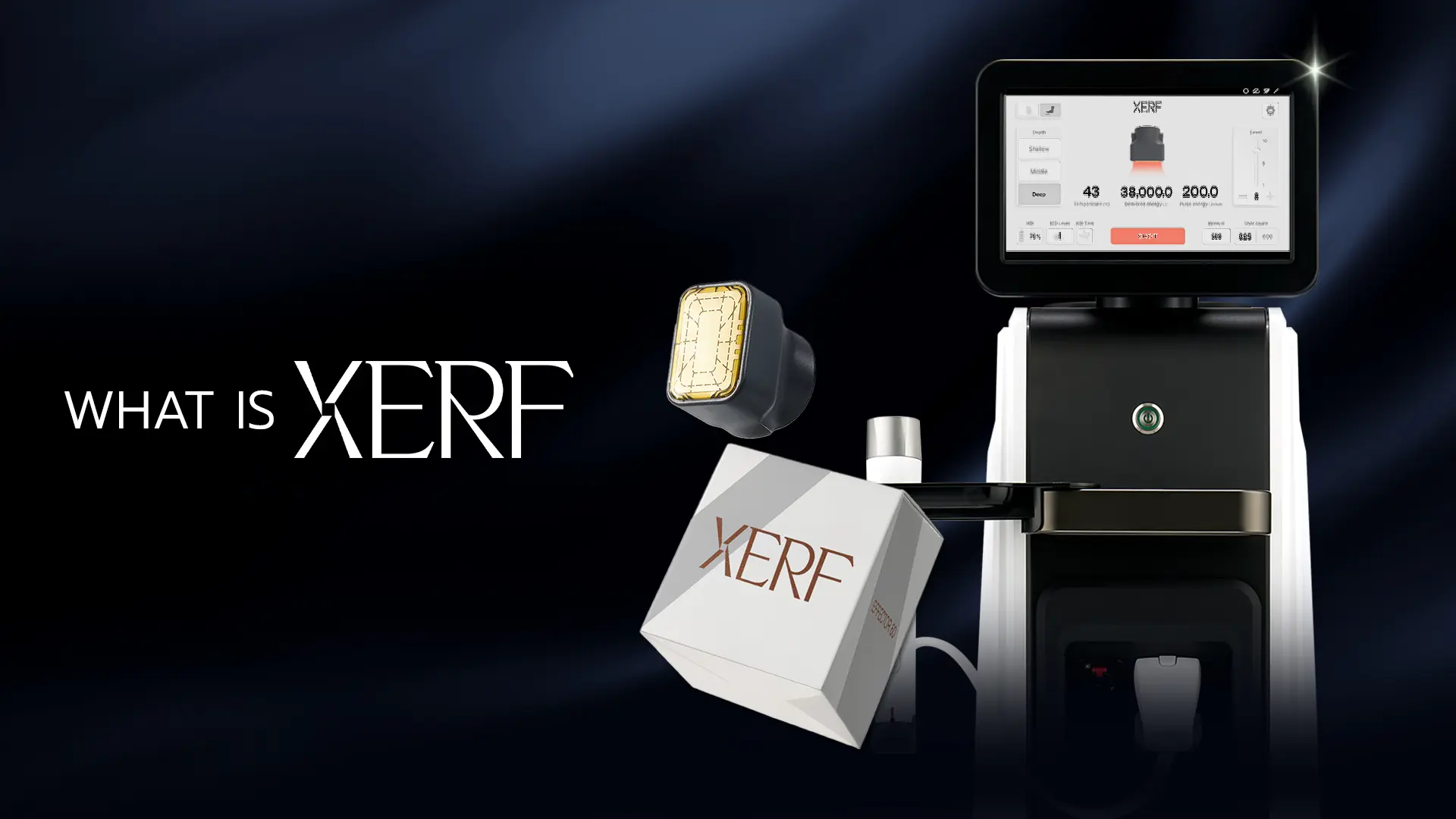
XERF
Dual-frequency monopolar RF for broad, layered heating
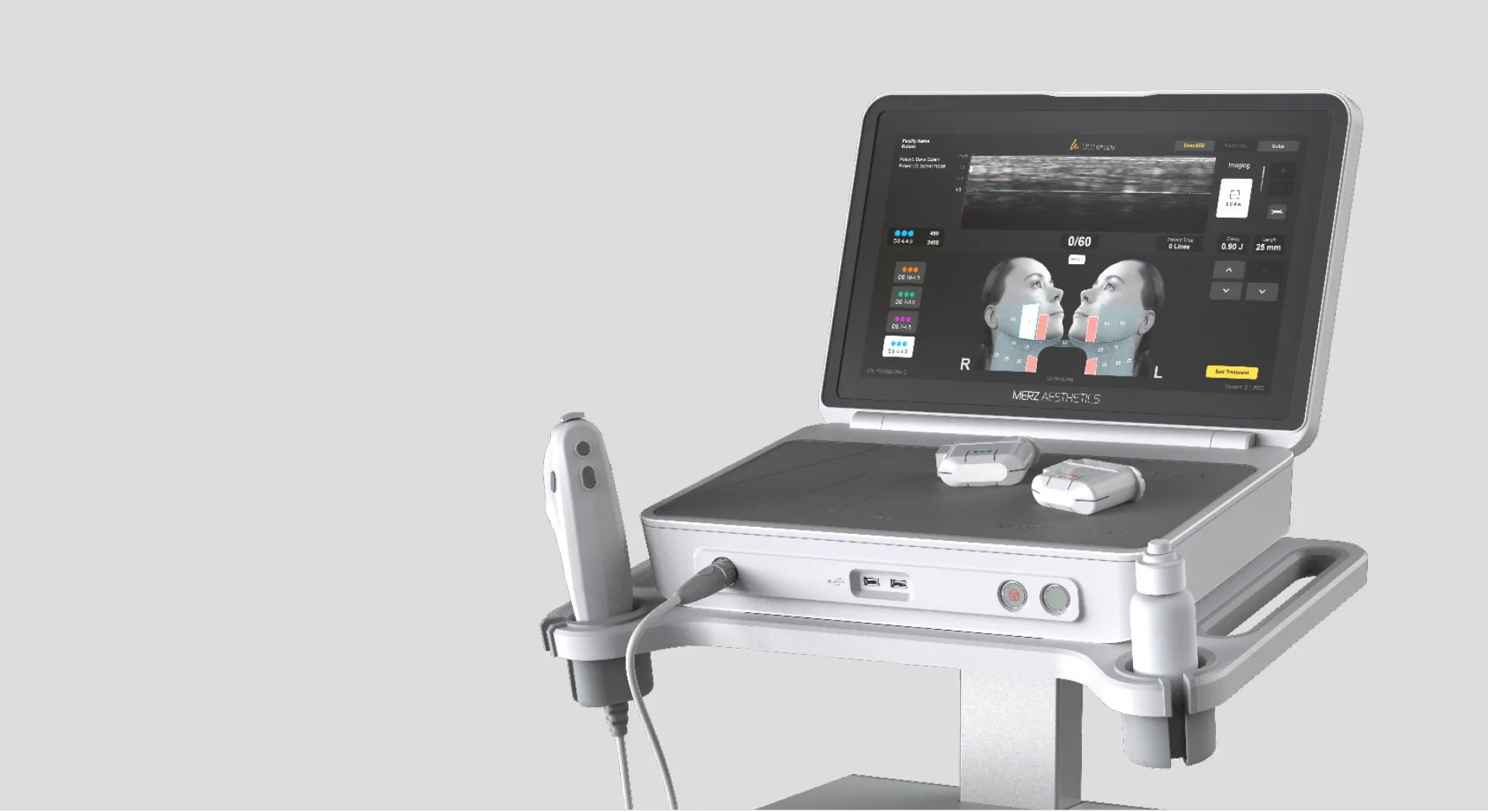
Ultherapy PRIME
Image-guided microfocused ultrasound at selected depths
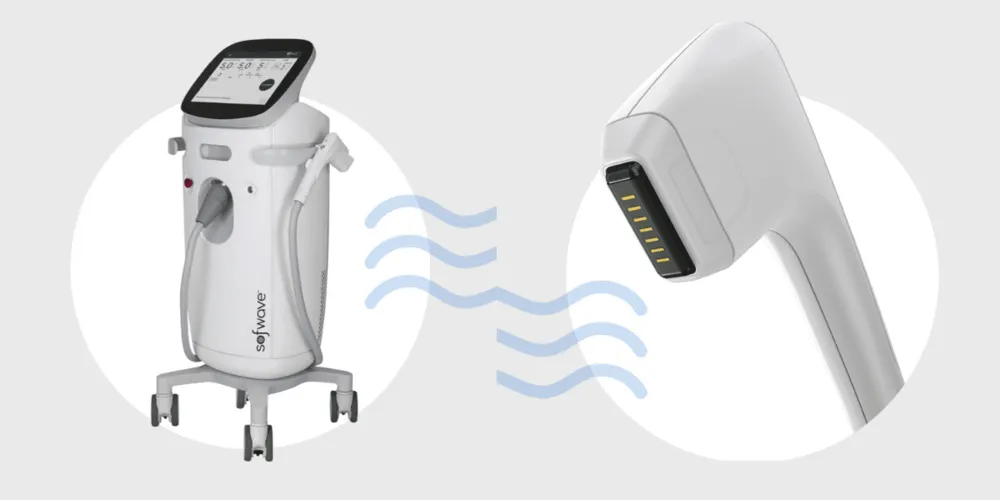
Sofwave
Parallel-beam ultrasound focused within the mid-dermis
The short answer
Three ways to stimulate remodelling, with different strengths
XERF is the radiofrequency option and may appeal when broader lower-face, jawline or neck firmness is the priority. Ultherapy PRIME places focused ultrasound at visible, selected tissue depths and is often considered when deeper support matters. Sofwave concentrates ultrasound energy in the dermis, making skin quality, early laxity and fine lines a natural part of the conversation.
None is a substitute for surgery, and none can correct every cause of a softened jawline. A good plan first distinguishes loose skin from facial volume change, fat, muscle pull and underlying structure.
At-a-glance comparison
How XERF, Ultherapy PRIME and Sofwave differ
The most important differences are the energy type, how that energy is distributed and the level of tissue being treated. This changes what each technology is naturally suited to address.
| Comparison point | XERF | Ultherapy PRIME | Sofwave |
|---|---|---|---|
| Energy | 6.78 MHz and 2 MHz monopolar radiofrequency | Microfocused ultrasound with visualisation | Synchronous parallel-beam ultrasound |
| Energy pattern | Broader volumetric heating through selectable levels | Discrete thermal points at chosen focal depths | Parallel cylindrical thermal zones in the mid-dermis |
| Depth approach | Shallow, middle and deep treatment modes rather than fixed focal depths | Defined 1.5, 3.0 and 4.5 mm treatment depths | Thermal effect from 0.5 to 2 mm, centred at 1.5 mm |
| Guidance and cooling | Settings are selected for the area and tissue profile; integrated cryogen cooling supports comfort | Real-time ultrasound imaging guides treatment placement | Integrated Sofcool cooling and surface temperature monitoring |
| Natural starting point | Diffuse firmness across the lower face, jawline and neck | Brow, under-chin, jawline and neck concerns where selected deeper levels matter | Fine lines, dermal firmness and mild to moderate visible laxity |
| Important trade-off | No real-time ultrasound image of the treatment plane | Pulse sensation and post-treatment tenderness can be more noticeable for some patients | Its dermal focus is different from a device designed to place energy at deeper focal levels |
Practical takeaway: choose by anatomy and goal, not by a one-word claim such as "deepest" or "strongest". Greater depth is useful only when the target tissue is actually at that level.
Depth explained
Why the treatment level changes the result
Skin is not one flat layer. The dermis, fibrous support and deeper soft tissue each behave differently, which is why two patients with a similar-looking jawline may need different plans.
Different transducers place focal thermal points at defined levels. Real-time imaging allows tissue to be viewed before treatment lines are delivered.
The thermal effect sits between 0.5 and 2 mm, focusing treatment within the mid-dermis while active cooling protects the skin surface.
Technology profiles
Where each treatment makes the most sense
These are starting points, not prescriptions. Tissue thickness, facial volume, previous procedures and the degree of laxity can change the recommendation.
RF pathway
XERF for broad firmness
XERF may suit someone who wants non-needle RF treatment across the lower face or neck, particularly where the concern feels diffuse rather than confined to one small line.
- Lower-face and jawline firmness
- Neck skin that may benefit from layered treatment
- Patients comparing RF with ultrasound options
Image-guided ultrasound
Ultherapy PRIME for precise depth selection
Ultherapy PRIME may be considered when treatment at defined levels is important, including selected brow, under-chin, lower-face and neck concerns.
- Real-time tissue visualisation
- Choice of superficial and deeper focal levels
- Gradual lifting and tightening goals
Dermal ultrasound
Sofwave for skin quality and early laxity
Sofwave may fit a patient whose main concern is the way the skin itself looks and feels, including fine lines and mild to moderate loss of firmness.
- Mid-dermal collagen remodelling
- Brow, submental and neck treatment planning
- Integrated cooling during energy delivery
Compare by concern
A more useful way to find your best fit
The treatment target matters more than the popularity of the machine. These common starting points show how the decision may be approached.
Brow area
Ultherapy PRIME or Sofwave
Both can be considered for a subtle non-surgical brow lift. Ultherapy offers selectable depths and imaging; Sofwave works within the dermis. Eyelid heaviness or marked brow descent may need a different assessment.
Jawline
XERF or Ultherapy PRIME
XERF may suit broad lower-face firmness, while Ultherapy may suit focal treatment at selected deeper levels. A softened jawline caused mainly by fat, jowl volume or bone structure will not be solved by skin tightening alone.
Neck
Match the layer
Sofwave may suit dermal crepiness, XERF may suit diffuse firmness and Ultherapy may be selected when deeper support is relevant. Visible muscle bands are assessed separately from loose skin.
Fine lines
Often Sofwave
A dermal-focused approach can make sense when fine lines and skin quality are more noticeable than deeper descent. Texture, pigmentation and etched wrinkles may still need separate treatment.
Diffuse laxity
Often XERF
Broad monopolar RF heating may be useful where the goal is overall firmness through the lower face and neck, provided facial volume and tissue thickness are taken into account.
What the evidence can tell us
Different technologies can both improve mild to moderate laxity
Platform specifications vary by model, handpiece and configuration; confirm the equipment and treatment plan available at your clinic. Manufacturer information: XERF · Ultherapy PRIME · Sofwave specifications.
This study does not establish a three-device winner
A small randomised split-face study compared monopolar RF with microfocused ultrasound with visualisation. Both sides improved at one, three and six months, with no statistically significant difference in the investigators' laxity scores. The study involved 20 people and did not test these three current systems head to head, so it cannot prove that one named device is superior.
Balanced expectations
What skin tightening can and cannot do
Energy-based treatment is best understood as gradual collagen remodelling. The result is usually a fresher, firmer version of your own features rather than a dramatic change in facial shape.
It may help with
- Mild to moderate skin laxity
- Early jawline softening
- Subtle brow, lower-face or neck tightening
- Fine lines and reduced skin firmness
It will not replace
- A surgical lift for advanced loose skin
- Volume restoration where tissue deflation is the main issue
- Fat reduction when fullness is driving the contour
- Dedicated treatment for pigment, scars or prominent neck bands
Treatment experience
Comfort, recovery and results
All three treatments are non-surgical, but non-surgical does not mean sensation-free or risk-free. The area, energy settings and your individual response influence the experience.
Confirm the real target
Assessment looks at skin thickness, laxity, fat distribution, facial volume, muscle pull, medical history and previous procedures before a device is selected.
Expect heat or short pulses
Sensation varies. Cooling and protocol choices may improve comfort, while bony areas and deeper ultrasound lines can feel more noticeable for some people.
Allow time for remodelling
Most people return to their routine promptly. Depending on the device and individual response, the treated area can temporarily look pink or feel warm, swollen, tender or tingly.
When should you judge the result?
Some early firmness may be visible, but collagen change is gradual. A meaningful review is commonly made around two to three months, with further evolution possible over several months. Outcome, longevity and the need for maintenance vary between patients.
Personalised planning
Sometimes the right answer is not another tightening session
If laxity appears alongside acne scarring, enlarged pores or uneven texture, RF microneedling with Morpheus8 may be more relevant. Patients comparing another monopolar RF option can review Thermage FLX.
Likewise, an indistinct jawline may require a broader jawline assessment, while vertical neck cords may be better understood through the platysmal bands guide. Combining treatments is considered only when each step has a clear purpose.
Sydney consultations
Compare skin tightening in Chatswood or Hurstville
Chatswood
Convenient for the North Shore, including Willoughby, Artarmon, Roseville, Lindfield and Lane Cove.
Suite 203/38B Albert AvenueChatswood NSW 2067
Hurstville
Convenient for the St George area, including Kogarah, Penshurst, Beverly Hills, Allawah, Oatley and Blakehurst.
41-43 Dora StreetHurstville NSW 2220
Common questions
XERF, Ultherapy PRIME and Sofwave FAQs
Is XERF better than Ultherapy PRIME or Sofwave?
There is no universal winner. XERF distributes monopolar radiofrequency through selectable treatment levels, Ultherapy PRIME places focused ultrasound at selected depths with real-time imaging, and Sofwave concentrates parallel ultrasound energy in the mid-dermis. The better fit depends on the cause and depth of laxity.
What is the main difference between XERF, Ultherapy PRIME and Sofwave?
XERF uses dual-frequency monopolar radiofrequency. Ultherapy PRIME uses microfocused ultrasound with visualisation at 1.5, 3.0 and 4.5 mm treatment depths. Sofwave uses parallel ultrasound beams with a thermal effect between 0.5 and 2 mm, centred at 1.5 mm.
Which treatment is best for jawline tightening?
XERF may suit diffuse lower-face firmness, while Ultherapy PRIME may suit selected patients needing precise treatment at deeper tissue levels. Sofwave may be considered when dermal firmness is the main issue. Jawline heaviness caused by fat, volume or bone structure may need a different plan.
Which treatment is best for neck laxity?
Ultherapy PRIME can address selected deeper levels, Sofwave is dermal-focused, and XERF provides broader radiofrequency heating through selectable levels. Thin crepey skin, platysmal bands and more advanced laxity are different concerns and may not respond to the same treatment.
Which option may suit a non-surgical brow lift?
Ultherapy PRIME and Sofwave both have applications for brow lifting. Selection depends on anatomy, tissue depth, skin thickness and treatment goals. A non-surgical treatment cannot reproduce a surgical brow lift.
Which skin tightening treatment reaches the deepest?
Ultherapy PRIME has defined treatment transducers at 1.5, 3.0 and 4.5 mm. XERF uses dual-frequency radiofrequency with selectable shallow, middle and deep modes rather than fixed ultrasound focal depths. Sofwave is centred in the mid-dermis at approximately 1.5 mm. Depth alone does not determine suitability.
Which treatment is the most comfortable?
Comfort cannot be guaranteed from the device name. Patients may feel heat, short pulses or tenderness, and sensation varies with anatomy, settings and personal tolerance. Cooling and treatment technique are part of comfort planning.
Is there downtime after XERF, Ultherapy PRIME or Sofwave?
Most patients can return to usual activities without planned recovery time. Temporary redness, warmth, swelling, tenderness, bruising, welts, tingling or altered sensation can occur, depending on the treatment and individual response.
Can these treatments cause facial fat loss?
Skin tightening treatment should be planned around tissue thickness and facial volume. Unwanted contour change is a concern patients should discuss before energy-based treatment. Appropriate device selection, treatment depth and settings matter, particularly in lean faces.
When do results appear?
Some patients notice early firmness, but collagen remodelling is gradual. Change is commonly assessed over two to three months and may continue to evolve for several months. The degree and duration of improvement vary.
Can XERF, Ultherapy PRIME or Sofwave be combined with other treatments?
Sometimes. If laxity occurs with scarring, texture, pigmentation, volume change or muscle activity, a staged plan may be more useful than repeating one tightening device. Timing and compatibility require individual assessment.
Where can I compare these treatments in Sydney?
Medical Aesthetics 360 provides skin tightening consultation and treatment planning at Chatswood and Hurstville. Cost is confirmed after the treatment area, device and proposed protocol have been assessed.
This information is general and does not replace medical advice. Suitability, treatment settings, comfort, recovery and results vary. Energy-based treatments carry risks, including uncommon burns, contour change and temporary nerve-related symptoms; these are discussed during consultation.
Continue exploring
Related skin tightening and clinic information
Compare the options with an individual assessment at MA360 in Chatswood or Hurstville.