Melasma Treatment: Q-Switch vs Pico Laser vs IPL (BBL) | Medical Aesthetics 360

A doctor-led guide to melasma

Melasma is complex. Treatment should be measured.

Doctor-led melasma treatment in Sydney for people who want more than a one-off laser session. We assess the pigment first, then build a careful plan around your skin, previous response and risk of rebound.

Chatswood & Hurstville Direct medical oversight Recurrence-aware planning

Understanding melasma

Why one device cannot solve every pigmentation pattern

Melasma commonly appears as symmetrical brown or grey-brown patches across the cheeks, forehead, upper lip or jawline. It may be described as predominantly epidermal, dermal or mixed, depending on where pigment-related changes are seen. Our overview of melasma, freckles and sun spots explains why distinguishing these patterns matters. Mixed patterns are common.

The face may also show freckles, solar lentigines, post-inflammatory pigmentation or Hori’s naevus alongside melasma. These conditions can look similar but respond differently to pigment lasers and light-based treatments. That is why Medical Aesthetics 360 begins with assessment rather than assuming every brown patch should receive the same laser.

Melasma tends to relapse because treatment can reduce visible pigment without removing the skin’s underlying tendency to produce it. Sun and visible light exposure, hormonal factors, heat and skin irritation may continue to activate pigmentation after the initial improvement.

Why patients choose a medical assessment: the aim is to reduce visible contrast while protecting the skin barrier and limiting the inflammation that can trigger rebound pigmentation.

When treatment disappoints

Four common rebound patterns

Darkening after treatment is a reason to reassess—not automatically a reason to use stronger settings.

01

Initial improvement, then return

Pigment lightens noticeably before returning within several weeks or months.

02

Little visible change

The treated pigmentation remains similar despite completing a treatment course.

03

Progressive darkening

Pigmentation worsens without first showing a meaningful reduction.

04

A new pigment pattern

New dark or light areas appear while the original pigmentation remains.

Treatment comparison

Q-switch, Pico or IPL (BBL)?

There is no universal “best laser” for melasma. The safer choice depends on pigment depth, skin type, treatment history, wavelength, fluence and the risk of inflammation.

Q-switch Nd:YAG

A studied adjunct—when used conservatively

Low-fluence 1064 nm Q-switched Nd:YAG is one of the more commonly studied laser approaches for melasma. It may gradually reduce visible pigment in selected patients, particularly when combined with photoprotection and topical management.

Potential roleGradual lightening within a multimodal treatment plan.
Important limitationRecurrence is common; excessive treatment may cause rebound or patchy hypopigmentation.

What the research tells us

The device matters. The treatment plan matters more.

Long-term recurrence

Improvement may not be permanent

A small two-year split-face trial reported recurrence or exacerbation in 10 of 17 participants who completed follow-up, illustrating why maintenance matters.

View the study
Picosecond evidence

Results vary by wavelength

A 2023 review found substantial variation between picosecond studies; 755 nm treatment was not superior to topical therapy in its subgroup analysis.

View the review
Combined treatment

Multimodal care is supported

A network meta-analysis reported better outcomes from Q-switched Nd:YAG combined with topical management than from the Q-switch laser alone.

View the analysis
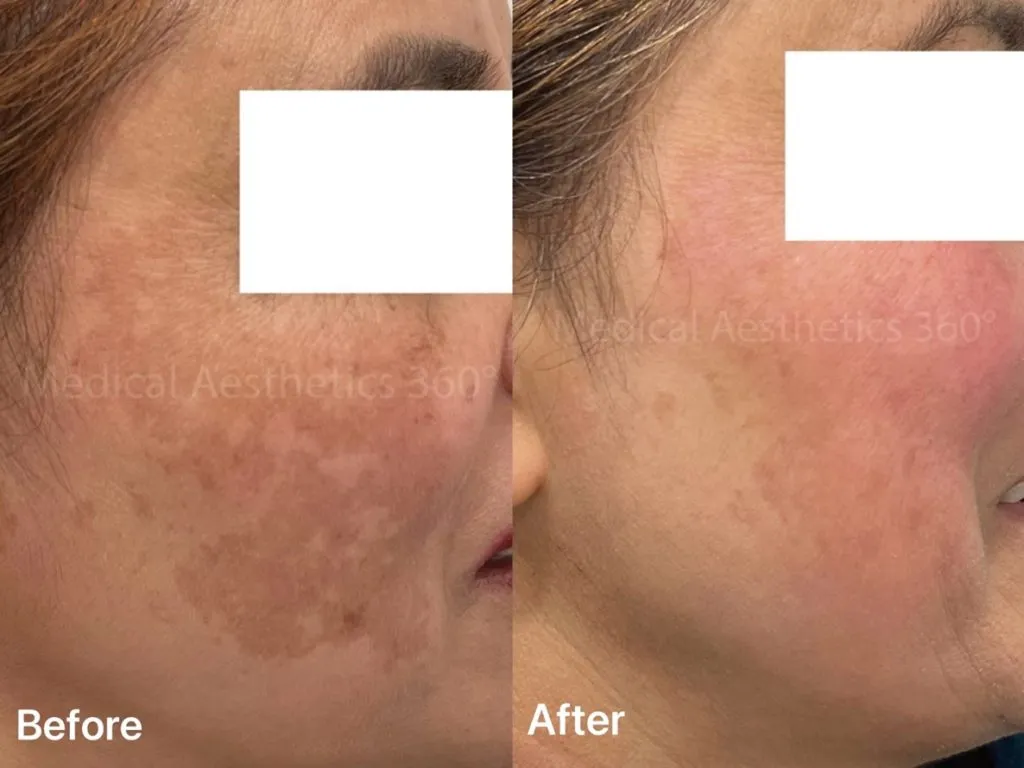
Medical Aesthetics 360 melasma case study showing facial pigmentation before and after an individual treatment plan MA360 case study
Individual Medical Aesthetics 360 case-study images. Lighting, skin condition and treatment plans vary. This result does not predict the outcome another person may experience.

A real Medical Aesthetics 360 case

Carefully staged treatment can make stubborn pigment feel manageable.

This patient presented after years of recurring facial pigmentation and previous treatment attempts. Dr Chun-Yen Huang assessed the pattern as consistent with melasma and developed an individual plan focused on pigment control, skin-barrier support, sun-safe behaviour and appropriately selected professional treatment.

  • Visible reduction in the appearance and contrast of pigmentation
  • A brighter, more even-looking overall complexion
  • A longer-term strategy designed around recurrence control
Read the complete case study

Results vary between individuals. All treatments carry risks and require an in-person assessment. No outcome can be guaranteed.

The Medical Aesthetics 360 approach

A medical plan built around your skin—not a machine.

Our cosmetic doctors combine diagnosis, pigment control, skin-barrier care and conservative energy selection. Laser is an adjunct to the plan; in some cases, delaying or avoiding a device may be the safer choice.

01

Confirm the pigmentation pattern

Assess melasma alongside possible freckles, solar lentigines, Hori’s naevus and post-inflammatory pigmentation. Review skin type, triggers, medicines and previous treatment response.

02

Build the foundation

Establish broad-spectrum photoprotection, gentle skincare and—when clinically appropriate—doctor-supervised topical or medical management. Prescription options are discussed privately after medical assessment. If device treatment is planned, review the clinic’s Pico laser and BBL aftercare guide before your appointment.

03

Select energy carefully

Choose Q-switch, Pico or IPL/BBL only when the treatment characteristics suit the assessed pattern and risk profile. Settings and intervals are adjusted to the skin’s response.

04

Follow a structured course

Where laser is suitable, the clinic may recommend approximately six sessions, sometimes six to eight, often around two weeks apart. This is a clinic protocol—not a universal schedule—and treatment may be paused or changed.

05

Protect the improvement

Maintenance focuses on photoprotection, trigger management and a sustainable skin plan to help reduce the degree and speed of recurrence.

Realistic treatment goals

Aim for meaningful control, not an impossible promise.

For deeper or mixed melasma, a realistic aim may be to reduce contrast so pigmentation becomes much less noticeable at normal conversational distance and no longer produces a prominent mottled appearance.

Frequently asked questions

Clear answers about melasma

The most important question is not “Which machine is strongest?” It is “Which plan is appropriate for my pigment pattern and skin?”

Can melasma be permanently removed?

Melasma is usually managed rather than permanently cured. Treatment may lighten it, but recurrence is common because the triggers and tendency to produce pigment can persist.

Is Q-switch laser good for melasma?

Low-fluence Q-switched Nd:YAG may help selected patients as part of a combined plan. Our pigmentation laser comparison explains how wavelength and pulse duration affect treatment selection. It is not appropriate for everyone, and excessive treatment can worsen or unevenly alter pigmentation.

Is Pico laser better than Q-switch laser?

Not necessarily. Pico devices use different wavelengths and delivery modes. Current evidence does not show that every Pico treatment is superior to Q-switch laser or topical management.

Does IPL or BBL help melasma?

IPL or Sciton BBL may help selected superficial, sun-related or vascular components, but it can aggravate melasma in some people. Assessment of skin type and pigment pattern is essential.

How many laser sessions will I need?

There is no universal number. If laser is suitable, Medical Aesthetics 360 may recommend a structured course—commonly around six sessions—with timing and total number adjusted according to the device and your response.

What if my pigmentation became darker after laser?

Avoid adding further active products or energy-based treatment until the skin has been assessed. Darkening may be post-inflammatory hyperpigmentation, recurrent melasma or another pigment condition. Seek prompt advice if there is pain, blistering or crusting.

What are the possible risks?

Effects may include temporary redness, warmth, swelling, dryness or darkening. Less common but more significant risks include post-inflammatory hyperpigmentation, uneven pigment, hypopigmentation, burns and scarring. Risks vary between individuals and devices.

Article author

Dr Chun-Yen Huang, FRACGP

Medical practitioner at Medical Aesthetics 360

Read more about Dr Chun-Yen Huang and the MA360 medical team. AHPRA registration MED0001187421. FRACGP; member, Korean College of Cosmetic Surgery; trainer for Galderma and Cynosure/PicoSure; guest speaker for PicoSure and Revlite.

Request an assessment

Individual assessment

Get clarity before committing to another treatment.

Meet with a Medical Aesthetics 360 doctor at our Chatswood clinic or Hurstville clinic to review your pigmentation pattern, history and previous response. You will receive an individual plan with suitable options, alternatives, risks and realistic goals.

Book a melasma consultation Prefer to speak with the clinic? Call 1300 338 307. Individual suitability and results vary; laser may not be recommended.