


Conditioning with Nd:YAG
Two passes are used. The first provides a short skin stimulus; the second delivers deeper FRAC3 heating and prepares tissue for fractional treatment.
TwinLight combines Nd:YAG conditioning with fractional and full-beam Er:YAG resurfacing in one adjustable protocol. At Medical Aesthetics 360, the treatment plan is shaped around the concern, skin response and amount of recovery you can reasonably accommodate.
It may be considered for rough texture, fine lines, enlarged pores, selected acne scars and visible sun damage. The aim is measured improvement in skin quality, not an artificial change in facial character.
Book a TwinLight consultation
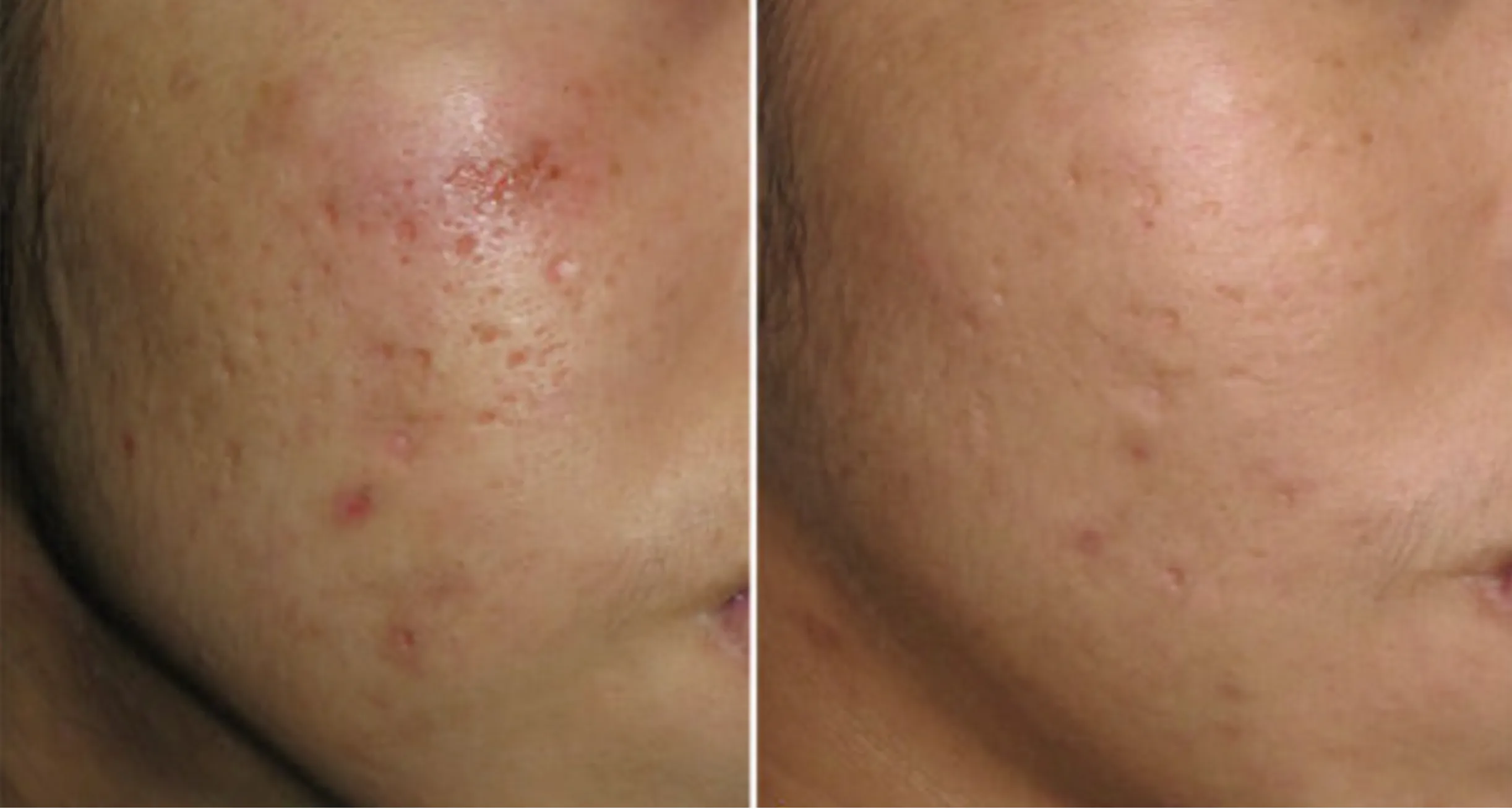
Acne scars are rarely all the same depth or shape. Fractional erbium resurfacing can soften selected textural irregularities by creating controlled microchannels while leaving intervening skin to support healing.
TwinLight adds an Nd:YAG conditioning stage and a light Er:YAG finishing pass. Whether that complete sequence is appropriate depends on scar type, active acne, pigmentation tendency, previous treatments and the downtime you can accept.
A photograph can show a change, but it cannot predict your response. Lighting, skin condition, settings, treatment count and aftercare all matter.
Nd:YAG and Er:YAG interact with skin differently. The first is used for deeper conditioning and dermal heating; the second is strongly absorbed by water and is used to remove microscopic columns and a controlled surface layer.
The sequence can range from a lighter refresh to more assertive resurfacing. More energy is not automatically better: the useful setting is the one that balances the intended change with your skin and recovery risk.
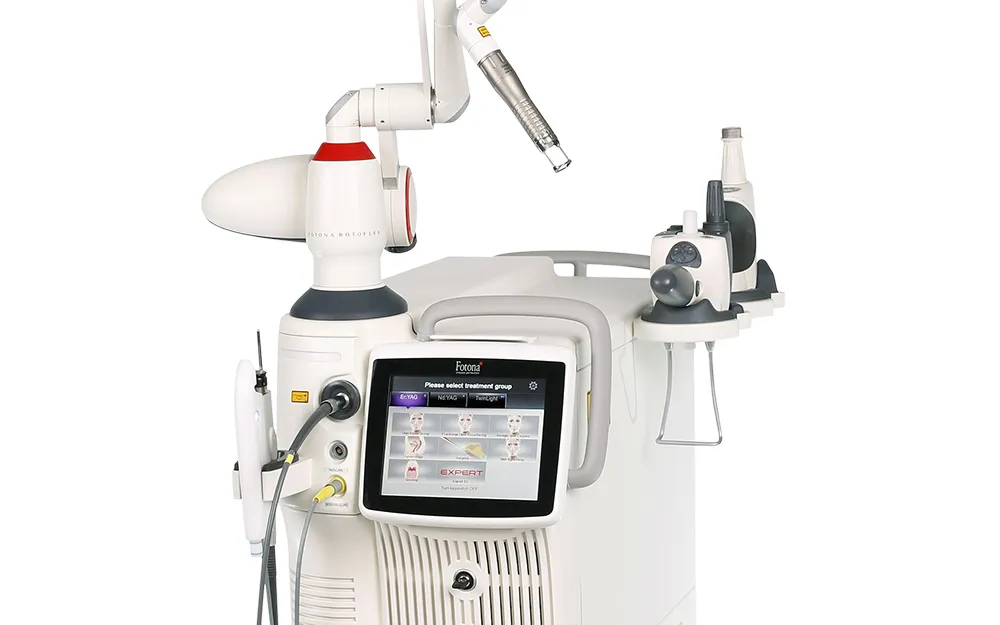
Fotona SP Dynamis provides the complementary Nd:YAG and Er:YAG wavelengths used in the protocol.
Two passes are used. The first provides a short skin stimulus; the second delivers deeper FRAC3 heating and prepares tissue for fractional treatment.
Precisely spaced microchannels are created in the treatment area. Healing around these columns supports surface renewal and collagen remodelling over time.
A controlled full-beam pass finishes the procedure by addressing superficial irregularity. Depth is adjusted rather than applied as one standard peel.
A consultation separates concerns that may respond to resurfacing from those that need a different approach. This is especially important when texture, colour and volume changes occur together.
Brown marks, melasma, redness and vascular lesions require a diagnosis before laser selection. A resurfacing protocol can aggravate some pigment conditions if the indication, timing or settings are wrong.
TwinLight can improve the quality of skin, but it does not restore structural facial volume. Volume loss may need observation or another treatment category.
TwinLight is adjustable. The treatment intensity influences discomfort, visible recovery and the type of change that may be achievable.
Lower-intensity treatment may suit early texture or maintenance goals. Redness, warmth and dryness can still occur, but visible settling may be closer to two days for some patients.
Deeper treatment may be considered for more established damage or scarring. Swelling, bronzing, peeling or fine scabbing can make four to seven days of social recovery more realistic.
A 2023 systematic review and meta-analysis of laser combinations for skin rejuvenation found that combined approaches often produced greater improvement and less pain or erythema than a single laser in the included studies. Er:YAG plus Nd:YAG was among the commonly studied pairings.
The authors also highlighted limited high-quality reporting and called for further trials. The review covered different combinations and protocols, so it supports the dual-wavelength concept more broadly; it does not guarantee an outcome from TwinLight or replace individual assessment.
The appointment is usually around one hour, although area size and treatment depth affect timing. Topical anaesthetic may be used. During treatment, warmth, stinging or a momentary pinching sensation is possible.
Some people choose one treatment; others may be advised to complete up to three sessions, often separated by four to six weeks. Scar depth, treatment intensity and the response after the first session influence the recommendation.
Annual maintenance can be considered as skin continues to age, but it is optional rather than a fixed requirement. Results vary, and resurfacing does not stop future sun damage or ageing.
Suitability is not based on age alone. Active infection, open skin, a recent tan, certain medicines, a history of abnormal scarring or poorly controlled skin inflammation can change the plan or delay treatment.
People with darker skin tones can be treated with some laser protocols, but the risk of post-inflammatory pigmentation deserves specific discussion. Conservative settings, preparation and sun protection may be advised.
Practical answers about treatment planning at Medical Aesthetics 360 in Chatswood and Hurstville.
It is a three-stage skin resurfacing protocol that combines 1064 nm Nd:YAG conditioning with fractional and full-beam 2940 nm Er:YAG treatment.
TwinLight centres on external fractional resurfacing and a finishing peel. Fotona 4D is a broader four-mode rejuvenation protocol that can include an intraoral stage and non-ablative external modes.
Fractional Er:YAG resurfacing may soften selected atrophic acne scars. Deep ice-pick, tethered or mixed scars can need a combination plan, and active acne is usually addressed first.
Some sun-related surface irregularity may improve, but melasma, discrete pigment and vascular redness should be diagnosed separately. A different laser or non-laser approach may be safer.
No. It can support skin texture and firmness, but it does not restore deeper structural volume in the cheeks, temples or under-eye area.
Suitability depends on skin type, tanning, pigment history and the proposed intensity. Darker skin tones may require more conservative settings and careful preparation to reduce pigment risk.
People commonly describe warmth, stinging or momentary pinching. Sensation increases with treatment depth, and topical anaesthetic may be applied when appropriate.
Allow about one hour for many facial treatments. Preparation, anaesthetic time, treatment area and protocol intensity can change the total visit length.
A course can range from one treatment to as many as three, commonly spaced four to six weeks apart. The response after each session helps guide the next step.
Surface smoothness may become noticeable after redness and peeling settle. Collagen remodelling is slower and may continue for approximately two to three months.
A light protocol may have around two days of visible redness or dryness. More intensive resurfacing can require roughly four to seven days, sometimes longer for sensitive skin.
Expected effects include redness, swelling and peeling. Less common complications include infection, pigment change, prolonged redness, cold-sore reactivation and scarring.
Medical Aesthetics 360 provides consultations in Chatswood and Hurstville. Pricing depends on the area, settings and treatment course recommended after assessment.
Compare technologies and concern-based information before deciding what deserves a consultation.
Medical Aesthetics 360, Chatswood and Hurstville, Sydney | 1300 338 307
Discuss Fotona TwinLight suitability and a personalised treatment plan at MA360 in Chatswood or Hurstville.