
Home » Our Technology » Fotona Laser » Fotona 4D

Fotona 4D

Fotona 4D Sydney | Four-Stage Laser Rejuvenation | MA360

Dual-wavelength facial laser rejuvenation

Fotona 4D Sydney: Four-Stage Laser Facial Rejuvenation

One treatment sequence for the inner mouth, deeper facial tissues and skin surface, designed for gradual rather than surgical change.

Fotona 4D combines four Er:YAG and Nd:YAG laser modes to address several features of facial ageing in a coordinated session. At Medical Aesthetics 360, the protocol is adjusted to the concern: mild laxity, perioral lines, texture, pores or general skin quality.
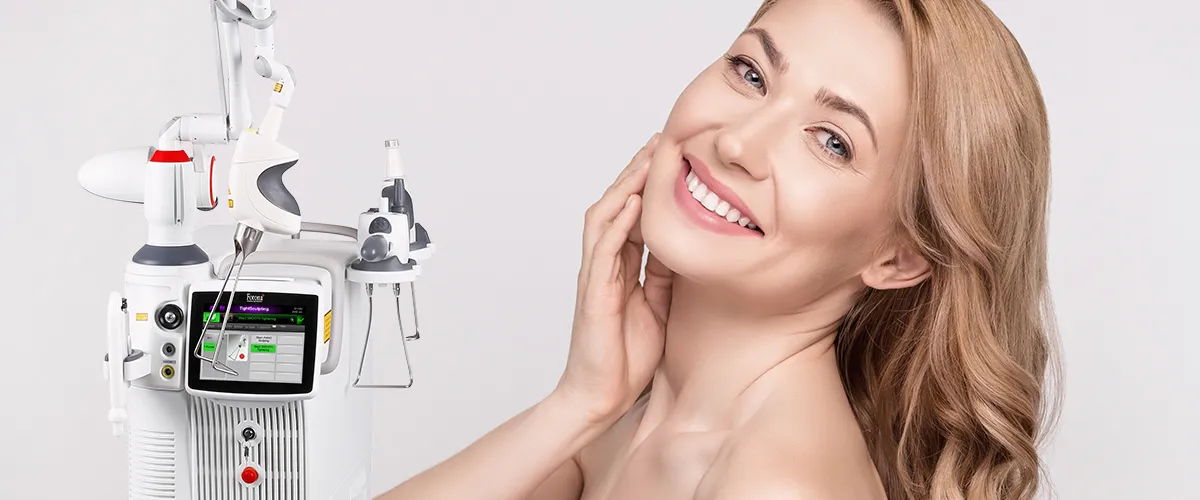
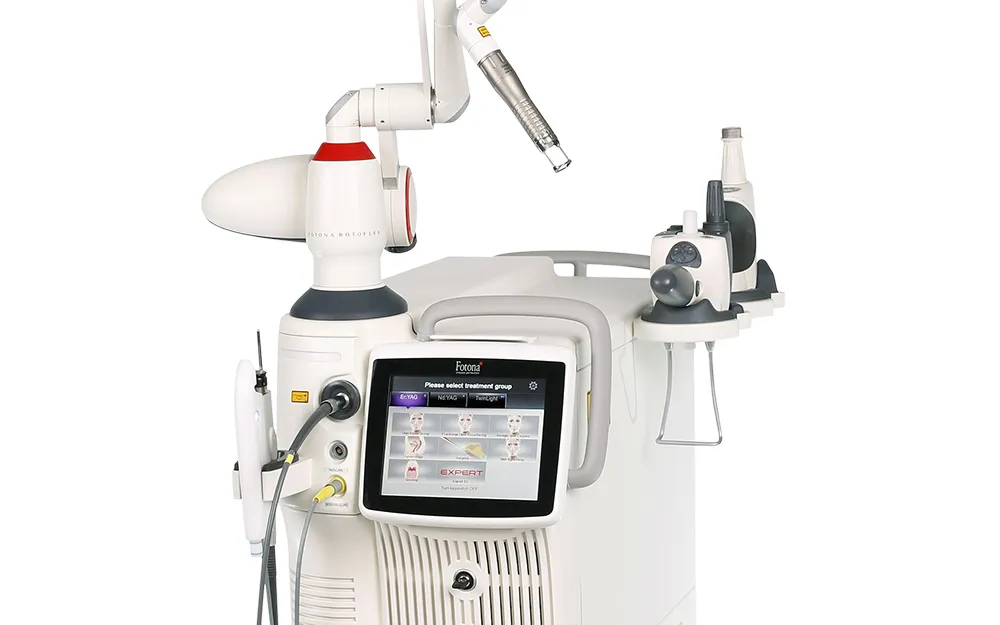
Fotona laser platform for four-stage facial rejuvenation at Medical Aesthetics 360
Fotona technology combines Er:YAG and Nd:YAG wavelengths for layered treatment planning.
Four stages Intraoral, targeted, bulk-heating and surface modes
Two wavelengths 2940 nm Er:YAG and 1064 nm Nd:YAG
About 60-90 minutes Timing varies with coverage and treatment intensity
Gradual improvement Best suited to mild tightening and skin-quality goals
Fotona dual-wavelength laser system used for facial treatment planning
The selected handpiece, pulse mode and settings determine the depth and purpose of each Fotona stage.

Why the layered approach matters

Facial ageing rarely happens in one layer

Fine surface roughness, enlarged-looking pores, softening around the mouth and early laxity are different problems. Fotona 4D uses four treatment directions so a session can address more than one of them without assuming that every face needs the same intensity.

  • Intraoral heating for the perioral and nasolabial region
  • Targeted Nd:YAG treatment for selected deeper irregularities
  • Broader thermal treatment for mild laxity
  • An adjustable Er:YAG light peel for surface refinement

How Fotona 4D works

The four stages, explained clearly

The "4D" name describes four complementary laser modes. It does not mean four-dimensional imaging or a surgical lift.

01

SmoothLiftin

A non-ablative Er:YAG stage delivered inside the mouth. Controlled thermal energy is directed towards oral tissues behind the nasolabial and perioral region.

Primary role
Inside-out perioral and fold support
02

FRAC3

A targeted 1064 nm Nd:YAG mode that creates small thermal treatment zones at selected tissue depths without removing the entire surface.

Primary role
Selected deeper irregularities and texture
03

PIANO

An extended-pulse Nd:YAG stage delivered with a continuous brushing motion to create broader, controlled heating across the treated facial area.

Primary role
Dermal heating and mild tightening support
04

SupErficial

An Er:YAG light peel that can be adjusted for superficial roughness, fine lines and enlarged-looking pores. Stronger settings create more visible recovery.

Primary role
Surface texture and brightness

Realistic treatment goals

What Fotona 4D may improve, and where its limits sit

The treatment can be compelling for a patient who wants several modest improvements in one plan. It should not be presented as a replacement for every structural or surgical option.

Often considered for

  • Mild to moderate facial skin laxity
  • Fine lines and selected static wrinkles
  • Nasolabial and perioral softening
  • Uneven texture and enlarged-looking pores
  • General photoageing where a layered plan is useful

Not designed to correct

  • Significant jowling or excess loose skin
  • Loss of bone or deep facial fat compartments
  • A large, precisely placed volume deficit
  • Every pigment condition, particularly unstable melasma
  • Changes that require surgical tissue repositioning

Who may consider treatment

A broad protocol still needs individual screening

Skin tone, tanning, cold-sore history and tolerance for peeling all influence which stages and settings are appropriate.

May be a useful fit

  • Early laxity with texture concerns
  • Fine lines through several facial zones
  • A preference for non-surgical treatment
  • Goals that favour gradual, natural-looking change

Needs a cautious plan

  • Melanin-rich or pigment-prone skin
  • Recent tanning or significant sun exposure
  • Previous adverse laser response
  • Relevant medicines or impaired healing

Usually postpone

  • Active cold sores, mouth ulcers or infection
  • Broken, inflamed or recently injured skin
  • Recent facial procedures until reviewed
  • Pregnancy or other circumstances where elective laser is deferred
13

women completed four monthly Fotona 4D sessions in a recent prospective study using objective 3D facial imaging.

What current evidence can tell us

Measured change was real, but modest

A prospective Fotona 4D study indexed by PubMed followed 13 Chinese women after four full-face sessions at one-month intervals. Three-dimensional imaging found small vertical changes at several facial landmarks, approximately 0.5 to 0.63 mm in the lateral periorbital measurements at selected follow-ups.

Nasolabial-fold ratings and pore scores also improved at three and six months. The study reported transient redness and swelling, but it had no untreated control group and a very small sample. It supports the possibility of early and mid-term improvement; it does not establish equivalence to a surgical facelift or predict how every patient will respond.

Practical interpretation: Fotona 4D is best described as layered laser rejuvenation with potential for subtle tightening, smoother texture and softer folds. The evidence does not justify promises of dramatic lifting or restored facial volume.

Choosing the right level of treatment

Fotona 4D, resurfacing and surgical lifting are different tools

The useful choice depends on whether the priority is skin surface, mild multi-layer rejuvenation or structural repositioning.

Comparison point
Fotona 4D
Resurfacing only
Surgical lift
Main target
Several tissue depths, fine lines and mild laxity
Texture, scars, pores and surface photoageing
Deeper laxity, jowls and excess skin
Expected change
Gradual and generally subtle
Surface improvement; intensity-dependent
More substantial structural repositioning
Recovery
Usually limited, with redness or peeling possible
Ranges from mild to significant
Surgical recovery and scar care
Typical course
Often several sessions, then review
One or more sessions depending on depth
One operation with scheduled follow-up

What to expect at an appointment

Four stages require thoughtful pacing

The full protocol commonly takes around an hour or longer. Comfort and skin response are checked throughout rather than treating every stage at a fixed intensity.

01

Assessment

Facial ageing pattern, skin tone, pigment history, oral health, cold sores and treatment goals are reviewed.

02

Preparation

The skin is cleansed, eye protection is used and the sequence is adjusted for the planned coverage.

03

Layered treatment

Intraoral and external stages are delivered with temperature, comfort and tissue response monitored.

04

Aftercare

Instructions reflect the final peel intensity and may cover cleansing, moisturising, heat avoidance and sun protection.

Treatment course and results

Plan the course around response, not a promise

Some patients start with one Fotona 4D session and review the result. For broader ageing concerns, three to four treatments around four to six weeks apart are commonly considered. The recent prospective study used four monthly sessions.

An early glow or firmer feel may reflect surface change and temporary swelling. Collagen-related effects develop more slowly, with a better assessment generally made two to three months after completing the planned course. Maintenance can then be discussed according to benefit rather than scheduled automatically.

Appointment
Often around 60 to 90 minutes after preparation
Common course
One treatment and review, or three to four staged sessions
Spacing
Often about four to six weeks between sessions
Developing result
Gradual change across the course and following months
Maintenance
Individualised after results and skin response are reviewed

Recovery and safety

Low downtime is a setting, not a certainty

The external peel can be adjusted from very light to more active. That choice affects both surface improvement and how visible the recovery may be.

Common short-term effects

  • Warmth, redness or facial tenderness
  • Mild swelling, including around the mouth
  • Dryness, roughness or light peeling
  • Temporary sensitivity to skincare products

Risks that need discussion

  • Cold-sore reactivation
  • Burn, blistering, infection or delayed healing
  • Temporary or persistent pigment change
  • Scarring, acne flare, uneven response or little visible improvement

Fotona 4D questions

Frequently asked questions

Patient-focused answers about the four stages, results, recovery and suitability.

What is Fotona 4D?

Fotona 4D is a four-stage facial laser protocol that combines 2940 nm Er:YAG and 1064 nm Nd:YAG wavelengths. It includes intraoral heating, targeted external treatment, broader dermal heating and a light surface peel to address different layers in one plan.

Why is it called Fotona 4D?

The name refers to four treatment modes rather than four physical dimensions. SmoothLiftin, FRAC3, PIANO and SupErficial are applied in sequence, with each stage serving a different intraoral, dermal or surface role.

Which laser wavelengths does Fotona 4D use?

The protocol combines Er:YAG at 2940 nm with Nd:YAG at 1064 nm. Er:YAG is used for the intraoral thermal stage and surface peel, while Nd:YAG supports targeted and broader external heating stages.

What concerns can Fotona 4D treat?

It may suit mild to moderate facial laxity, fine lines, selected nasolabial or perioral creasing, enlarged-looking pores and uneven texture. Pigmentation must be assessed separately because not every brown patch is appropriate for a general rejuvenation protocol.

Is Fotona 4D a non-surgical facelift?

It is frequently marketed that way, but it does not reposition deeper facial tissues or remove excess skin like surgery. Fotona 4D is better understood as a layered laser rejuvenation treatment that may produce mild tightening and textural improvement.

Can Fotona 4D replace lost facial volume?

No laser can restore bone, fat compartments or precisely placed structural volume. Temporary swelling and softened folds can make the face look fuller, but marked volume loss usually requires a different treatment strategy.

Is Fotona 4D suitable for every skin tone?

Settings and the surface-peel component need to be adjusted for skin tone, tanning, pigment history and sensitivity. Melanin-rich or pigment-prone skin may require a more conservative plan; customisable settings do not make the risk of pigment change zero.

Does Fotona 4D hurt?

Comfort varies across the four stages. Patients may feel intraoral warmth, hot pinpricks or sustained external heating. Many treatments are performed without injectable anaesthetic, but the experience should not be described as completely painless for everyone.

How long does Fotona 4D take?

A full appointment often takes around 60 to 90 minutes after preparation. Timing varies with facial coverage, settings, cooling, the intensity of the surface step and whether every stage is included.

How many Fotona 4D sessions are usually needed?

Some patients begin with one treatment and review the response, while a course commonly involves three to four sessions around four to six weeks apart. The number should reflect baseline ageing, tolerance and the degree of improvement seen.

When will Fotona 4D results appear?

Surface brightness and temporary tightening may be noticed early, but swelling is not the final result. Collagen-related change develops gradually, with a more useful assessment generally made two to three months after a course.

How long do Fotona 4D results last?

Duration varies with age, skin quality, sun exposure, smoking, treatment intensity and the completed course. A small recent study found mild improvements persisting at six months, but long-term comparative evidence is still limited.

Is there downtime after Fotona 4D?

Many patients resume routine activities promptly. Redness, warmth, swelling, dryness, roughness or light peeling can occur, especially when the SupErficial peel is stronger. Social downtime therefore depends on the selected settings.

Can the intraoral stage trigger a cold sore?

Laser treatment around the mouth may reactivate herpes simplex in susceptible people. A history of cold sores should be disclosed before treatment so timing and any need for medical advice or preventive medication can be considered.

What are the risks of Fotona 4D?

Possible risks include prolonged redness or swelling, cold-sore reactivation, burns, blistering, infection, acne flare, pigment change, scarring, uneven response or little visible improvement. Risk varies with settings, skin condition and aftercare.

Is Fotona 4D available in Chatswood and Hurstville?

Medical Aesthetics 360 provides Fotona treatment planning through its Chatswood and Hurstville clinics in Sydney. Current availability and individual suitability should be confirmed when arranging an appointment.

How much does Fotona 4D cost in Sydney?

Pricing depends on the areas treated, the stages included, treatment intensity and whether a single session or course is planned. Current costs can be explained after assessment confirms an appropriate protocol.

Medical Aesthetics 360 Sydney

Fotona planning in Chatswood and Hurstville

The value of a four-stage platform is flexibility, but flexibility still requires selection. Consultation identifies whether a complete Fotona 4D sequence is appropriate or whether a more focused tightening, resurfacing, pigmentation or perioral treatment would make better sense.

Chatswood

Suite 203/38B Albert Avenue
Chatswood NSW 2067

Hurstville

41-43 Dora Street
Hurstville NSW 2220

Explore related treatment information

Fotona, tightening and skin-treatment directory

Compare adjacent treatment pathways when the main concern is lip quality, eye-area ageing, skin surface, pigment or structural laxity.

This information is general and does not replace personal medical advice. Treatment response, recovery and complications vary. Suitability, settings and any need for cold-sore precautions must be assessed individually. No cosmetic laser treatment can promise a particular degree of lifting or rejuvenation.

```html
Fotona 4D Sydney • Medical Aesthetics 360

Fotona 4D laser skin tightening for layered facial rejuvenation

Fotona 4D is a multi-step laser rejuvenation treatment used to support firmer-looking skin, refined texture, smoother-looking pores, perioral ageing concerns and collagen-focused skin management. At Medical Aesthetics 360 in Chatswood and Hurstville, Fotona 4D is planned through doctor-led assessment and may be compared with Ultherapy PRIME, Thermage FLX, Sofwave, Morpheus8, PicoSure, BBL and other device-based skin pathways.

Fotona 4D Sydney Laser skin tightening Collagen support Chatswood & Hurstville
Technology type Multi-mode Fotona laser rejuvenation protocol.
Common focus Firmness, texture, pores, fine lines and skin quality.
Downtime Varies by settings. Mild redness, warmth, dryness or peeling may occur.
Best next step Consultation to assess suitability and compare treatment options.
What is Fotona 4D?

A four-step laser approach for skin tightening and rejuvenation

Fotona 4D is a structured laser protocol designed to work across different treatment depths and skin concerns. Instead of treating only the surface of the skin, the pathway combines intraoral and external laser steps to support perioral rejuvenation, collagen stimulation, deeper heating and surface refinement.

At Medical Aesthetics 360, Fotona 4D is not presented as a one-size-fits-all treatment. It is considered after assessment of your skin quality, facial ageing pattern, pigmentation tendency, previous procedures, medical history, recovery preference and overall goals.

For some patients, Fotona 4D may be suitable as a standalone laser rejuvenation pathway. For others, it may be only one part of a broader skin management plan involving ultrasound, radiofrequency, RF microneedling, laser resurfacing, pigmentation treatment, skin booster-style treatments or medical skincare.

Search intent

Patients usually search Fotona 4D when they want more than a facial

Many patients searching for Fotona 4D Sydney are looking for a non-surgical option that feels more comprehensive than a standard facial, but less invasive than surgery. The most common concerns are usually mixed: mild sagging, dullness, pores, lines around the mouth and a general loss of firmness.

Skin tightening Sydney Fotona 4D laser Lower-face ageing Pores and texture Collagen support Non-surgical rejuvenation
The 4D protocol

How Fotona 4D works across four treatment dimensions

Fotona 4D uses a sequence of laser modes, each with a different role in facial rejuvenation planning. The goal is to approach the skin in layers: from intraoral support around the mouth, to deeper heating, fractional collagen stimulation and light surface refinement.

1

SmoothLiftin

An intraoral laser step performed from inside the mouth. This may be discussed for patients with perioral ageing, smile-line support needs or lower-face softness.

2

FRAC3

A fractional laser step used to support collagen stimulation and target selected imperfections. It may be relevant for texture, pores and uneven skin quality.

3

PIANO

A deeper heating step used to support bulk tissue warming and gradual collagen remodelling. This is often relevant in a firmness-focused plan.

4

SupErficial

A light surface refinement step designed to polish and refresh the outer skin layer. It may support smoother-looking texture and skin luminosity.

01

For skin tightening

Fotona 4D may be considered when the goal is to support firmer-looking skin and improve early laxity without surgical intervention. It is generally more suitable for mild to moderate changes than advanced sagging.

02

For texture and pores

The surface-refining and fractional components may be relevant when a patient is concerned about pores, dullness, roughness or uneven skin texture as part of the ageing pattern.

03

For mouth-area ageing

The intraoral step is one reason Fotona 4D is often discussed for perioral ageing, smile-line support and lower-face rejuvenation planning.

Suitable concerns

Who may be suitable for Fotona 4D?

Fotona 4D may be discussed for patients who want a laser-based rejuvenation pathway and have realistic expectations about gradual improvement. It may suit patients with early ageing changes where the concern is a combination of firmness, texture and skin quality.

  • Mild to moderate skin laxity
  • Early lower-face softness
  • Fine lines around the mouth or cheeks
  • Enlarged-looking pores and uneven texture
  • Dullness or reduced skin luminosity
  • Patients wanting a personalised laser skin management plan
When to compare options

When another treatment may be more appropriate

Fotona 4D is not the best answer for every tightening concern. If the main issue is deeper jowling, significant neck laxity, strong pigmentation, active melasma, acne scarring or volume loss, another treatment or a staged plan may be discussed.

Internal treatment pathway

Fotona 4D within the MA360 skin tightening and skin quality plan

Medical Aesthetics 360 offers multiple device-based pathways. The purpose of consultation is to identify whether your concern is mainly skin laxity, deeper support, surface texture, pigmentation, collagen quality or facial volume balance.

Treatment pathway Often discussed for Where it may fit
Fotona 4D Laser skin tightening, mouth-area ageing, texture, pores, dullness and early laxity. A multi-step laser pathway for patients wanting layered rejuvenation and collagen support.
Skin Tightening Sydney Patients comparing tightening options before choosing a device. The main MA360 hub for comparing Ultherapy, Thermage, Sofwave, Morpheus8, HIFU and Fotona-related pathways.
Ultherapy PRIME Deeper ultrasound-based support around the brow, jawline, lower face or neck. Often discussed when lifting-style support is a higher priority than surface polish.
Thermage FLX Radiofrequency skin firming, broad tightening support and collagen remodelling. May be considered when the main concern is firmer-looking skin and mild to moderate laxity.
Sofwave Mild to moderate lines, skin laxity and non-surgical skin firmness. A dermal ultrasound option for patients wanting a firmness-focused treatment pathway.
Morpheus8 Texture, pores, acne scars, RF remodelling and mild laxity. Often considered when skin remodelling and texture improvement are key parts of the plan.
Sciton BBL Redness, pigmentation, sun damage and skin clarity in suitable patients. May be part of a broader skin ageing plan when tone and colour are major concerns.
PicoSure Selected pigmentation, uneven tone and pigment-focused pathways. May be used when the main concern is pigment diagnosis rather than laxity.
Why MA360

Doctor-led Fotona 4D planning at Medical Aesthetics 360

A good skin tightening plan is not simply about choosing the strongest device. It starts with identifying the cause of the concern. Skin laxity, volume loss, collagen decline, pigmentation, redness, acne scarring and dehydration can all make the face look tired or less firm, but each problem may require a different pathway.

At Medical Aesthetics 360, Fotona 4D is assessed in the context of your full skin picture. Your consultation may include discussion of skin quality, facial anatomy, previous laser history, pigmentation tendency, downtime tolerance and whether Fotona 4D should be used alone or as part of a staged plan.

Consultation

What happens before Fotona 4D treatment?

Before recommending Fotona 4D, your practitioner will assess your skin, treatment history, medical history, pigmentation risk, current skincare, downtime preference and treatment goals.

  • Skin quality and laxity assessment
  • Discussion of Fotona 4D versus other tightening devices
  • Review of pigment risk, sensitivity and previous laser response
  • Explanation of treatment expectations and aftercare
  • Personalised treatment sequencing if a broader plan is more appropriate
Aftercare

Recovery and maintenance planning

Recovery depends on the settings selected and your individual skin response. Some patients may experience temporary redness, warmth, sensitivity, dryness, mild swelling or light peeling.

Aftercare may include gentle skincare, avoiding active ingredients for a short period, sun protection and follow-up review where appropriate. Maintenance timing depends on your skin goals and whether Fotona 4D forms part of a larger skin management plan.

Locations

Fotona 4D consultation in Chatswood and Hurstville

Medical Aesthetics 360 provides doctor-led cosmetic, laser and skin treatment planning across Sydney, with clinic access for patients in the North Shore, St George area and surrounding suburbs.

Chatswood cosmetic, laser and skin clinic

Suite 203/38B Albert Avenue, Chatswood NSW 2067.

Convenient for patients from Chatswood, Willoughby, Artarmon, Roseville, Lindfield, Lane Cove, Northbridge, St Leonards, Crows Nest and the North Shore.

View Chatswood Clinic

Hurstville cosmetic, laser and skin clinic

41–43 Dora Street, Hurstville NSW 2220, with Hurstville MediSpa at Shop 2/15 Dora Street, Hurstville NSW 2220.

Convenient for patients from Hurstville, Kogarah, Allawah, Penshurst, Carlton, Oatley, Beverly Hills, Bexley and the St George area.

View Hurstville Clinic
FAQs

Fotona 4D Sydney FAQs

Common questions from patients comparing Fotona 4D with Ultherapy, Thermage, Sofwave, Morpheus8 and other non-surgical skin tightening options.

What is Fotona 4D?
Fotona 4D is a multi-step laser rejuvenation protocol that uses different laser modes to support skin tightening, collagen stimulation, perioral rejuvenation and surface refinement. At MA360, it is assessed as part of a personalised skin management plan.
Is Fotona 4D a skin tightening treatment?
Fotona 4D may be used as part of a laser skin tightening plan for suitable patients with mild to moderate laxity, early lower-face ageing, texture concerns and reduced skin firmness. Suitability depends on your skin, concern and goals.
Is Fotona 4D better than Ultherapy, Thermage or Sofwave?
Not necessarily. Fotona 4D, Ultherapy PRIME, Thermage FLX and Sofwave work differently. Fotona 4D is laser-based, Ultherapy and Sofwave are ultrasound-based, and Thermage uses radiofrequency. The best option depends on whether your main concern is deeper support, skin firmness, surface texture, pores or overall skin quality.
Who is suitable for Fotona 4D?
It may suit patients with early facial ageing, mild laxity, mouth-area lines, uneven texture, visible pores or dullness who want a non-surgical laser-based rejuvenation pathway. A consultation is required to assess whether it is appropriate.
How many Fotona 4D treatments will I need?
The number of sessions varies depending on your skin quality, age-related changes, treatment intensity and whether Fotona 4D is used alone or as part of a staged treatment plan. Your recommended plan will be discussed during consultation.
Is there downtime after Fotona 4D?
Downtime varies depending on treatment settings and individual skin response. Temporary redness, warmth, sensitivity, dryness, swelling or light peeling may occur. Your practitioner will explain expected recovery and aftercare before treatment.
Can Fotona 4D be combined with other skin treatments?
Yes, when suitable. Fotona 4D may be combined or sequenced with other skin tightening, pigmentation, redness, resurfacing or skin quality treatments. MA360 recommends combination treatment only after assessment.
Do you offer Fotona 4D in Chatswood and Hurstville?
Medical Aesthetics 360 offers doctor-led cosmetic, laser and skin treatment planning across Chatswood and Hurstville. Availability and suitability for Fotona 4D can be confirmed during consultation.
Medical Aesthetics 360

Not sure if Fotona 4D is the right tightening treatment?

Book a consultation at Medical Aesthetics 360 in Chatswood or Hurstville. Your practitioner can assess whether Fotona 4D, Ultherapy PRIME, Thermage FLX, Sofwave, Morpheus8 or another skin pathway is more suitable for your concern.

```