


Case Study
From Jaw Tension to a Softer Profile: A Face Slimming Journey with Functional Relief
Story
Long hours at a desk, constant stress, and busy working days had slowly started to show in more ways than one.
This patient, a 30-year-old office lady, came to Medical Aesthetics 360 with a concern that was both aesthetic and functional. She had been noticing frequent jaw tension, grinding, and recurring headaches, but she was also increasingly aware that her lower face looked broader and heavier than she wanted. Over time, she felt her face had become less soft and less refined, with more width through the jawline than suited her features.
What bothered her was not simply wanting a smaller face. She wanted a softer, more balanced appearance — something that looked natural, feminine, and less dominated by lower-face bulk. At the same time, she was hoping the constant clenching and grinding could also be properly assessed, especially as the tension had started to affect her comfort and daily life.
At consultation, our doctors carefully reviewed both sides of the concern. Facial shape, jaw muscle activity, lower-face proportions, and her symptoms of grinding and headache were all assessed in detail. It was explained that, in some patients, repeated clenching and overuse of the jaw muscles can contribute both to discomfort and to a stronger, squarer lower-face appearance.
She appreciated that the consultation was not just about appearance. It was about understanding why the face had changed, why the jaw felt tight and overworked, and how a personalised plan might help address both function and facial balance. A tailored treatment approach was discussed with the aim of reducing excessive jaw tension while supporting a softer and more refined lower-face shape over time.
For her, the appeal was simple: to feel more comfortable, look less tense, and see a face in the mirror that felt gentler and more in line with how she saw herself.
Visible Results
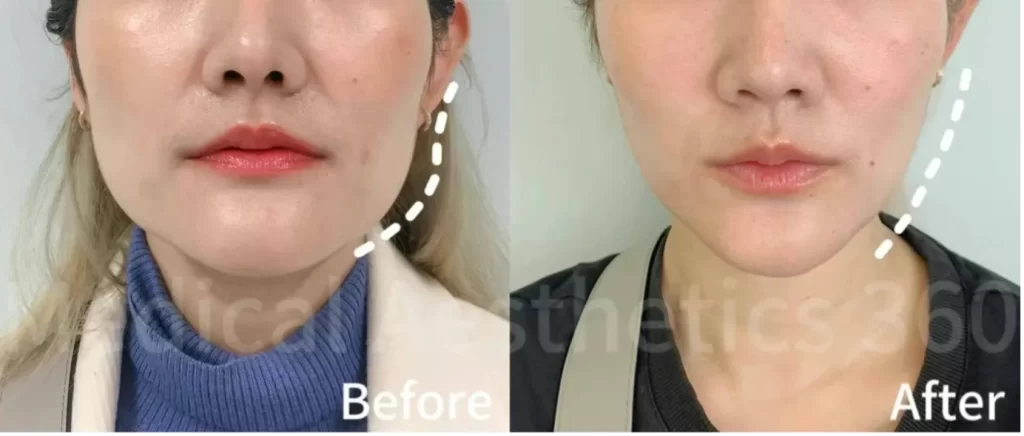
At review, the lower face appeared softer and less heavy, with a more tapered and balanced overall shape. The broadness through the jawline looked reduced, helping the face appear slimmer and more refined.
Just as importantly, the patient also reported improvement in the sense of tightness and overuse through the jaw area. Where clenching and grinding had previously contributed to a feeling of tension and headache, the area now felt more relaxed and less strained.
The overall effect was subtle but meaningful: a softer facial contour, a more harmonious lower-face appearance, and improved comfort through the jaw. This case highlights how careful assessment can support outcomes that address both facial shape and functional symptoms in a thoughtful, individualised way.
Doctors
Disclaimer
Results vary for each individual. The information and photos presented are for educational purposes only and do not constitute medical advice. All procedures carry risks and require an in-person consultation with a qualified medical practitioner. Some procedures are performed by trained therapists under the clinical supervision of Dr Chun Yen Huang or Dr Suzanna Luo . Medical Aesthetics 360° complies with AHPRA advertising guidelines and does not advertise prescription-only medicines or their active ingredients.