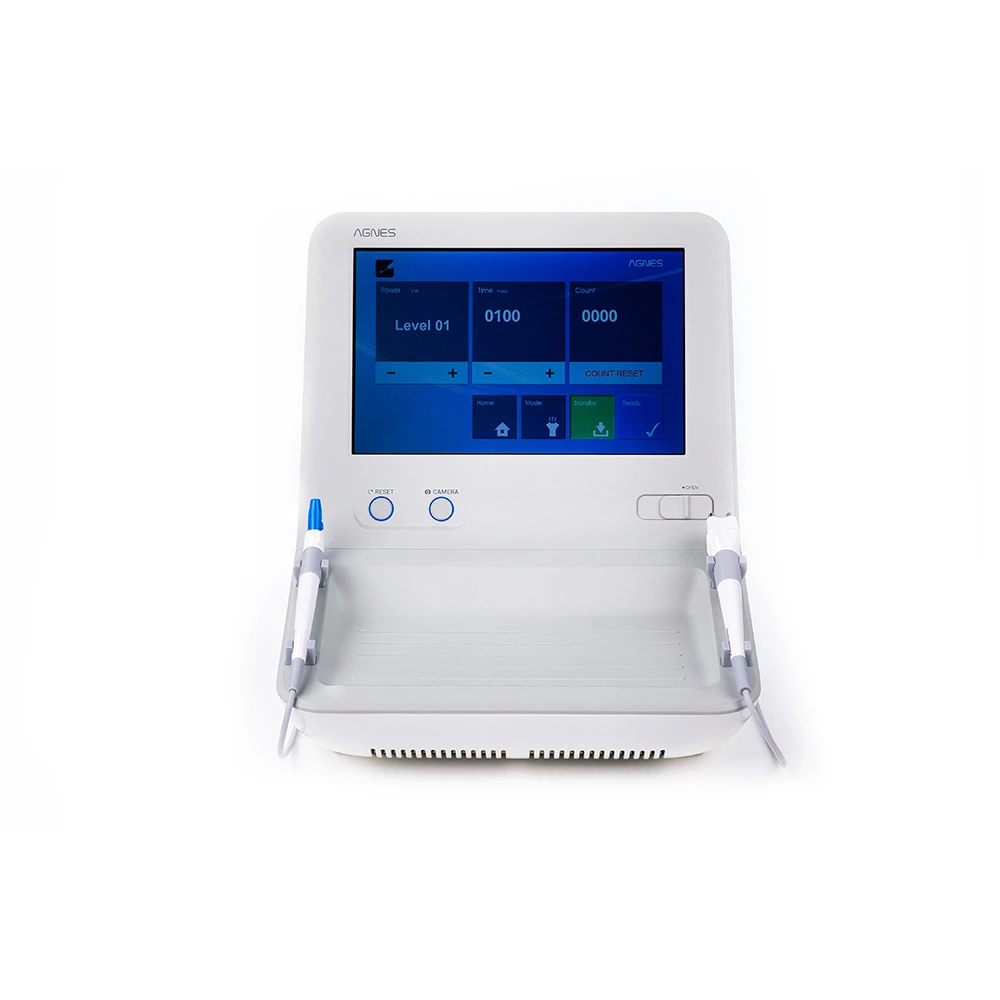
AGNES RF is a precision treatment for selected structures beneath the skin, including acne-related sebaceous glands, syringomas, lower-eyelid fat bulging and small facial or submental fat pads.
Unlike broad fractional microneedling, AGNES uses specific insulated needles to concentrate radiofrequency energy near the intended target. At Medical Aesthetics 360, the plan is shaped by the diagnosis, anatomy and recovery you can reasonably accommodate.
The AGNES RF platform uses purpose-designed needles and adjustable energy for different target tissues.
1 MHz RFMonopolar radiofrequency delivered through a selected treatment needle
Micro-insulatedInsulation controls where energy exits near the needle tip
Target-specificNeedle type, depth and pulse are chosen for the intended structure
Variable recoveryDowntime differs substantially between acne, lesions, eyes and contour work
How AGNES works
Precision matters more than treating a large area
Each AGNES needle has a defined pattern of insulation. Radiofrequency energy leaves the uninsulated portion, creating heat within a narrow zone while limiting unnecessary surface heating. Different needle designs allow the clinician to approach follicles, small lesions or deeper tissue at an appropriate angle and depth.
This is why the same device can be used for very different concerns. The procedure is not interchangeable, however: targeting a sebaceous gland is not the same as treating lower-eyelid fat, and both require different planning, anaesthesia and aftercare.
The starting point is diagnosis. An under-eye shadow may come from fat, hollowing, fluid or loose skin. A facial bump may be a syringoma or something else. Correct identification determines whether AGNES belongs in the plan at all.
Sebaceous glandsSelected acne lesions and recurrent comedones may be approached follicle by follicle.
Small skin lesionsConfirmed syringomas can be treated within the lesion while reducing broad surface injury.
Localised fat padsSelected lower-eyelid or submental fullness may be treated at a deeper tissue level.
Lines and laxityControlled thermal injury may support gradual remodelling in carefully chosen areas.
What AGNES RF may treat
Different concerns need different protocols
AGNES RF is versatile, but versatility should not be confused with universal suitability. Its value is greatest when a clear structure can be targeted precisely.
Active acne and recurring comedones
After a comedone is opened or extracted, a fine insulated needle can be guided into the follicular unit to thermally affect the sebaceous gland. This may suit selected inflammatory acne, oily areas or persistent blackheads. Broader acne drivers still need to be addressed.
Periorbital syringomas
Syringomas are benign sweat-duct growths, often clustered around the eyes. Intralesional treatment can reduce individual bumps while limiting broad surface ablation. Recurrence and the need for repeat sessions remain possible.
Selected under-eye fat bulging
Purpose-designed needles may be used to coagulate small areas of protruding lower-eyelid fat and support the surrounding tissue. It will not correct tear-trough hollowing, pigmentation or every form of eyelid laxity, and surgery may be more suitable for pronounced bags.
Submental and lower-face fullness
Small, localised fat pads beneath the chin or along the lower face may be considered for targeted treatment. A soft jawline can also reflect skin laxity, muscle, salivary glands or bone structure, so not every contour concern is a fat-reduction problem.
Lines, pores and acne scars
AGNES can be used for selected deep lines and focused remodelling, but it does not automatically replace fractional treatment across a larger area. Established acne scars may need subcision, fractional carbon dioxide laser, Morpheus8 or another scar-specific combination. Active acne control and scar revision are related, but they are not the same treatment goal.
The evidence is strongest for targeted acne treatment
In a prospective randomized study of insulated single-needle radiofrequency, participants received three treatments four weeks apart. The treatment group had a statistically significant reduction in inflammatory acne lesions at 12 weeks compared with microneedling and extraction alone.
Other published studies have examined lower-eyelid fat bulging, periorbital syringomas and submental fat. They reported encouraging changes, but these were smaller single-centre or pre-post studies. That makes them useful signals rather than proof that every patient or anatomy will respond in the same way.
Under-eye fat and syringomasSmaller clinical series are promising, but careful selection and procedure-specific consent remain essential.
Contouring and remodellingEarly studies suggest potential benefit; evidence is less extensive than for established surgical or resurfacing options.
Suitability and safety
Who may be a suitable candidate?
A suitable patient has a clearly identified target, realistic expectations and enough time for the recovery associated with that area. Medical screening is particularly important for treatment near the eyes or deeper facial tissue.
AGNES RF may fit when
Persistent acne lesions or comedones can be treated individually.
Periorbital bumps have been assessed and confirmed as syringomas.
Under-eye or submental fullness comes from a small, targetable fat pad.
You understand that improvement is gradual and repeat treatment may be needed.
Extra caution or postponement may apply
Active infection, cold sores, open wounds or uncontrolled inflammatory skin disease.
Pregnancy, bleeding disorders, anticoagulant use or a history of difficult healing.
Implanted electronic or metal devices that could affect radiofrequency safety.
Eye bags caused mainly by hollowing, fluid, marked laxity or anatomy better suited to surgery.
Treatment process
What happens during an AGNES RF appointment
The details change with the target tissue. Treating several acne follicles is a different procedure from under-eye or submental contouring.
Assessment and mapping
The diagnosis, anatomy, medical history and downtime tolerance are reviewed. The intended targets may be marked and photographed.
Anaesthesia
Topical anaesthetic may suit lighter work. Deeper or sensitive areas can require local anaesthetic for more reliable comfort.
Targeted RF delivery
The selected needle is positioned at the planned depth before a controlled radiofrequency pulse is delivered. Acne work may include extraction.
Cooling and aftercare
The area is checked and aftercare is tailored to the tissue treated. Review timing reflects the expected swelling and remodelling period.
Recovery and aftercare
Downtime depends on what was treated
Acne, blackhead and syringoma treatment can leave pinpoint redness, swelling, tenderness or small crusts. These effects often settle over several days, although the eye area may remain visibly puffy for longer.
Deeper under-eye or contour treatment commonly produces more swelling and bruising, often most noticeable during the first week. Firmness, altered sensation or sensitivity can take longer to settle. Final contour should not be judged while the tissue is still swollen.
Less common complications include infection, acne flare, pigment change, prolonged numbness or sensitivity, burns, scarring, nodules, asymmetry and contour irregularity. Eye-area procedures need additional anatomical care and procedure-specific consent.
Results and treatment planning
Improvement develops on different timelines
AGNES does not have one universal course. The response of an inflamed follicle, a syringoma and a small fat pad should be assessed differently.
Acne and comedones
Inflammatory lesion counts may change over the following weeks. A staged course can be used when multiple active glands need treatment, while new acne drivers are managed separately.
Syringomas
Individual bumps may flatten after healing, but repeat treatment can be needed and recurrence remains possible. Surface crusting should resolve before the result is judged.
Eye and contour treatment
Fat reduction and tissue remodelling develop over several months. Early swelling can hide improvement, and additional treatment should wait until the response is clear.
Choosing the right technology
How AGNES differs from other treatments
Device names are not interchangeable. The right option depends on whether the priority is a specific gland or fat pad, broader skin texture, deep scarring or general laxity.
TreatmentDeliveryWhere it may fitMain trade-off
AGNES RFDeliveryTargeted energy through selected micro-insulated needlesWhere it may fitIndividual glands, syringomas and selected small fat padsMain trade-offTechnique-intensive and recovery varies greatly by area
Morpheus8DeliveryFractional RF through an array of microneedlesWhere it may fitBroader pores, texture, acne scars and selected laxityMain trade-offTreats a field rather than a single follicle or lesion
eCO2 laserDeliveryAblative fractional carbon dioxide laser resurfacingWhere it may fitDeeper acne scars, wrinkles and intensive surface renewalMain trade-offMore surface recovery and pigment risk
Skin tightening devicesDeliveryNeedle-free ultrasound or radiofrequency across a wider areaWhere it may fitGeneral mild-to-moderate laxity of the face, jawline or neckMain trade-offNot designed for individual sebaceous glands or syringomas
Eyelid surgeryDeliverySurgical removal or repositioning of tissueWhere it may fitPronounced eye bags, excess skin or complex eyelid anatomyMain trade-offSurgical recovery, scars and procedure-specific risks
Medical Aesthetics 360 Sydney
AGNES RF in Chatswood and Hurstville
Medical Aesthetics 360 combines medical assessment with several skin, laser, eye and contour treatment pathways. That range is useful when a concern looks suitable for AGNES at first glance but is better addressed with acne care, fractional resurfacing, broader tightening or eyelid surgery.
The recommendation is based on the tissue causing the concern, the likely degree of change and whether the expected recovery is acceptable to you.
Chatswood
Suite 203/38B Albert Avenue Chatswood NSW 2067
Hurstville
41-43 Dora Street Hurstville NSW 2220
Hurstville MediSpa
Shop 2/15 Dora Street Hurstville NSW 2220
Frequently asked questions
AGNES RF FAQs
General answers cannot account for your anatomy or medical history. Procedure-specific advice is provided after assessment.
What is AGNES RF?
AGNES RF is a targeted radiofrequency platform that delivers energy through purpose-designed micro-insulated needles. Needle type, insertion depth, energy and pulse duration are chosen for a specific structure, such as a sebaceous gland, syringoma, selected fat pad or line.
How does AGNES RF work?
Insulation limits where energy leaves the needle, allowing heat to be concentrated near the uninsulated tip. This can coagulate a selected gland or small volume of tissue and may also trigger gradual remodelling. The effect depends heavily on accurate diagnosis, needle choice and placement.
Can AGNES RF treat active acne?
It may suit selected inflammatory or comedonal acne when individual sebaceous glands can be targeted. A randomized study found improvement after three treatments, but acne can have several drivers and may still require skincare, prescription treatment or hormonal assessment.
Can AGNES RF remove blackheads?
AGNES RF may be used after extraction to target selected sebaceous glands associated with persistent comedones. It is not necessary for every blackhead, and widespread congestion may be better managed first with topical care or other acne treatment.
Does AGNES RF treat acne scars?
AGNES RF is primarily used to target active glands or individual structures rather than resurface an entire scar field. Established ice-pick, boxcar or rolling scars usually need a scar-specific plan such as subcision, fractional laser or fractional radiofrequency microneedling.
Can AGNES RF treat syringomas?
Selected periorbital syringomas may be treated by placing an insulated microneedle within each lesion. Published evidence includes a retrospective series rather than a large randomized trial, and recurrence or repeat treatment remains possible. Diagnosis should be confirmed before treatment.
Can AGNES RF reduce under-eye bags?
It may reduce selected lower-eyelid fat bulging, but not every under-eye concern is caused by excess fat. Hollowing, fluid, skin laxity and prominent bone structure need different treatment. Surgical assessment may provide a more predictable option when bags are substantial or anatomy is complex.
Can AGNES RF reduce a double chin or lower-face fullness?
Micro-insulated needle radiofrequency has been studied for small, localised submental fat deposits. It is not a weight-loss treatment, and suitability depends on whether the concern comes from fat, skin laxity, muscle, glands or skeletal structure.
Is AGNES RF painful?
Sensation varies by area and depth. Topical anaesthetic may be enough for lighter acne or lesion work, while under-eye or deeper fat-pad treatment often requires local anaesthetic. Pressure, heat or tenderness can still be felt during or after treatment.
How much downtime follows AGNES RF?
Pinpoint redness, swelling, tenderness or crusting may follow superficial treatment. Under-eye and contour procedures can cause more obvious swelling and bruising for about a week, sometimes longer. Recovery should be planned for the exact area and intensity rather than a universal timeline.
How many AGNES RF treatments are needed?
Some concerns may improve after one treatment, while acne, syringomas or fat-pad treatment may require a staged course. Published studies have used different protocols, commonly one to three sessions. The response should be reviewed before additional treatment is scheduled.
When do AGNES RF results appear?
Acne lesion change may be noticed over the following weeks. Fat reduction and tissue remodelling develop more slowly, often over several months. Early swelling can temporarily obscure the result, so immediate appearance is not a reliable measure of the final outcome.
What are the risks of AGNES RF?
Expected effects include discomfort, redness, swelling, bruising and temporary crusting. Less common complications include infection, acne flare, pigment change, prolonged altered sensation, burns, scarring, nodules, asymmetry or contour irregularity. Periorbital treatment requires additional eye-area precautions.
Is AGNES RF suitable for all skin tones?
Radiofrequency is not directed at melanin in the way some lasers are, so it may be considered across a range of skin tones. Needle injury and inflammation can still trigger post-inflammatory pigmentation, making conservative settings and aftercare important for pigment-prone skin.
Who should avoid or postpone AGNES RF?
Treatment may need to be postponed with infection, open skin, an active cold sore, uncontrolled inflammatory disease or recent procedures in the area. Pregnancy, bleeding risk, poor healing, implanted electronic or metal devices and relevant medicines should be discussed during medical screening.
How much does AGNES RF cost in Sydney?
Cost varies with the concern, area, anaesthetic requirements, treatment complexity and number of sessions. A quote should follow assessment because treating several acne glands is different from a detailed under-eye or submental procedure.
Explore related care
Treatment and case study directory
Compare related concerns and technologies, review treatment examples and find the most convenient Medical Aesthetics 360 location.
This page provides general information and does not replace personal medical advice. Outcomes, recovery and complications vary. A consultation is required to confirm diagnosis, suitability and an appropriate treatment plan.
Discuss AGNES RF suitability and a personalised treatment plan at MA360 in Chatswood or Hurstville.