


Stress incontinence
Leakage with coughing, sneezing, laughing, lifting, running or jumping. Pelvic floor weakness and urethral support are often involved.
Pelvic floor treatment in Sydney
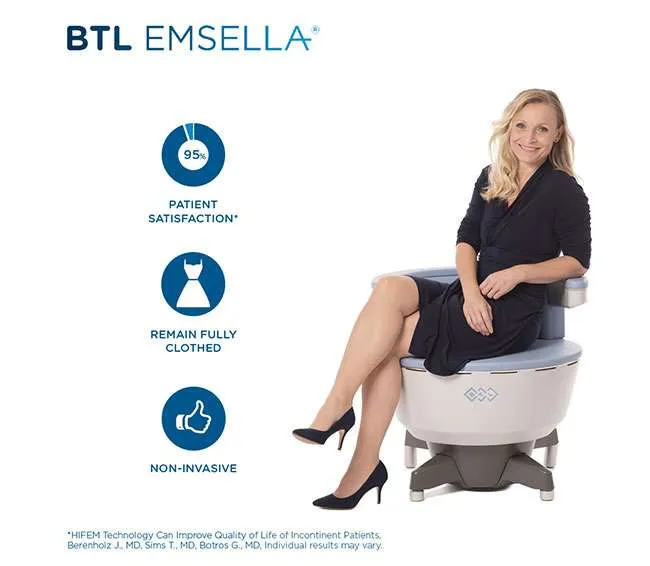
Emsella is a chair-based treatment that uses high-intensity focused electromagnetic energy to stimulate pelvic floor muscle contractions. It may support women and men whose bladder control is affected by pelvic floor weakness, including leakage with coughing, exercise or everyday movement.
You remain fully clothed for a session of about 28 to 30 minutes and can usually return to normal activities afterwards. Emsella is convenient, but it does not replace a diagnosis, supervised pelvic-floor training or specialist care when symptoms point to another bladder or pelvic condition.
Start with the symptom pattern
Knowing when leakage occurs helps decide whether muscle stimulation is relevant or whether bladder training, pelvic-health physiotherapy, medicine or another investigation should come first.
Leakage with coughing, sneezing, laughing, lifting, running or jumping. Pelvic floor weakness and urethral support are often involved.
A sudden compelling urge followed by leakage, often with frequency or waking at night. Bladder behaviour and medical causes need consideration.
A combination of stress and urgency symptoms. Treatment usually focuses first on the symptom that is most disruptive.
Overflow leakage, difficulty emptying the bladder, recurrent infection, pelvic pain or new neurological symptoms need medical assessment rather than automatic pelvic-floor strengthening.
Who may benefit
Emsella may be considered when urinary control is affected by reduced pelvic floor strength or difficulty performing a strong, coordinated contraction. Common contexts include childbirth, menopause, ageing and selected post-prostate treatment recovery.
A pelvic floor can be weak, poorly coordinated, overactive or unable to relax. People with pelvic pain, painful sex, constipation with straining or a known hypertonic pelvic floor may need relaxation and coordination work rather than stronger contractions.
A pelvic-health physiotherapist can assess muscle tone and technique directly. Emsella may complement a rehabilitation plan, but it should not be assumed to replace that assessment.
How the chair works
A coil inside the seat generates a changing electromagnetic field. Positioning and intensity affect where the contractions are felt.
The field activates peripheral motor nerves serving the pelvic floor, producing repeated involuntary contractions.
Energy is increased according to comfort and muscle response. Treatment can feel like strong rhythmic lifting, tingling or vibration.
Six sessions over about three weeks is a common starting schedule. The appropriate course and maintenance plan vary.
Evidence in context
A 2025 systematic review and meta-analysis indexed on PubMed included seven studies of HIFEM treatment in women with urinary incontinence. Pooled results suggested fewer leakage episodes and improved symptom scores compared with controls.
Some studies and subgroup analyses reported better quality of life, but the overall pooled difference from controls was not statistically significant.
Pooled changes in measured contraction and resting tone were not significantly different from controls.
Protocols, participants and outcome measures varied, and the review identified possible bias.
Better-quality blinded trials and longer follow-up are still needed, particularly for different symptom groups and men.
What to expect
The chair itself is straightforward. The more important work happens before and after: confirming suitability, setting useful goals and reviewing whether symptoms actually change.
Leakage pattern, bladder urgency, childbirth or prostate history, pelvic pain, medicines, implants and previous treatment are reviewed. A bladder diary or validated symptom questionnaire can create a more useful baseline.
Remove electronic devices and metal objects as instructed, then sit fully clothed in the centred treatment position. Intensity rises gradually while the pelvic floor contracts and relaxes.
Most people resume normal activity immediately. Muscle fatigue or soreness can occur. Progress should be judged by leakage frequency, pad use, urgency and confidence, not sensation during the session alone.
Where Emsella fits
Urinary incontinence often responds best to a plan rather than one device. Supervised pelvic-floor muscle training remains an established first-line treatment for women with stress or mixed incontinence.
| Approach | What it contributes | When it may fit | Limitation |
|---|---|---|---|
| Supervised pelvic-floor training | Teaches voluntary strength, relaxation, coordination and a home programme. | First-line care for many stress or mixed urinary symptoms. | Requires correct technique, regular practice and follow-through. |
| Emsella HIFEM chair | Produces external electromagnetic pelvic floor contractions without an internal probe. | Weakness, difficulty activating muscles or preference for a fully clothed treatment. | Cannot diagnose the cause or teach voluntary control by itself. |
| Bladder training and medical care | Addresses urgency, frequency, infection, medicines and bladder behaviour. | Urgency-predominant, mixed or unexplained symptoms. | The correct pathway depends on diagnosis and may require several strategies. |
| Specialist procedures or surgery | Targets selected structural or persistent continence problems. | Symptoms that remain troublesome after conservative treatment or need structural correction. | Greater intervention, recovery and procedure-specific risk. |
Safety screening
Because the chair creates a strong electromagnetic field and repeated muscle contractions, screening for implants, pregnancy and medical conditions is essential.
Blood in the urine, burning or fever, recurrent urinary infections, difficulty starting or emptying the bladder, new pelvic pain, a vaginal bulge, new leg weakness or numbness, or sudden loss of bladder or bowel control should be assessed before Emsella is considered.
Medical Aesthetics 360
Assessment is available across Chatswood and Hurstville. Recommendations are based on the symptom pattern, relevant medical history and whether chair treatment, pelvic-health physiotherapy or medical review is the more appropriate next step.
Hurstville Clinic41-43 Dora Street
Hurstville NSW 2220
Hurstville MediSpaShop 2/15 Dora Street
Hurstville NSW 2220
Chatswood ClinicSuite 203/38B Albert Avenue
Chatswood NSW 2067
Common questions
Continue exploring
Explore related technology, body-treatment information and Medical Aesthetics 360 clinic details.
Information is general and does not replace assessment by a GP, urologist, gynaecologist, continence nurse or pelvic-health physiotherapist. Suitability, treatment course and results vary. Seek urgent medical attention for sudden loss of bladder or bowel control with weakness or numbness.
Discuss Emsella suitability and a personalised treatment plan at MA360 in Chatswood or Hurstville.