


Natural under-eye rejuvenation in Sydney
Look fresher—not different. MA360 plans under-eye treatment around the cause of tired-looking eyes, with a focus on gradual skin firming, smoother texture and collagen support rather than automatically adding volume.
Our three featured pathways are Thermage FLX Eye, Rejuran and carefully selected biostimulator care.
Crepey skin, fine lines, hollowness, dark circles and eye bags may look similar in the mirror, but they need different solutions. Your plan begins by separating skin quality and laxity from pigment, fluid and lower-eyelid anatomy.
- Doctor-led assessment
- Chatswood & Hurstville
- Natural, staged treatment planning
Real MA360 under-eye results
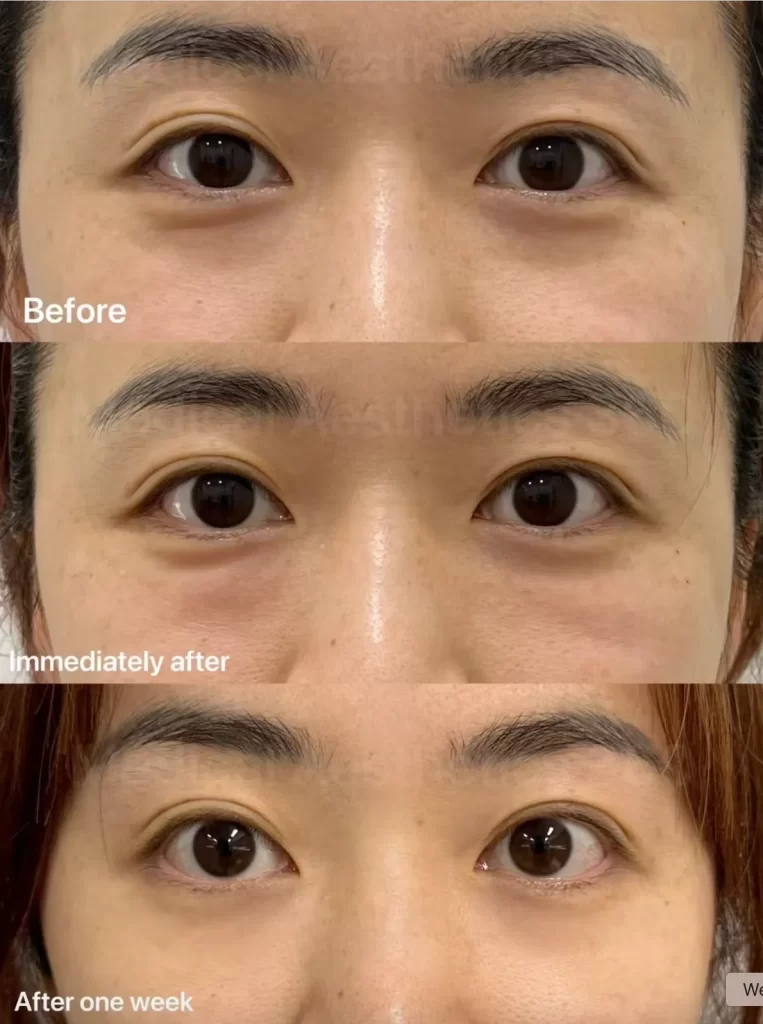
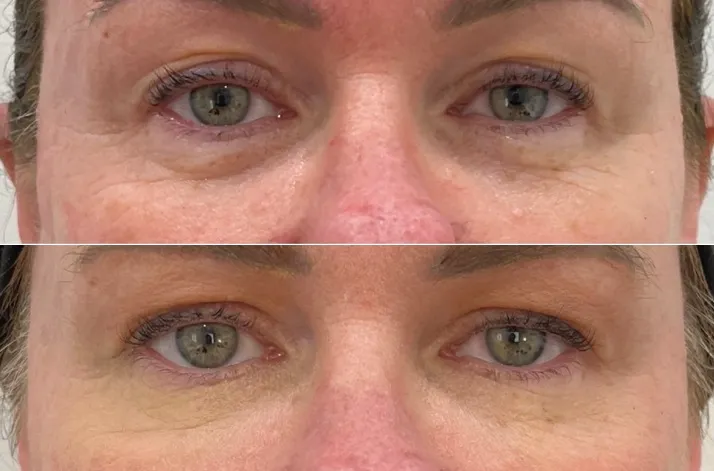
These photographs show individual cases at different stages of care. They are not a promise of outcome; suitability, treatment method and healing vary between patients.
Match under-eye treatment to the cause
Thermage FLX Eye, Rejuran and biostimulators can all support natural-looking rejuvenation, but they do different jobs. The right starting point depends on whether the dominant change is laxity, delicate skin quality or deeper collagen and structural support.
Thermage FLX Eye
Uses a dedicated eye tip to deliver controlled radiofrequency energy for selected upper- and lower-eyelid fine lines, crepey texture and early laxity. Change is gradual and does not add volume.
Often considered for: patients who want non-surgical eye-area firming with generally limited interruption to daily routine.
Explore Thermage FLX Eye →Rejuran i
Designed for delicate periocular skin, where fine crepiness, texture and resilience matter more than replacing deeper volume. A course and review plan may be discussed according to the skin concern.
Often considered for: thin, dry-looking or finely creased under-eye skin where a gradual skin-quality approach fits.
Explore Rejuran for under-eyes →Biostimulator
May be considered to support collagen, skin thickness or selected structure over time. Products behave differently and not every material or placement is appropriate directly beneath thin lower-eyelid skin.
Often considered for: selected patients who need broader collagen or tissue support as part of a carefully staged plan.
Compare Rejuran vs biostimulator →Sometimes the most natural plan combines layers. For example, Thermage FLX Eye may address selected laxity while Rejuran supports delicate skin quality. A biostimulator may suit broader tissue support—but combinations should follow diagnosis, not a preset package.
Natural under-eye results in context
These MA360 photographs show different concerns and treatment pathways. Click any image to read what was assessed and which approach was used.
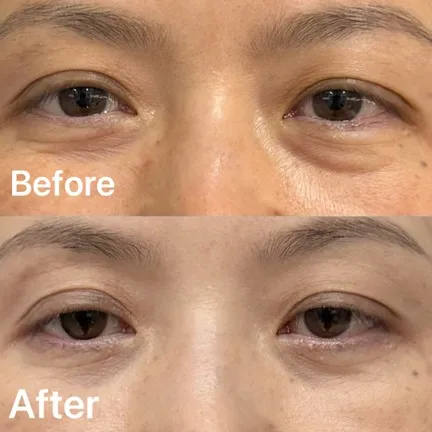
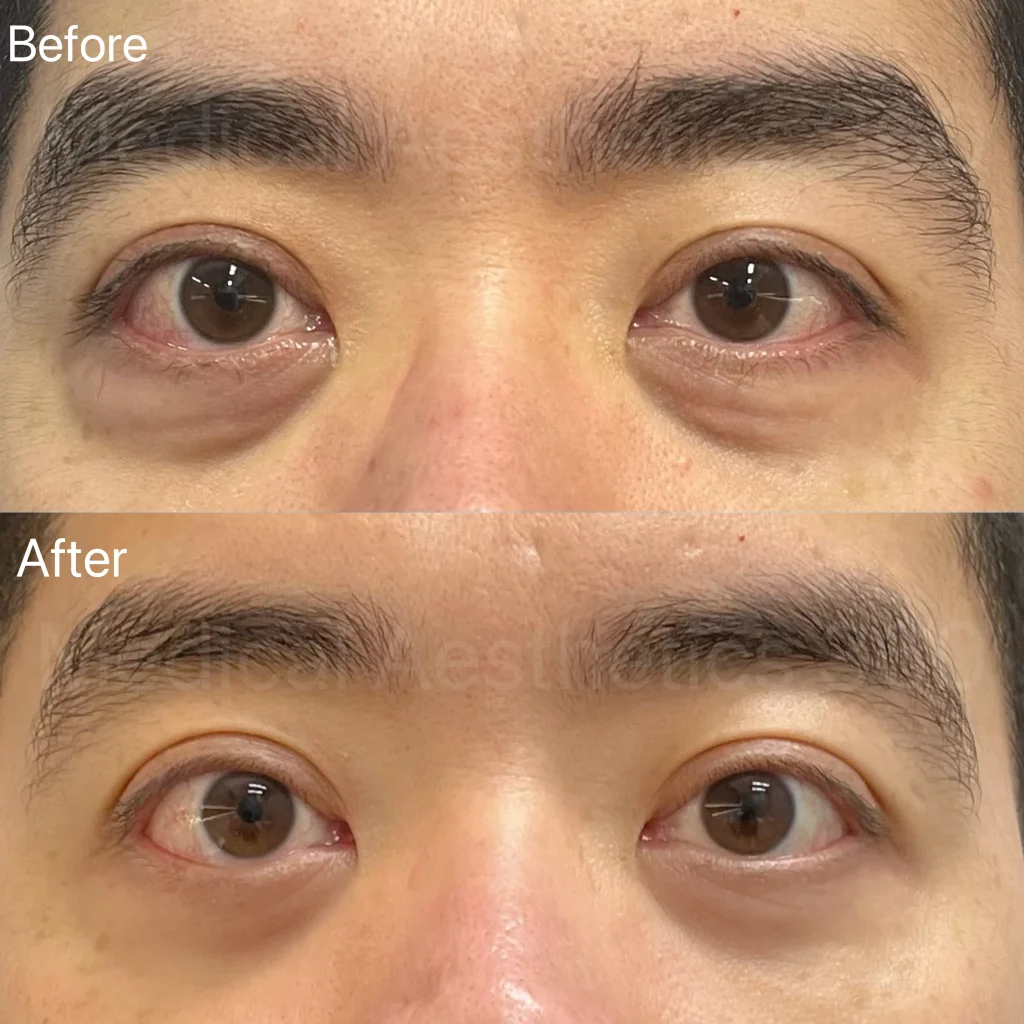
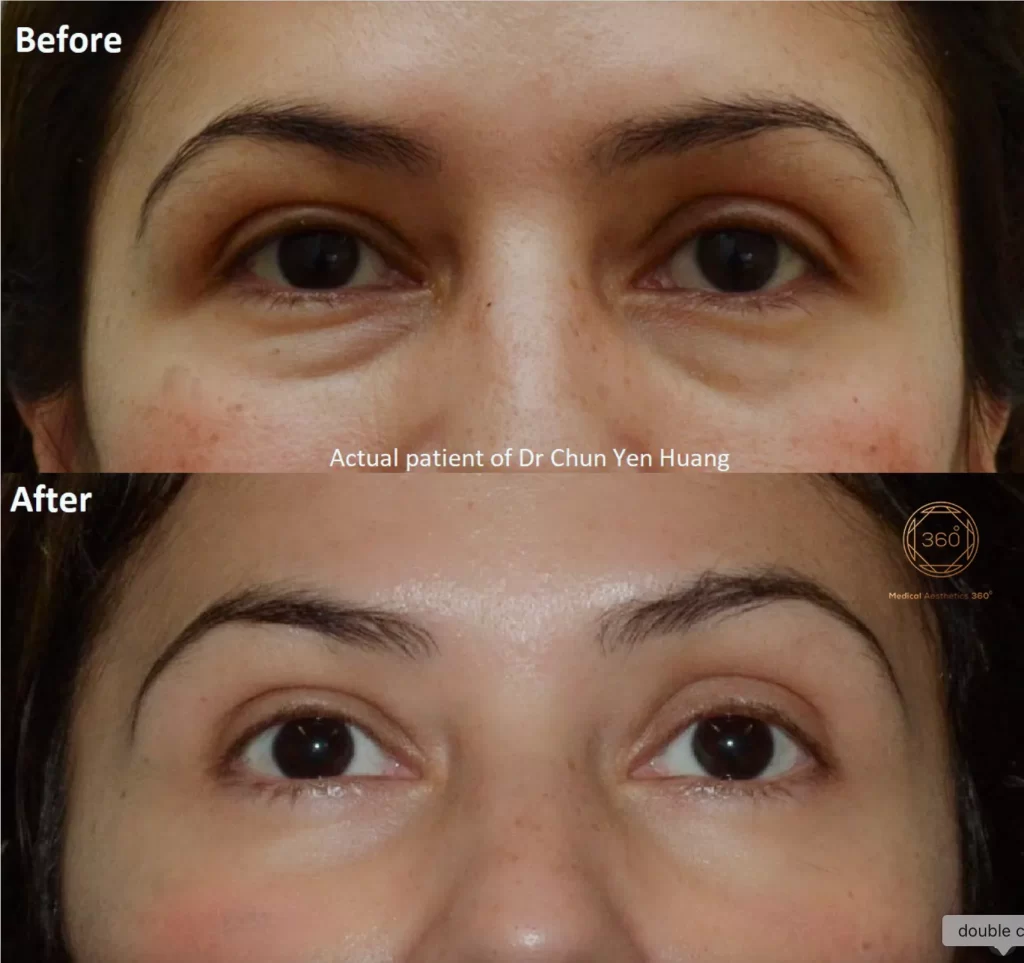
Individual results vary. Images are published for educational context and do not predict another patient’s outcome. Treatment suitability requires consultation.
Not every dark circle is a tear trough
Several changes can overlap in the same person. Treating the wrong one can leave the darkness unchanged or make puffiness more noticeable.
A groove between the lower eyelid and cheek can cast a shadow, especially in overhead light.
Constitutional pigment, rubbing, dermatitis or post-inflammatory colour may create brown darkness.
Visible muscle and vessels can give the area a blue, purple or reddish tone.
Fine lines, crepiness and reduced support can scatter light and deepen the tired appearance.
Protruding fat, malar oedema or fluid retention creates fullness, not a simple volume deficit.
Some changes need medical review first. Persistent one-sided swelling, pain, redness, a rapidly changing eyelid, visual symptoms or a new lesion should not be treated as a routine cosmetic concern.
Which under-eye pathway may fit?
These are discussion pathways, not automatic recommendations. The lower eyelid, cheek, skin and eye-bag anatomy need to be examined together.
True tear trough hollow
Depth of the groove, cheek support, skin thickness, lower-lid tone and whether bags or fluid are present.
Conservative hyaluronic-acid volumising treatment, cheek support or no treatment if the risk-benefit balance is poor.
Brown pigmentation
Type and depth of pigment, melasma, dermatitis, rubbing, skin tone and risk of post-inflammatory pigmentation.
Skin care, sun protection and selected pigment treatment. Filler does not remove pigment.
Thin or crepey skin
Fine lines, barrier health, dryness, pigment risk, eye health and tolerance for visible recovery.
Thermage FLX Eye, Rejuran i or another selected skin-quality pathway may be discussed, depending on whether laxity or skin texture is dominant.
Eye bags or puffiness
Fat prolapse, fluid, malar bags, lid laxity, skin excess and whether the fullness changes during the day.
Surgical or eye-bag assessment may be more useful. Adding filler can worsen heaviness in an unsuitable patient.
Mixed dark circles
The relative contribution of shadow, pigment, vessels, texture, bags and mid-face support.
A staged plan that treats the dominant cause first and reviews the result before adding another procedure.
Promising options, measured expectations
Research supports potential improvement from radiofrequency, polynucleotides and facial biostimulators, but it does not guarantee an under-eye result. A systematic review of radiofrequency found measurable improvement in skin laxity across facial and body studies. A 2025 polynucleotide review included nine small, low- to moderate-quality studies, while a recent biostimulator review also called for more long-term, standardised evidence. Eye anatomy, product choice, technique and realistic goals remain central.
Under-eye safety depends on the method
The eyelid area is thin, expressive and prone to visible swelling. Non-invasive energy treatment and injectable skin-quality care have different risks, and even a subtle treatment deserves careful screening.
Thermage FLX Eye
- Temporary redness, swelling, warmth or tenderness
- Heat and comfort vary by area and individual sensitivity
- Burn, altered sensation or unwanted contour response are possible
- Eye history and electrical implants require specific screening
Rejuran and biostimulators
- Temporary bumps, redness, swelling, bruising or tenderness
- Infection, prolonged inflammation, nodules or unwanted contour
- Not every biostimulatory material can be simply dissolved
- Placement close to the eye needs product-specific judgement
Volume treatment and filler
Possible problems include persistent oedema, lumps, asymmetry, blue-grey colour, migration and infection. Accidental injection into or compression of a blood vessel can damage skin; facial filler has also been associated with rare, time-critical vision loss and stroke.
Previous treatment matters
Tell the clinician about every previous under-eye or cheek injection, laser, energy treatment or surgery—even if it was years ago. Residual product, altered tissue and a history of swelling or complications can change the safest next step.
Results, downtime and cost
What may improve
A suitable treatment may soften a hollow, reduce a contour shadow, improve fine texture or make the lower eyelid-to-cheek transition look less abrupt. It may not remove every dark circle or make normal skin texture disappear.
Downtime
Recovery depends on the method. Injectable swelling and bruising can be socially noticeable; laser or surgery has a different healing pattern. The area may look uneven before it looks settled, and delayed swelling is possible.
Treatment cost
Cost depends on the diagnosis, product or device, treatment area, number of sessions and whether surgery is more suitable. A quote should follow assessment and explain what review or staged care is included.
Under-eye rejuvenation FAQs
Which under-eye treatment is best for a natural result?
What can Thermage FLX Eye improve?
What is Rejuran i used for under the eyes?
Is a biostimulator suitable for the under-eye area?
Can Thermage FLX Eye and Rejuran be combined?
What causes tear trough hollowing?
Can tear trough filler remove dark circles?
Who may not be suitable for under-eye filler?
Can filler make eye bags look worse?
What are the main tear trough filler risks?
Can under-eye filler be dissolved?
Is Rejuran or polynucleotide treatment the same as filler?
Can laser or tightening treatment improve the under-eyes?
When is lower-eyelid surgery more appropriate?
How long does under-eye treatment last?
How much downtime should I allow?
Can I have treatment while pregnant or breastfeeding?
Find the most natural path for your eyes
Bring the concern—not a treatment decision. MA360 can assess your eyelid skin, hollowing, pigment, fluid tendency and previous treatment, then compare Thermage FLX Eye, Rejuran, biostimulator care and other suitable options with you.
Doctor-personalised consultation: $100 fee, redeemable towards suitable same-day treatment. Suitability and same-day treatment are not guaranteed.
Under-eye treatment in Sydney: Chatswood and Hurstville
Chatswood
A North Shore clinic for tear trough, dark-circle, eye-bag and lower-eyelid assessment.
Suite 203/38B Albert Avenue, Chatswood NSW 2067Hurstville
A southern Sydney clinic offering the same diagnosis-led approach to under-eye planning.
41–43 Dora Street, Hurstville NSW 2220