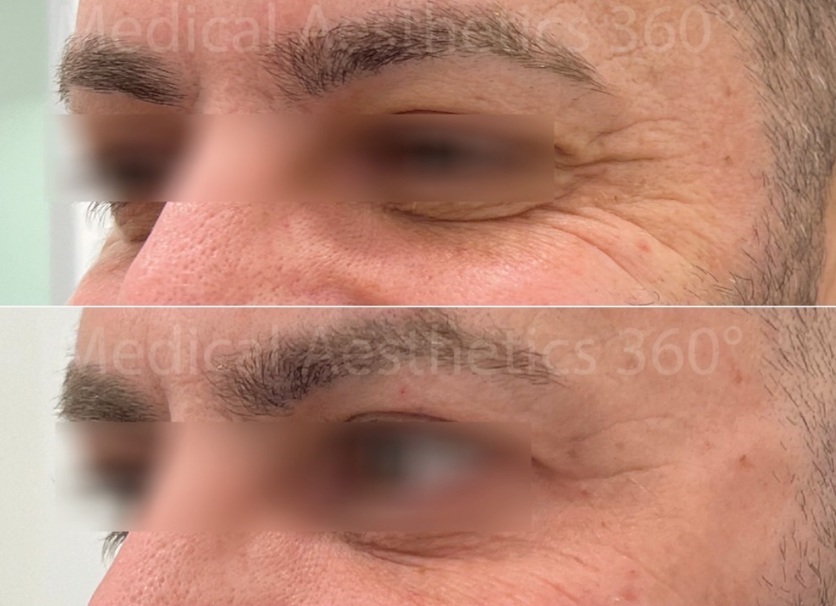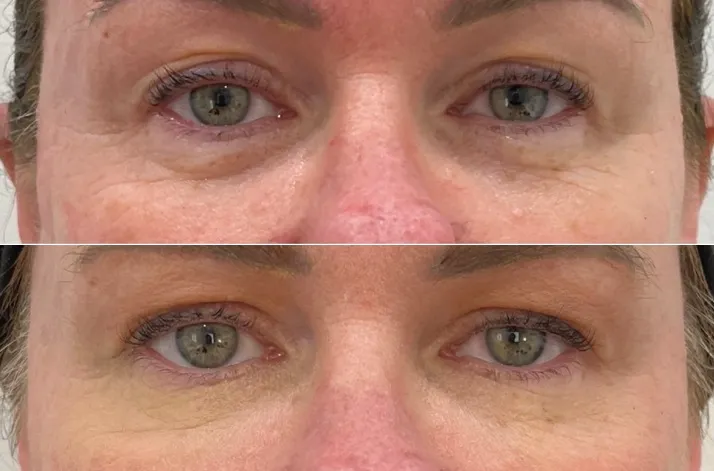

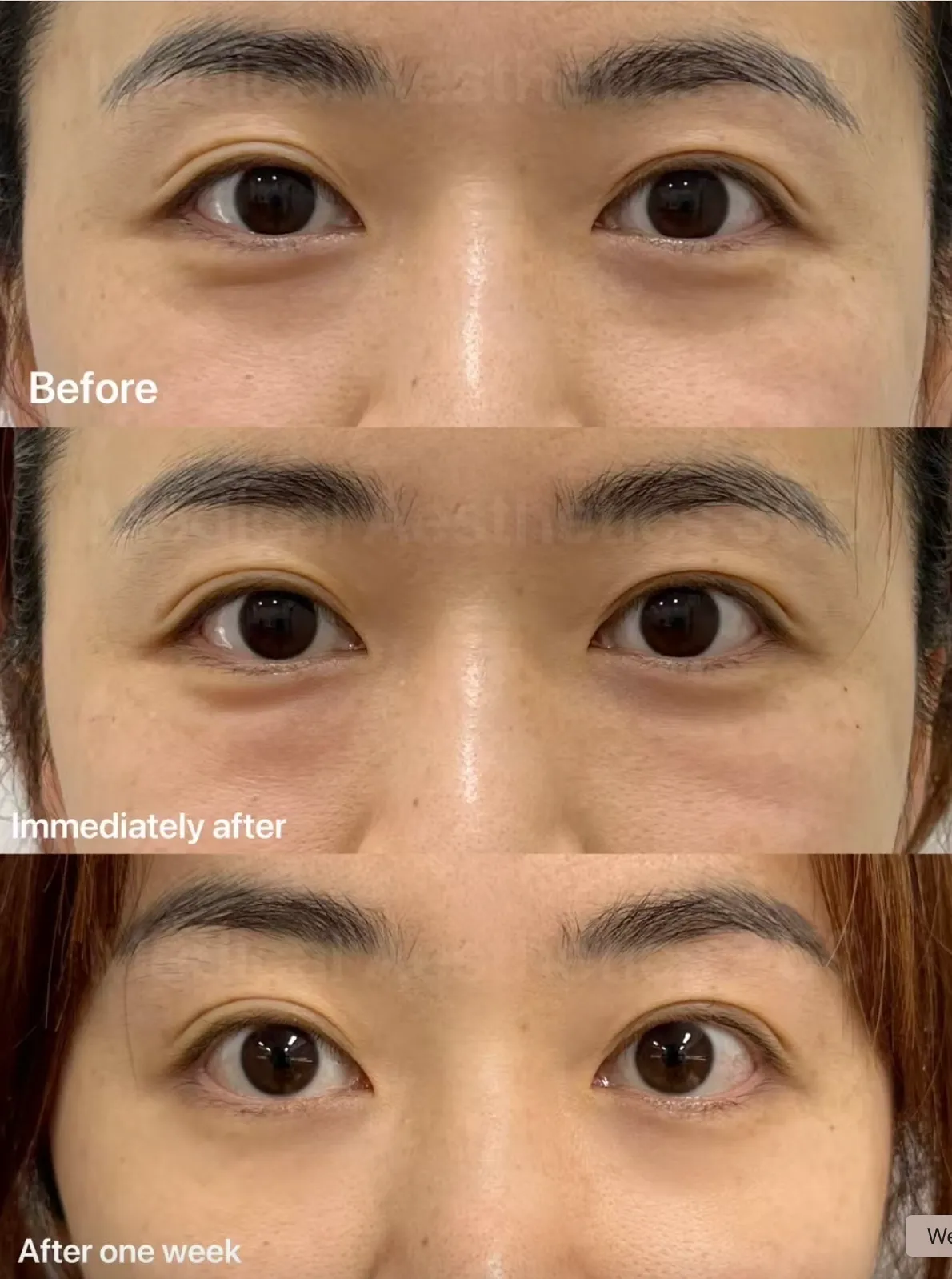
Dark circles, under-eye hollows or eye bags?
Colour, shadows and fullness need different assessments.
Dark circles describe a darker-looking area beneath the eyes. Brown discolouration may involve pigment, while thin, translucent skin and visible blood vessels can also contribute. Eczema, irritation, rubbing and inherited features may play a part. Shadowing can make the area appear darker even when extra pigment is not the main cause.
Under-eye hollows, or tear troughs, are grooves or depressions between the lower eyelid and cheek. They may reflect inherited anatomy or changes with ageing. A hollow can cast a shadow that changes with the lighting.
Eye bags and under-eye puffiness are areas of fullness beneath the eyes. Swelling or the shape and position of underlying tissues may contribute. Fullness can also cast a shadow below it.
These concerns can occur together. Assessment considers colour, skin quality, hollowing, fullness, medical history and previous treatment. Understanding the main contributors helps clarify which options, if any, are appropriate and what change is realistic.
Further reading: DermNet: dark circles under the eyes.
2. Laser Options for the Under-Eye Area
Laser treatments may be considered when vascular visibility, pigmentation or texture contributes to the tired-looking appearance.
Laser treatments may be considered when vascular visibility, pigmentation, or texture contributes to dark under-eye circles.
- Vascular laser mechanism: selected wavelengths aim to target haemoglobin within superficial vessels (selective photothermolysis), which may reduce vessel-related blue/purple discolouration in suitable patients.
- Pigment-focused laser mechanism: pigment-targeting wavelengths aim to target melanin, which may improve uneven brown tone when pigmentation is a contributor.
- Fractional laser mechanism: fractional technologies stimulate collagen remodelling, which may improve crepey texture and soften fine under-eye lines over a series of treatments.
- Advantages: lasers can address colour and texture and support gradual, natural-looking change when planned conservatively.
3. Skin Boosters, Biostimulators and Rejuran
These approaches focus more on skin quality, hydration and regeneration, which can be especially useful for thin, crepey or ageing under-eye skin.
Skin boosters focus on skin quality rather than structural volume. They may be considered for thin, dehydrated under-eye skin, crepiness and fine lines.
Mechanism: by improving dermal hydration and supporting collagen pathways, skin boosters may enhance smoothness, elasticity and light reflection, which can make the under-eye area appear brighter. Your practitioner may adjust product selection and technique to prioritise subtlety in this delicate region.
Advantages: typically subtle, supportive of fragile skin, and can pair well with laser when appropriately timed.
Biostimulators are collagen-stimulating treatments designed to encourage the body’s own collagen production over time.
Mechanism: controlled stimulation of fibroblasts can lead to gradual increases in dermal density and firmness, potentially improving translucency and texture in appropriately selected patients.
Rejuran (polynucleotide-based) supports skin repair processes.
Mechanism: polynucleotides may support tissue repair signalling and fibroblast activity, which may help improve elasticity, resilience and under-eye lines.
Advantages: both approaches focus on skin quality and are often chosen for patients seeking subtle, progressive change.
4. Under-Eye Threads and Supportive Measures
In selected cases, under-eye threads and everyday supportive care can complement other modalities and help with mild laxity or irritation-related worsening.
Under-eye threads may be considered in selected cases of mild laxity.
Mechanism: absorbable threads can provide subtle mechanical support and stimulate collagen formation during the healing response.
Advantages: may assist mild laxity and skin quality when appropriately selected, and may be combined with other treatments where clinically suitable.
Supportive measures may also be discussed, such as gentle skincare, managing allergy-related rubbing, and daily sun protection to help reduce pigment worsening.
Dark-circle assessment in Chatswood and Hurstville
Discuss dark circles at our Chatswood clinic or Hurstville clinic. An assessment considers the main contributors to the appearance and whether any treatment is suitable. You do not need to choose a procedure before your consultation.
Costs, recovery and limitations
Costs and recovery depend on the option, area and treatment plan. Ask about the likely benefit, visible downtime, longer healing, possible complications, maintenance and the total proposed cost before deciding. No approach suits every cause of dark circles, and improvement cannot be guaranteed.
Read our consultation and pricing guidance or request an under-eye assessment. Browse the skin, face and body concerns guide for related concerns.
Disclaimer – Medical
This article is intended for general educational purposes only and does not replace an in-person consultation. All medical and cosmetic procedures carry risks, and treatment suitability varies from person to person.