


Oil and congestion
Higher sebum output and retained material can make follicular openings look wider or darker.
Pore minimisation and skin texture improvement start by identifying why visible pores have become more prominent. Visible pores are normal, but oil, congestion, acne scarring, sun damage or reduced skin elasticity can make them look larger.
No device can erase pores, and the strongest treatment is not automatically the best one. A well-matched pore minimisation and skin texture improvement plan may begin with skincare, move to collagen remodelling or resurfacing when needed, and treat pigmentation or redness separately rather than asking one procedure to do everything.
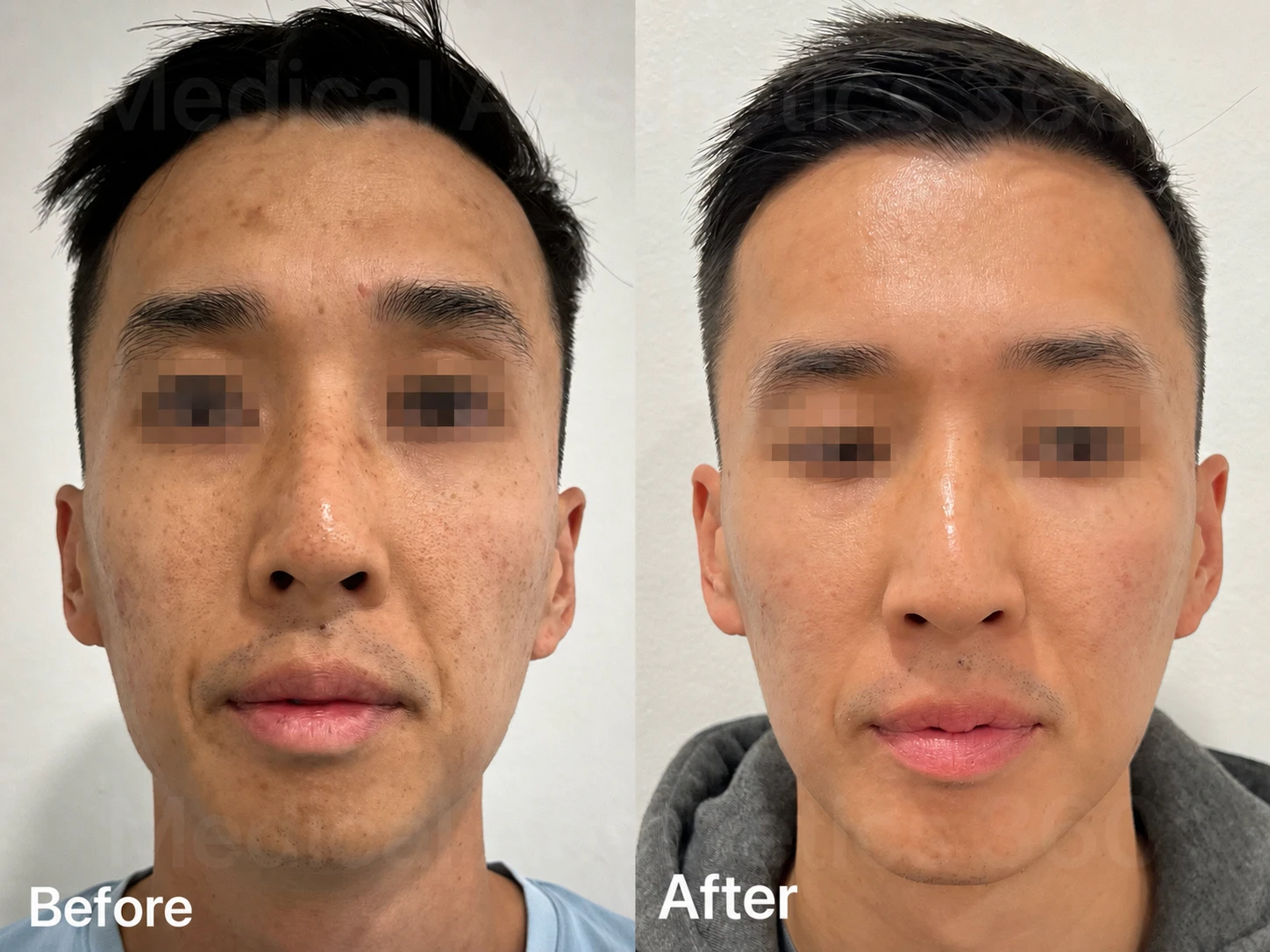
Pores can sit alongside pigmentation, acne scars, sun damage and an uneven surface. These MA360 cases show related concerns and individual treatment journeys relevant to pore minimisation and skin texture improvement; they are not examples of one standard protocol.
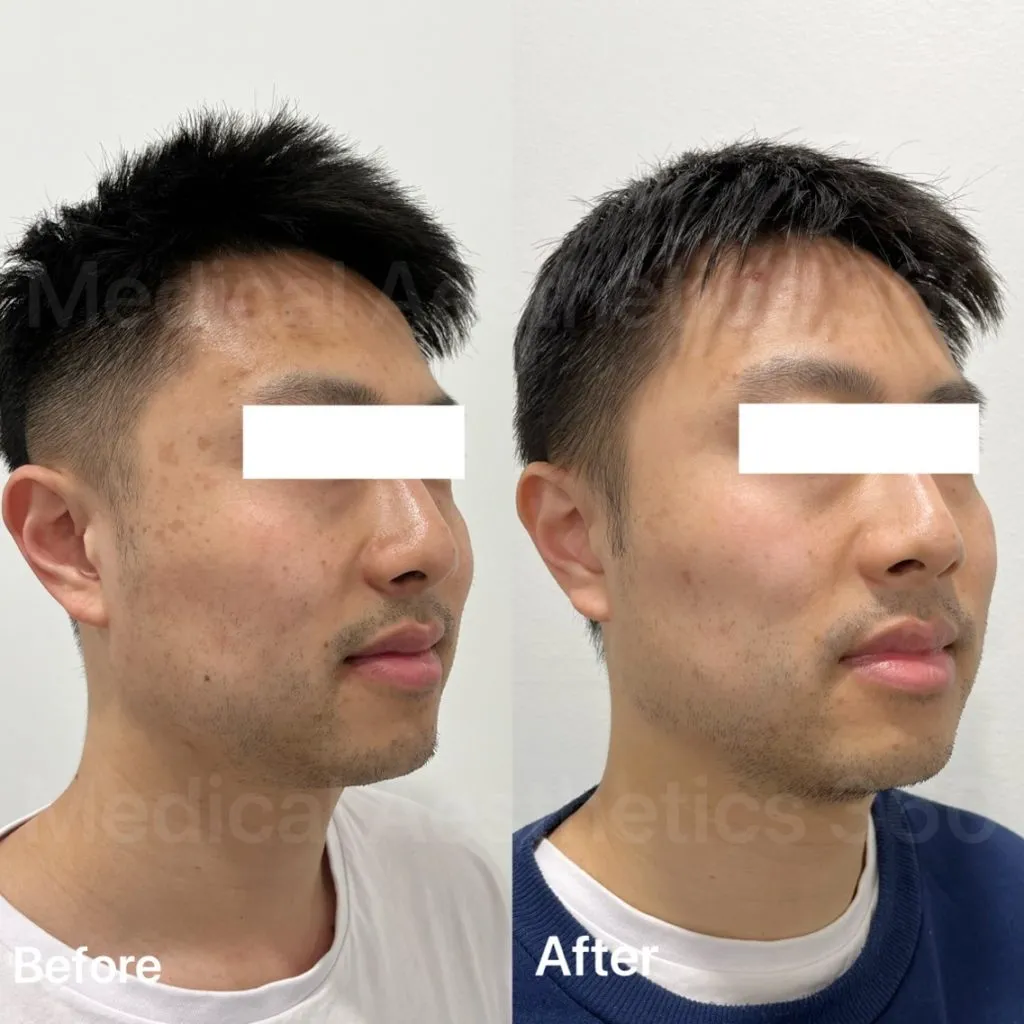
A staged plan focused on barrier support, sun-safe habits and treatment selected for pigment depth rather than treating every visible irregularity as a pore.
Read this patient case study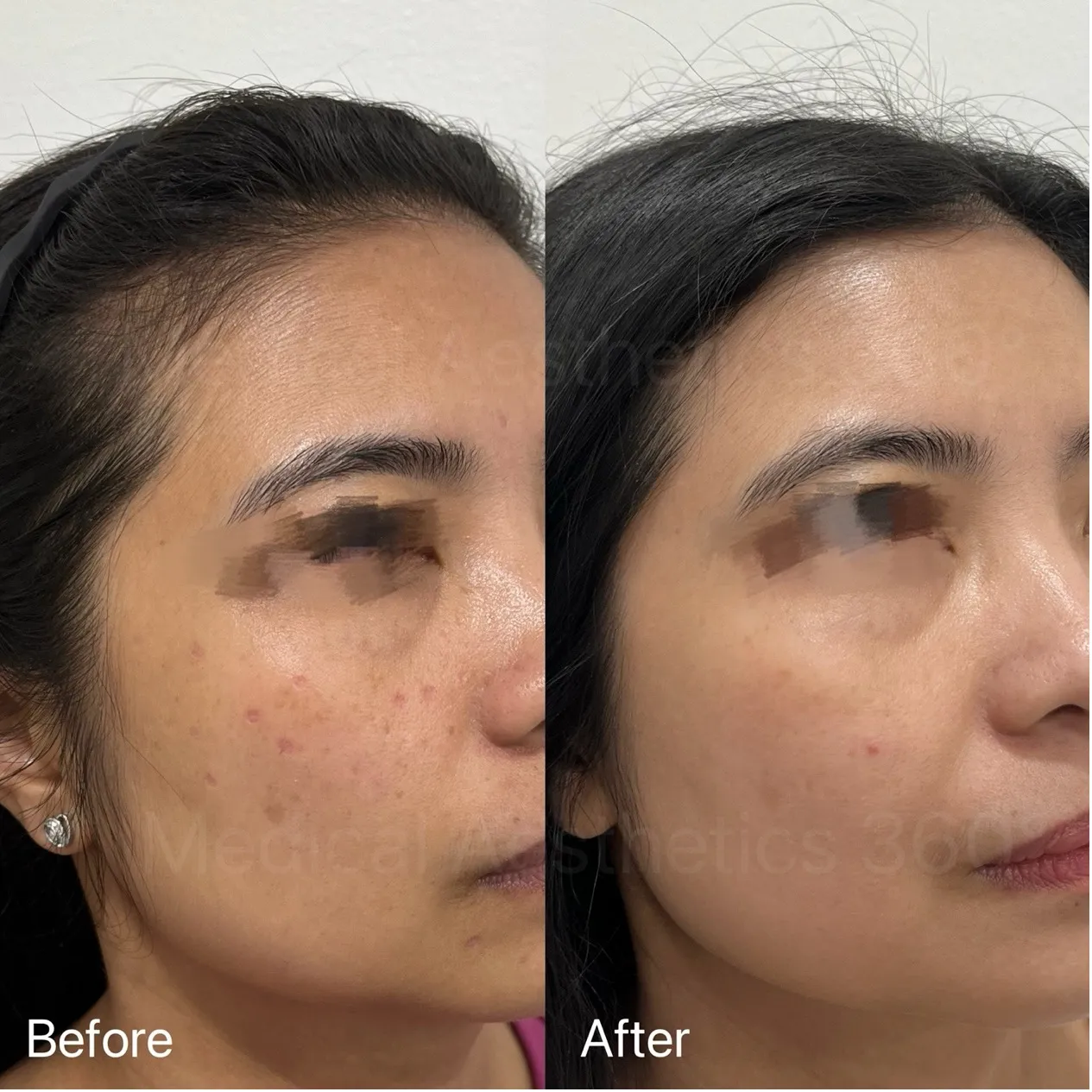
This case required separate thinking for scar remodelling and colour. Fractional Erbium resurfacing and BBL were used as distinct parts of a staged approach.
Read this patient case study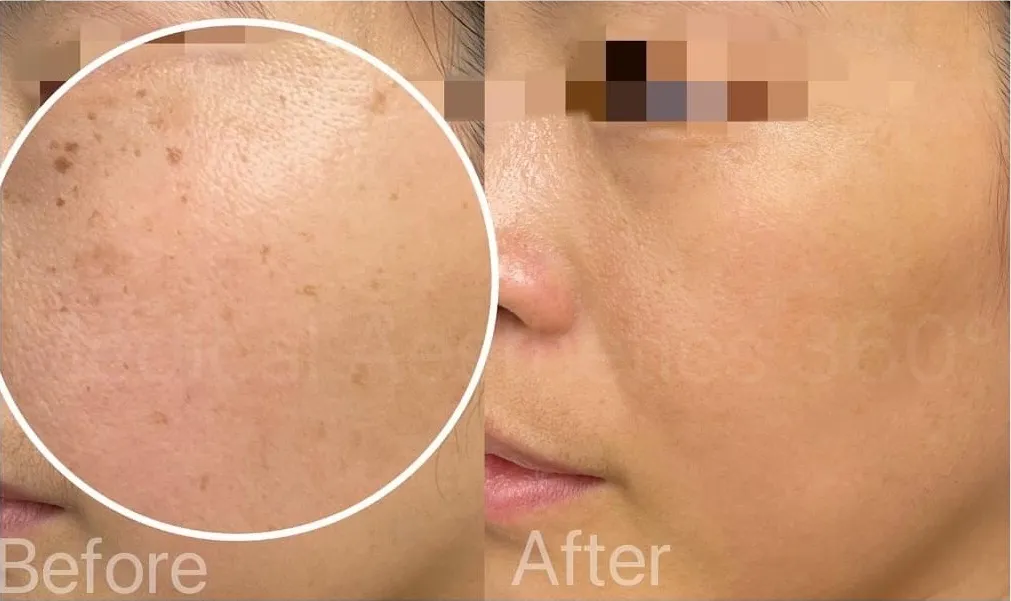
Pico, Nano and BBL technologies were selected for mixed pigmentation. The case illustrates why clearer-looking skin may need colour treatment rather than deeper pore resurfacing.
Read this patient case studyA facial pore is the visible opening of a hair follicle and its associated oil gland. Its appearance is influenced by inherited follicle size, the amount of sebum reaching the surface and the support of the skin around it.
Ageing and cumulative UV exposure can reduce elasticity, so pore edges become less supported. Recurrent acne may stretch or scar the follicular area. Congestion can make an opening look darker, while dehydration or a disrupted barrier can exaggerate roughness and shadow without permanently changing the follicle itself.
Higher sebum output and retained material can make follicular openings look wider or darker.
Reduced support around the pore can create a more visible, elongated opening over time.
Inflammation, recurrent breakouts and tissue loss can produce a mixed landscape of pores and scars.
UV-related collagen change, dryness and irritation can make uneven texture easier to see.
A practical pore minimisation and skin texture improvement plan targets the main driver first. Combining treatments can make sense when several concerns coexist, but more procedures do not guarantee a better result.
A consistent routine may include carefully selected retinoid, exfoliating or oil-balancing ingredients, plus non-comedogenic moisturiser and daily broad-spectrum sunscreen.
This pathway can improve surface smoothness and reduce the contrast of congested pores. Active acne should be controlled before aggressive resurfacing is considered.
Morpheus8 places radiofrequency energy through microneedles at selected depths. It may suit coarse texture, selected shallow acne scars or reduced support around pores when collagen remodelling is the aim.
Redness, swelling, pinpoint marks, infection, pigment change, scarring, burns, unwanted fat loss and nerve injury belong in the risk discussion. Depth and energy should match the tissue rather than follow a standard aggressive setting.
Fractional Erbium or CO2 treatment creates controlled resurfacing columns to remodel texture. It may be considered for selected acne scars and more established surface irregularity.
Deeper treatment generally means more visible recovery and a greater need to plan for pigment risk, sun avoidance and wound care. Ice-pick or tethered scars may still need targeted scar procedures.
PicoSure or Sciton BBL may be considered when pigmentation, sun spots or redness make the complexion look uneven. Their main target is colour, not the permanent removal of follicular openings.
Colour-focused treatment can make the overall surface look clearer, but it should not be presented as a substitute for scar release, collagen remodelling or oil control when those are the central problems.
Book an assessment at MA360 Chatswood or Hurstville so we can identify whether oil, scarring, pigmentation or reduced elasticity is driving the concern.
Published trials use different pore scales, devices, wavelengths, treatment intervals and follow-up periods. That makes it difficult to name one universally superior option or predict an exact percentage improvement for an individual.
A review published in 2023 assessed 19 clinical trials involving 591 participants aged 18 to 80. The studies evaluated topical and oral treatments as well as laser and device-based approaches for reducing pore count or area.
The review is useful for understanding the range of options, but the evidence base remains relatively small and does not support guaranteed results.
Read the facial pore treatment review on PubMedFor pore minimisation and skin texture improvement, the value of assessment is not simply receiving a longer treatment list. It is separating concerns that look similar and choosing the lowest reasonable intensity for the desired change.
Nose, central cheeks and scarred areas can show different structures even on the same face.
Oiliness, sensitivity, active acne, barrier health and tendency to pigment affect suitability.
Recent procedures, medicines, isotretinoin history and abnormal healing may alter timing or risk.
A subtle low-downtime series and a stronger resurfacing treatment involve different trade-offs.
Early swelling or surface dryness can temporarily change how pores look. Meaningful comparison is made after healing, under similar lighting, with the same skin preparation and camera position.
Oil control, acne management, barrier support and sun protection can improve tolerance and may be the main treatment for mild concerns.
RF microneedling often causes several days of redness, swelling and roughness. Fractional resurfacing may involve more prolonged redness, flaking or crusting depending on intensity.
Collagen-related change develops over weeks to months. Oil production, acne, ageing and UV exposure continue, so maintenance may be part of the plan.
Energy-based treatments can cause temporary redness, swelling, discomfort, dryness and sensitivity. Less common complications include prolonged inflammation, infection, acne flare, pigment change, burns and scarring. Each device also has its own risk profile.
Patients who tan easily or develop post-inflammatory pigmentation may need more conservative settings, preparation and longer intervals. Active infection, inflamed acne, an impaired barrier or a recent procedure may be reasons to treat the skin first or postpone energy-based care.
A broad device range is useful only when it allows the treatment to follow the diagnosis. At MA360, pore minimisation and skin texture improvement start by distinguishing a pore-dominant concern from acne scarring, pigmentation, redness or age-related texture before skincare, Morpheus8, PicoSure, BBL, TwinLight or eCO2 is considered.
This approach is available at Chatswood and Hurstville for patients seeking a measured plan rather than a default device package.
Use these treatment and clinic pages to compare mechanisms, recovery and related concerns supporting pore minimisation and skin texture improvement. Each destination is listed once so the next step remains clear.
This page provides general educational information and does not replace an individual medical assessment. Suitability, treatment intensity, recovery and results vary. All procedures carry risks. Back to top ↑